

Equipment Introduction
The KPD Series electric flatbed trolleys are track-powered electric flatbed trolleys. Their operating principle involves using a ground-based step-down system to reduce the 380V power supply (three-phase or single-phase) to a safe voltage of 36V. Power is supplied to the conductive rail (which also serves as the flat car’s running track), and the low-voltage electricity is transmitted via the flat car’s current-collecting device to the on-board step-up transformer. There, the voltage is stepped up to 380V to power a three-phase or single-phase capacitor motor, which drives the flat car. Equipment Features
1. Safe and Reliable:
The system uses rail-based power supply, eliminating the need for cables or external wiring. This protects against burns and damage from falling cables and does not interfere with cross-transportation. The use of a 36V low-voltage (safe voltage) power supply and audible and visual alarm devices minimizes the risk of injury to personnel during the flatbed’s operation.
2. Simple Layout:
It reduces the need for cables and accessories, facilitates remote control and automation, and greatly simplifies the layout of transportation within the plant.
3. Lower Operating Costs:
The use of a vertical gear reducer and a special chassis structure makes it convenient for customers to perform daily maintenance and periodic inspections on the equipment.
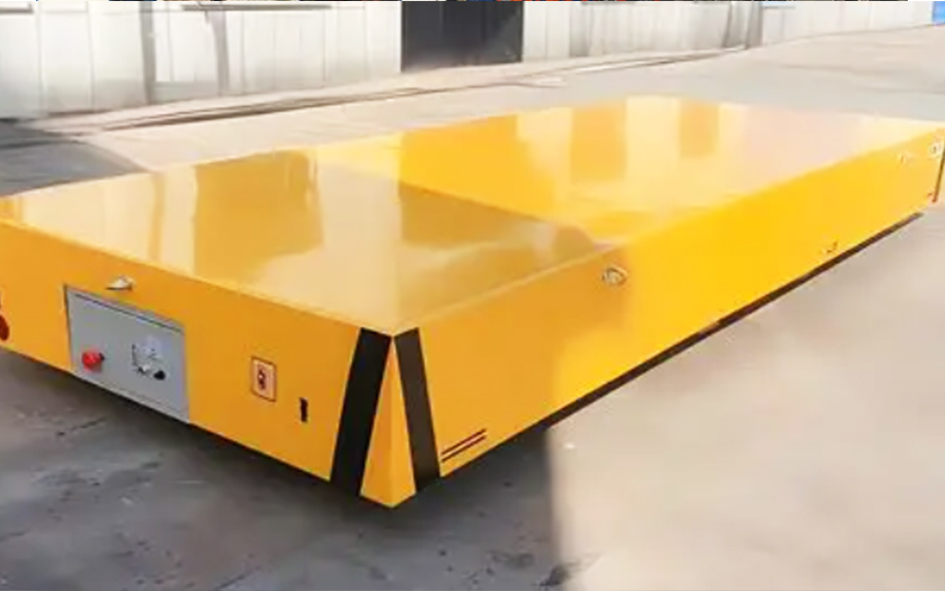
KPD Series Electric Flatbed Cart For Warehouse Work – Comprehensive Product Technical Guid
1. Introduction: The Strategic Role of Electric Flatbed Carts in Warehouse Logistics
The modern warehouse is no longer a passive storage facility but a dynamic hub of material flow, where speed, precision, and reliability determine competitive advantage. Within this ecosystem, the KPD Series Electric Flatbed Cart has emerged as a strategically critical asset for moving heavy, bulky, or palletized goods across warehouse floors with unparalleled efficiency. Designed specifically for track-powered, rail-guided operation, this electric flatbed cart addresses the fundamental limitations of conventional material handling equipment—namely, the downtime associated with battery charging, the safety hazards of trailing cables, and the operational constraints of manually pushed or forklift-dependent transport.
What makes the KPD series particularly well-suited to warehouse work is its continuous power supply architecture. Unlike battery-powered carts that must be taken out of service for hours at a time to recharge, or internal combustion vehicles that emit fumes and require fuel handling, the KPD cart draws its energy directly from conductive rails embedded in or mounted on the warehouse floor. This arrangement ensures that the cart is always ready for operation, capable of running across multiple shifts without interruption. For warehouses operating on just-in-time principles or serving round-the-clock production lines, this uninterrupted availability translates directly into higher throughput and lower inventory buffer requirements.
The flatbed configuration itself is inherently versatile. The open, level platform can accommodate virtually any type of warehouse load—standardized pallets, roll cages, drums, coils, machinery components, or custom fixtured items—without the need for specialized attachments. The low deck height, typically between 400 and 550 millimeters above the floor, enables easy loading and unloading using manual pallet jacks, forklifts, or gravity roller conveyors. This ergonomic advantage reduces worker fatigue and speeds up the transfer process at pick-up and drop-off stations.
Furthermore, the KPD electric flatbed cart is designed with automation readiness in mind. It can be equipped with wireless communication modules, onboard sensors, and centralized fleet management software, allowing it to function as an integral part of a smart warehouse system. In this context, the cart is not merely a transport device but an active node in the warehouse's material flow network, receiving instructions from the warehouse management system, reporting its real-time position and status, and coordinating with other automated equipment to optimize overall logistics efficiency.
2. Technical Specifications Tailored to Warehouse Demands
The KPD series offers a wide parametric envelope that can be precisely matched to the specific requirements of any warehouse operation, from light-duty e-commerce fulfillment centers to heavy-duty industrial storage facilities.
Load Capacity and Structural Design
The load capacity of the KPD electric flatbed cart ranges from 3 tons for smaller warehouse applications up to 50 tons or more for heavy industrial storage environments. For typical palletized goods in distribution centers, a 5-ton to 10-ton model is usually sufficient, while automotive parts warehouses or steel service centers often require 20-ton to 30-ton configurations. The cart's chassis is engineered with a safety factor of three against yield stress, ensuring that the structure remains intact even under the shock loads that occur when heavy items are placed onto the platform by forklifts or overhead cranes. This robust construction provides warehouse operators with peace of mind, knowing that the cart can withstand the rigors of daily industrial use without structural fatigue or premature failure.
Platform Dimensions and Aisle Compatibility
One of the most critical considerations in warehouse cart design is the ability to navigate narrow aisles while carrying large loads. The platform dimensions of the KPD series are fully customizable, with standard widths ranging from 1200 millimeters to 2000 millimeters and standard lengths from 2000 millimeters to 6000 millimeters. The 1200-millimeter width is particularly popular because it aligns perfectly with the standard 1200-by-1000-millimeter pallet footprint used in most international supply chains. For warehouses that handle longer items such as steel bars, timber, or large machinery parts, extended platform lengths of up to 8000 millimeters can be manufactured on request. The platform height is maintained at a low 400 to 550 millimeters, which not only lowers the center of gravity for enhanced stability but also enables flush integration with dock levelers and conveyor transfer stations.
The cart's turning radius is carefully optimized to suit warehouse aisle configurations. For standard two-wheel steering designs, the minimum turning radius is approximately equal to the cart's length, while four-wheel steering or differential drive configurations can reduce this radius by up to forty percent, allowing operation in aisles as narrow as 1800 millimeters. This maneuverability is achieved without compromising load stability, thanks to the cart's low profile and carefully calibrated suspension system.
Rail Gauge and Track Layout Flexibility
The rail gauge—the distance between the two running rails—is selected based on the warehouse's layout and the cart's load capacity. Narrower gauges in the range of 600 to 762 millimeters are ideal for space-constrained facilities where every square meter of floor space must be allocated to racking. Standard gauges of 900 to 1435 millimeters offer greater stability and are compatible with a wider range of industrial rail accessories, including turntables, transfer cars, and switching mechanisms. For extra-wide or extra-heavy loads, gauges exceeding 1500 millimeters can be provided to ensure lateral stability during cornering.
The track itself can be installed in several configurations to suit different warehouse floor conditions. Surface-mounted rails are bolted directly to the concrete floor and covered with protective ramps that allow forklifts and other wheeled equipment to cross the track safely. Flush-mounted rails are recessed into floor channels so that the rail head is level with the surrounding floor surface, creating a completely unobstructed working area that is ideal for warehouses with high pedestrian or forklift traffic. For facilities with uneven floors, rails can be mounted on adjustable sleepers that compensate for floor irregularities and ensure smooth cart operation.
Travel Speed and Positioning Precision
Warehouse transport tasks typically require a balance between speed and precision. The KPD electric flatbed cart offers infinitely variable travel speeds from zero to thirty meters per minute, controlled by a frequency inverter that ensures smooth acceleration and deceleration. For warehouses with long straight travel distances, a high-speed option of up to forty-five meters per minute is available, significantly reducing transit times between distant zones. The inverter-controlled drive system also provides a creep speed mode of zero to five meters per minute, which is essential for final positioning at loading stations, docking with conveyor systems, or maneuvering in confined spaces where precise control is paramount.
Positioning accuracy is another area where the KPD series excels. With encoder feedback from the drive motor and proximity sensors that detect track-mounted position markers, the cart can achieve repeatable stopping accuracy within plus or minus two millimeters. This level of precision enables automated docking with lift tables, roller conveyors, and automated storage and retrieval systems, eliminating the need for manual final positioning and reducing the risk of collision or misalignment.
Power Supply and Electrical System
The electrical system of the KPD electric flatbed cart is engineered for continuous warehouse duty. The ground-based step-down transformers are distributed along the track at intervals of fifty to eighty meters, depending on the load and rail conductivity, to maintain a stable 36-volt AC supply at all points along the travel path. This low-voltage supply is intrinsically safe, as the touch potential remains below the 50-volt AC threshold considered safety extra-low voltage by international standards.
Onboard the cart, the 36-volt supply is stepped back up to 380 volts by a heavy-duty transformer rated for continuous operation with a 150 percent overload capacity for up to three minutes. This overload capability accommodates the frequent starts and stops typical of warehouse material handling, where the cart must accelerate from standstill with a full load multiple times per shift. The main drive motor is a three-phase asynchronous induction motor with Class F insulation rated for 155 degrees Celsius and IP55 protection against dust and water splashes. Coupled with a vertical helical-bevel gear reducer, the motor delivers high torque at low speeds, enabling the cart to move heavy loads smoothly even from a dead stop.
All control circuits operate on a 24-volt DC supply, which is derived from the onboard transformer through a dedicated power supply unit. This separation of power and control circuits enhances safety and protects sensitive electronic components from voltage fluctuations or transient surges that may occur on the primary power line.
3. Distinctive Features That Benefit Warehouse Operations
Continuous Operation Without Battery Constraints
The most significant operational advantage of the KPD electric flatbed cart in a warehouse setting is its ability to operate continuously without the interruptions imposed by battery charging. Battery-powered industrial carts typically require six to eight hours of charging time for every eight to ten hours of operation, which means that facilities must either invest in spare carts or accept schedule disruptions while units are being recharged. The KPD cart eliminates this constraint entirely, as it draws power directly from the track and remains operational as long as the track is energized. This continuous availability is particularly valuable for warehouses that operate multiple shifts or that serve production lines with strict just-in-sequence delivery requirements.
The elimination of batteries also brings significant secondary benefits. Warehouse floor space that would otherwise be consumed by charging stations and battery storage rooms can be repurposed for racking, workstations, or additional travel lanes. The costly and environmentally problematic process of battery replacement—typically required every two to three years for industrial batteries—is completely avoided, reducing both operating costs and the facility's environmental footprint. Furthermore, the cart's weight is lower without heavy battery packs, which reduces wheel and rail wear and allows for more efficient energy use.
Cable-Free Operation for Enhanced Safety
Trailing cables and cable reels are a persistent safety hazard in warehouse environments, where forklifts, pallet jacks, and pedestrian traffic create constant opportunities for cable damage, entanglement, and tripping. The KPD cart's track-powered design eliminates all trailing cables from the warehouse floor, creating a cleaner, safer working environment. Cable reel systems, which are common on some types of electric carts, require regular maintenance of slip rings, brushes, and cable insulation, and they are vulnerable to breakage when cables are repeatedly bent or run over by heavy equipment. By removing these components entirely, the KPD cart reduces maintenance workload and eliminates a common source of unplanned downtime.
The 36-volt rail voltage provides an additional layer of safety for warehouse personnel. Even in the event of insulation failure or accidental contact, the voltage is well below the threshold that poses a risk of electric shock. This low-voltage design allows the cart to operate in close proximity to workers without the need for extensive safety barriers or exclusion zones, which is particularly important in warehouses where space is at a premium and workers must move freely around moving equipment.
Quiet and Fume-Free Operation
Indoor air quality and noise levels are increasingly important considerations in warehouse design, particularly in facilities that house offices, quality control laboratories, or sensitive manufacturing processes adjacent to the storage area. The KPD electric flatbed cart produces zero emissions, as it operates entirely on electric power with no internal combustion engine. This eliminates the need for expensive ventilation systems to extract exhaust fumes and contributes to a healthier work environment for warehouse staff.
The cart's noise output is remarkably low, typically measuring between 65 and 70 decibels at a distance of one meter, which is roughly equivalent to the volume of a normal conversation. This quiet operation is achieved through the use of a frequency-inverter-controlled AC motor that eliminates the mechanical noise of contactors and the high-pitched whine often associated with DC motor drives. In warehouses where noise-sensitive tasks such as quality inspection, packaging, or administrative work are conducted in the same space, this low noise level is a significant advantage.
Smooth and Vibration-Free Load Transport
The frequency inverter provides jerk-free acceleration and deceleration, which is particularly important when transporting fragile or sensitive goods. In e-commerce warehouses, for example, electronics, glassware, and pharmaceutical products require careful handling to prevent damage during transport. The KPD cart's smooth speed control eliminates the sudden jolts that can occur with direct-on-line motor starting or with manually pushed carts that are subject to operator-induced shocks. Vibration levels are maintained below 0.5 grams RMS on the platform surface, ensuring that delicate loads arrive at their destination in the same condition as when they were loaded.
Minimal Maintenance for High Availability
Warehouse managers prioritize equipment uptime, and the KPD electric flatbed cart is designed to deliver high availability with minimal maintenance intervention. The vertical gear reducer is oil-lubricated and sealed, requiring an oil change only every two thousand hours of operation, which in a single-shift warehouse translates to approximately once per year. The carbon brushes used in the current collection system have a service life of three thousand to five thousand hours, and heavy-duty copper-graphite brushes are available for extended intervals. The motor itself is brushless, with no commutator or brushes to wear out, and is typically the last component on the cart to require replacement. Wheel bearings are sealed-for-life units with grease packing, eliminating the need for routine lubrication. This low maintenance burden reduces the total cost of ownership and ensures that the cart remains productive rather than idle in the maintenance bay.
4. Warehouse Application Scenarios and Operational Use Cases
Receiving Dock to Bulk Storage
In a typical warehouse receiving operation, goods arrive on trucks and must be moved from the dock area to bulk storage racks with minimal delay. The KPD electric flatbed cart can be positioned at the end of an extendable Belt Conveyor, automatically receiving pallets as they are unloaded and transporting them to designated storage aisles. Multiple carts operating on the same track network can serve separate receiving bays, with the warehouse management system assigning the nearest available cart to each incoming load based on real-time position data. This decentralized dispatching eliminates the bottleneck that often occurs when a single forklift or cart must serve multiple docks sequentially.
Picking Zone Replenishment
As picking zones deplete their inventory throughout the day, replenishment stock must be moved from reserve storage to forward pick locations. The KPD cart can be programmed to automatically retrieve pallets from bulk storage and deliver them to the picking face, guided by a simple barcode or RFID reading system that identifies the correct pallet and destination. The cart's precise positioning capability ensures that it docks accurately with the racking system's transfer cart or conveyor, minimizing manual handling and reducing the risk of product damage. This automated replenishment process allows pickers to focus on their primary task of order fulfillment, increasing overall warehouse productivity.
Cross-Docking Operations
In cross-docking warehouses, incoming goods are immediately transferred to outgoing trucks with minimal storage time, requiring rapid and efficient transport across the warehouse floor. The KPD electric flatbed cart serves as the primary bridge between the receiving and shipping docks, moving goods at high speed across the facility. The ability to run multiple carts in tandem using master-slave control enables the simultaneous transport of oversized loads, such as long steel sections or large machinery crates that would be difficult to handle with conventional forklifts. The track system can be configured with bypass loops and turnouts to allow carts to pass each other, ensuring continuous flow even during peak receiving and shipping periods.
Assembly Line Feeding
Many warehouses are physically connected to manufacturing facilities, where the warehouse acts as a buffer for raw materials and finished goods. The KPD cart is ideal for feeding assembly lines with components delivered just-in-sequence. The track system can extend directly from the warehouse storage area into the production hall, with the cart traveling through fire doors, across aisle intersections, and between production equipment without human intervention. This seamless integration between storage and production eliminates the need for intermediate handling steps, reducing labor costs and minimizing the risk of component damage or misidentification.
Waste Removal and Empty Pallet Retrieval
Reverse logistics—moving empty pallets, packaging waste, and rejected items back to designated collection points—is a significant but often overlooked warehouse activity. The KPD flatbed cart can be scheduled to perform these tasks during off-peak hours, automatically navigating to collection bins and transporting waste to compactors or recycling areas. This scheduled approach to reverse logistics ensures that waste does not accumulate in work areas, improving housekeeping and freeing up floor space for productive operations.
Cold Storage and Frozen Goods Warehousing
In cold storage environments, human operators face time limits and ergonomic challenges due to low temperatures and heavy protective clothing. The KPD electric flatbed cart can be fully automated, performing repetitive transport tasks in temperatures as low as minus 25 degrees Celsius without requiring breaks or protective gear. The cart's sealed electrical components and heated control systems ensure reliable operation even in sub-zero environments, while the low-voltage track power eliminates the performance degradation that affects batteries in cold conditions. This automation capability is particularly valuable in frozen food warehouses, where productivity is constrained by the limited time workers can spend in the cold environment.
E-Commerce Fulfillment Centers
In high-volume e-commerce warehouses, the movement of goods from storage to packing stations must be fast and accurate to meet customer delivery commitments. The KPD cart can be integrated with autonomous mobile robot picking systems, where AMRs pick items from shelves and deposit them onto the flatbed cart for bulk transport to the packing area. This hybrid approach combines the agility of AMRs in navigating between racking aisles with the bulk transport capacity of the rail-guided flatbed cart, creating a highly efficient material flow system that can handle both single-item picks and full-pallet movements within the same facility.
5. Material Selection and Construction Quality
Chassis and Structural Frame
The load-bearing frame of the KPD electric flatbed cart is fabricated from high-tensile structural steel, typically ASTM A572 Grade 50 or equivalent, which offers an excellent combination of strength, weldability, and impact resistance. The frame employs a fully welded box-section design that maximizes torsional rigidity while minimizing weight, ensuring that the cart remains stable and true to its track even under uneven loading conditions. All primary load-bearing joints are welded using robotic gas metal arc welding with continuous seam tracking, achieving consistent penetration and a smooth toe radius that reduces stress concentration. After welding, the entire frame undergoes a stress-relief annealing process at 620 degrees Celsius for four hours, followed by slow cooling over a twenty-four-hour period. This heat treatment eliminates residual welding stresses that could cause distortion or fatigue cracking over the cart's service life, ensuring dimensional stability and structural integrity for decades of warehouse operation.
The frame is designed with forklift entry pockets on all four sides, allowing the cart to be repositioned or recovered in the event of a track or wheel failure without requiring an overhead crane. These pockets are reinforced with additional gusset plates and are positioned to maintain the structural integrity of the frame even when the cart is lifted from any corner. The chassis also incorporates integrated mounting points for optional equipment such as side bumpers, guide Rollers, and sensor brackets, providing flexibility for future upgrades without requiring structural modification.
Platform Deck Surface Options
The flatbed platform can be customized with a variety of deck surfaces to match the specific requirements of the warehouse operation. The standard option is a smooth steel deck, which provides a flat, level surface suitable for pallets with slip sheets, roll cages with casters, or any load that requires a stable base. For warehouses where moisture, oils, or spillage are common, a chequered steel plate deck offers superior slip resistance while maintaining a low profile that does not interfere with load placement. In environments where vibration damping is critical—such as when transporting electronic components or pharmaceutical products—a rubber matting layer can be applied over the steel deck, absorbing shocks and preventing skidding of packaged goods.
For particularly dirty or abrasive loads, a steel grid deck allows debris to fall through the openings, keeping the platform surface clean and reducing the maintenance required to clear accumulated material. This grid design is also lighter than a solid deck, reducing the overall weight of the cart and allowing for slightly higher payload capacities. For warehouses that handle a variety of load types, a quick-change deck system is available, allowing the operator to swap out different deck surfaces based on the product being transported. For example, a roller-top deck can be installed when handling tote boxes or cartons, while a flat deck with tie-down rails is used when securing heavy machinery components with straps or chains.
Wheel and Rail Interface Components
The wheels of the KPD electric flatbed cart are of dual-flange construction, ensuring positive guidance on the rail with minimal side play. The wheel material is selected based on the warehouse environment and duty cycle. For general warehouse use, forged 65Mn steel wheels are standard, with the tread and flange surfaces induction-hardened to a hardness of Rockwell C 48 to 52, providing a wear-resistant case depth of eight to twelve millimeters. This hardening process significantly extends wheel life in high-traffic applications where the cart makes hundreds of trips per day.
For warehouses where noise reduction is a priority, polyurethane-coated wheels are available, which reduce rolling noise by up to ten decibels compared to steel wheels and also protect polished concrete floors from abrasive wear. In food-grade or cleanroom warehouses, stainless steel wheels are specified to prevent corrosion and eliminate the risk of rust contamination. For light-duty, high-speed applications where weight reduction is beneficial, high-strength nylon wheels offer excellent wear resistance at a fraction of the weight of steel alternatives.
The rail profile itself is selected to match the wheel contour and load requirements. For lighter duty cycles, P18 or P24 rail profiles are sufficient, while heavier loads and higher traffic density call for P38 or QU70 rails with increased cross-sectional area and greater resistance to wear. In warehouses with particularly high traffic or where carts operate at elevated speeds, continuously welded rails with expansion joints are recommended to minimize maintenance and ensure smooth operation.
Electrical Component Quality and Protection
All electrical components on the KPD electric flatbed cart are selected from leading manufacturers and are rated for industrial warehouse conditions. The onboard transformer features copper windings with aramid paper insulation rated for Class H operation at 180 degrees Celsius, ensuring reliable performance even in warm warehouse environments. The windings are vacuum-pressure impregnated with solventless resin, which provides excellent moisture resistance and thermal conductivity while eliminating voids that could lead to partial discharge and premature insulation failure.
The control panel is assembled in an electrostatic discharge-protected environment, with all components mounted on DIN rails and clearly labeled wiring following international color-coding standards. Cable ducts are used throughout the panel to organize wiring and prevent chafing, while terminal blocks are specified with rising clamp technology that provides secure, vibration-resistant connections. The panel enclosure is rated at IP54 for standard warehouse applications, providing protection against dust ingress and splashing water. In dusty environments such as cement warehouses or grain silos, an IP65 enclosure is available with positive-pressure cooling to prevent particle ingress.
6. Manufacturing Process Excellence
Precision Fabrication and Component Machining
The manufacturing process for the KPD electric flatbed cart begins with precision cutting of all plate and section components using computer numerically controlled fiber laser cutting machines. These advanced cutting systems achieve dimensional tolerances of plus or minus 0.5 millimeters, ensuring that parts fit together with minimal grinding or rework during assembly. The laser-cut parts are then edge-prepared for welding, with bevelling applied automatically to ensure full penetration in all load-bearing joints.
Critical machined components—such as wheel treads, bearing housings, and axle journals—are produced on computer numerically controlled lathes and milling machines. Wheel treads and flanges are first rough-turned to remove the induction-hardened case, then finish-ground to a surface roughness of 0.8 micrometers Ra on the tread contact zone. Bearing housings are machined to H7 tolerance grade, providing a precise interference fit for the wheel bearings. Axle journals are turned and ground to tight tolerances, with fillet radii carefully controlled to minimize stress concentration at the shoulder transitions.
Robotic Welding and Quality Verification
All primary structural welds are performed by six-axis robotic welding systems equipped with seam tracking sensors that adjust the torch position in real time to compensate for any variations in part fit-up. The robotic welding process uses a gas metal arc welding procedure with a 60 percent carbon dioxide and 40 percent argon shielding gas mixture, which provides excellent arc stability and weld pool control. Double-pass fillet welds are specified for all load-bearing joints, with the first pass providing penetration and the second pass providing reinforcement and a smooth toe profile.
After welding, all load-bearing joints are subjected to non-destructive testing to verify weld quality. Ultrasonic testing is used to detect internal defects such as porosity, lack of fusion, or cracking, while magnetic particle inspection is applied to surface regions to identify any surface-breaking discontinuities. Any weld that fails inspection is carefully ground out and re-welded following an approved repair procedure, with the repair itself subject to the same inspection criteria as the original weld.
Surface Preparation and Protective Coating
Following welding and inspection, the completed frame undergoes abrasive shot-blasting to achieve an SA 2.5 surface cleanliness grade, which is defined as a near-white metal surface with only minor traces of rust, mill scale, or foreign matter remaining. The shot-blasting process also provides a surface profile of 50 to 75 micrometers, which is optimal for primer adhesion.
Within two hours of shot-blasting, the frame is coated with a zinc-rich epoxy primer applied to a dry film thickness of 80 micrometers. This primer provides both barrier protection and cathodic protection to the steel substrate, preventing rust creep from scratches or minor coating damage. After the primer has cured, a polyurethane topcoat is applied to a dry film thickness of 60 micrometers, providing excellent color retention, abrasion resistance, and chemical resistance against typical warehouse contaminants such as oils, solvents, and cleaning agents. For warehouses in particularly aggressive environments—such as those handling salt-laden materials or operating in coastal locations—an additional coat of micaceous iron oxide is applied between the primer and topcoat, providing enhanced barrier protection against moisture and corrosive ions.
Electrical System Assembly and Factory Testing
The onboard electrical system is assembled in a clean, environmentally controlled area to prevent dust or moisture contamination of sensitive components. All wiring is terminated with insulated ferrules to prevent strand breakage and ensure reliable connections, and each conductor is marked with heat-shrink labels indicating its circuit and function. Terminal connections are tightened with calibrated torque wrenches to the values specified in the engineering drawings, and each connection is subjected to a pull-out test to verify mechanical integrity.
After assembly, each cart undergoes a comprehensive factory testing program before it is shipped to the customer. The ground continuity test confirms that all exposed conductive parts have a ground resistance of less than 0.1 ohm, ensuring that the cart is effectively protected against electric shock. The dielectric strength test applies 2000 volts AC for sixty seconds between the primary circuit and ground, and 1500 volts AC between secondary circuits, verifying that the insulation can withstand the stresses of normal operation and transient surges.
The functional test simulates a full warehouse work cycle, with the cart carrying a load of 125 percent of its rated capacity through start-stop sequences, direction changes, emergency stops, and full-speed travel. During this test, motor current, transformer temperature, and gear reducer vibration are continuously monitored to detect any abnormalities. The noise level is measured at one meter from the cart to confirm compliance with the specified sound pressure level, and the run-out is checked to ensure that the wheel gauge remains within plus or minus one millimeter.
7. Installation, Commissioning, and Operator Training
Site Survey and Layout Planning
The installation process for the KPD electric flatbed cart begins with a comprehensive site survey conducted by the manufacturer's experienced installation engineers. The survey assesses floor flatness, which must be maintained within plus or minus five millimeters over any three-meter length for proper rail alignment and smooth cart operation. Areas prone to standing water are identified so that drainage measures can be implemented before rail installation begins, as standing water can cause electrical leakage and accelerate corrosion of the rail and collector system.
Overhead clearance is measured to ensure that the cart and its maximum-height load can pass safely under bridges, sprinkler systems, lighting fixtures, and other structural elements. The survey also documents the locations of existing equipment, including conveyors, racking, doors, and fire suppression equipment, so that the track layout can be designed to avoid interference. A detailed layout drawing is then prepared, showing the exact positions of all track components, transformers, sectioning switches, and accessory equipment.
Rail Installation Methodologies
The track system can be installed in several configurations depending on the warehouse floor conditions and operational requirements. Surface-mounted rails are bolted directly to the concrete floor using anchor bolts installed at three-hundred-millimeter intervals. Protective ramps are then fitted over the rails to allow forklifts, pallet jacks, and other wheeled equipment to cross the track safely without damage to the rail or the equipment. This configuration is the most cost-effective to install and is suitable for warehouses where the track route is not regularly crossed by high volumes of pedestrian or forklift traffic.
For facilities where unobstructed floor space is essential, flush-mounted rails are recessed into floor channels with the rail head level with the surrounding floor surface. This provides a completely flat working area that is ideal for warehouses with heavy pedestrian traffic or frequent forklift crossing. The channels are designed with drainage provisions to prevent water accumulation around the rails, and the rail and channel system is engineered to support the full weight of the cart without transferring loads to the surrounding floor.
In warehouses with uneven floors, rails can be mounted on adjustable sleepers that compensate for floor irregularities. The sleeper system is grouted in place with a high-strength, non-shrink epoxy mortar that transfers loads directly to the structural floor while providing precise elevation adjustment to maintain consistent rail height along the entire track. This approach is more expensive than simple surface mounting but ensures the smoothest possible cart operation in facilities where floor flatness cannot be guaranteed.
Transformer and Power Distribution Installation
The step-down transformers are positioned at the boundaries of each power section, with each transformer serving a zone of fifty to one hundred meters of track length depending on the load and rail conductivity. Transformer enclosures are weatherproof cabinets with ventilated louvers and thermostatically controlled fans to maintain the internal temperature within the specified operating range. The input power cables are XLPE-insulated and routed in protected conduits or cable trays to prevent mechanical damage, and all connections are made through watertight compression fittings.
Sectionalizing switches are installed at the boundaries between transformer zones, allowing individual sections of track to be isolated for maintenance without shutting down the entire warehouse track network. This sectionalized design is essential for facilities with multiple carts operating on long track runs, as it enables repair work to be performed on a single section while the rest of the system continues to operate normally. The switches are interlocked with the transformer circuit breakers to prevent isolation of a live section, ensuring the safety of maintenance personnel.
Commissioning and Performance Validation
The commissioning phase is the final step before the cart enters production service, and it is conducted by the manufacturer's service engineers in close coordination with the warehouse's maintenance team. The first task is to verify the rail voltage at all points along the track, ensuring that the minimum voltage under load is at least 32 volts AC. Any sections where the voltage drops below this level are investigated, and the transformer tapping settings are adjusted or additional transformer capacity is installed as needed.
The cart's travel path is then programmed with waypoints corresponding to the pick-up and drop-off stations used in the warehouse operation. This programming is performed through the onboard control panel, with coordinates entered either numerically or by manually driving the cart to each station and recording its position. The waypoint data is stored in the control system's non-volatile memory and can be modified at any time to accommodate changes in warehouse layout or operational procedures.
All safety systems are tested under simulated fault conditions, including emergency stop activation from both the remote control and the onboard control station, audible alarm verification, and collision sensor response. The communication link between the cart and the central warehouse management system is established and validated, with the cart successfully receiving test commands and reporting its position and status back to the management system.
Finally, the load test is conducted using a calibrated test weight at fifty, seventy-five, one hundred, and one hundred ten percent of the rated capacity. The cart is operated through a full travel cycle at each load level while motor current, transformer temperature, and travel speed are monitored. The test confirms that the cart can handle its full rated load safely and that the electrical and mechanical systems perform within specified parameters under all operating conditions.
Operator and Maintenance Training Program
The training program for warehouse staff is divided into two separate tracks: operator training for personnel who will be using the cart on a daily basis, and maintenance training for the technicians responsible for its care. Operator training covers the safe and efficient use of the remote control, the location and operation of emergency stop buttons, the daily inspection checklist, and the proper procedures for loading and unloading the platform. Trainees practice maneuvering the cart through typical warehouse routes, positioning it accurately at loading stations, and responding to audible alarms and warning signals. Each operator is required to demonstrate competency before being authorized to operate the cart independently.
Maintenance training is more comprehensive, covering the full spectrum of preventive maintenance tasks, fault diagnosis, and corrective repair procedures. Maintenance personnel learn to inspect and replace carbon brushes, measure wheel flange wear, check bearing condition, and perform oil changes on the gear reducer. They are taught to interpret fault codes displayed on the control panel and to use diagnostic tools to identify electrical and mechanical problems. The training includes practical sessions on the safe isolation of the track power supply and the proper use of lock-out and tag-out procedures when performing maintenance on the cart or its associated infrastructure.
8. Maintenance Protocols for Long-Term Reliability
Daily Operator Inspection Routine
The daily inspection routine is the first line of defense against unexpected breakdowns, and it is designed to be completed in just five to ten minutes at the start of each shift. The operator visually inspects the platform for debris, oil spills, or damaged deck plates that could affect load stability or cause injury. The collector shoes are checked for uneven wear or signs of sparking during a brief idle movement, with any visible arcing indicating either worn brushes or a contaminated rail surface. The audible alarm is tested by starting the cart and listening for the alarm signal, and if the alarm fails to sound, the cart is taken out of service until the issue is resolved. The operator also wipes the rail surface clean of dust, grease, or other contaminants that could interfere with electrical contact, paying particular attention to sections near loading stations where spills are more likely to occur. Finally, a walk-around visual inspection is performed to check for loose bolts on wheel housings, damaged cables or hoses, and any unusual signs of wear or damage.
Scheduled Preventive Maintenance Intervals
Preventive maintenance is scheduled at monthly, quarterly, and annual intervals to ensure that the cart remains in optimal condition and to detect developing problems before they lead to failures. The monthly maintenance tasks are designed to be performed by the warehouse's in-house maintenance team and require no special tools beyond standard hand tools and a multimeter. The control panel filters are cleaned to maintain adequate airflow for cooling, and all electrical connections are inspected and tightened to specified torque values. The carbon brush length is measured, and brushes that have worn to less than 60 percent of their original length are replaced to prevent sparking and voltage drop. The gear reducer is visually inspected for oil leaks, and if any leaks are detected, the seals are replaced during the next scheduled maintenance window.
Quarterly maintenance tasks are more detailed and may require specialized knowledge, but they can still be performed by a competent in-house maintenance team. An oil sample is taken from the gear reducer and sent to a laboratory for analysis, with the results indicating whether the oil is contaminated with wear particles, water, or oxidation products. The wheel flange profiles are inspected using a profile gauge to measure wear, and if the flange thickness has worn below the specified minimum, the wheel is scheduled for replacement. The transformer ventilation system is inspected to ensure that fans are operating correctly and that there is no blockage of the air intakes or exhaust grilles.
Annual maintenance is typically performed by the manufacturer's service engineers or by a trained third-party service provider. The gear oil is completely drained and replaced with fresh oil of the specified grade, and the drain plug is inspected for metal particles that would indicate abnormal wear. An insulation resistance test is performed on the motor windings using a megohmmeter, and if the resistance is below the specified minimum, the motor is scheduled for rewinding or replacement. The inverter parameters are reviewed and recalibrated if necessary to compensate for any changes in the motor or drive train characteristics that may have occurred over the previous year. A full rail continuity check is performed, with the resistance of each rail joint measured and any high-resistance joints corrected by cleaning and re-tightening the joint connections.
Troubleshooting Common Warehouse Issues
Despite the robust design of the KPD electric flatbed cart, issues can occasionally arise, and a systematic approach to troubleshooting minimizes downtime. If the cart fails to start, the first check is the transformer input power supply, followed by verification that the circuit breaker has not tripped. The collector arms are inspected to ensure that they are free-moving and making proper contact with the rail, as a stuck arm will prevent power from reaching the cart. If the emergency stop button has been activated, it must be reset before the cart can be restarted.
Slow travel speed is usually caused by low rail voltage, which can result from a transformer that is incorrectly tapped, a section of track with poor continuity, or excessive load on the transformer from multiple carts operating simultaneously. The rail voltage is measured at the point where the cart is experiencing the speed reduction, and if it is below 32 volts AC, the transformer output is adjusted or the track section is investigated for high-resistance joints. Excess wheel friction, caused by debris on the rail or by bearing failure, can also reduce speed, and a physical inspection of the wheels and bearings will confirm this diagnosis.
Excessive sparking at the collector shoes indicates either worn brushes, a dirty rail surface, or misalignment of the collector arms. The brushes are inspected and replaced if worn, and the rail surface is cleaned with emery cloth to remove oxidation or contamination. The collector arm spring tension is checked and adjusted if necessary, and the arm pivot points are lubricated to ensure smooth movement.
Long-Term Asset Management for Warehouse Fleets
For warehouses that operate fleets of KPD carts, a centralized asset management system provides significant benefits in terms of maintenance planning and operational efficiency. The system tracks the operating hours of each cart, recording time for each unit to enable precise scheduling of preventive maintenance activities. The maintenance history is digitized, providing a complete log of all repairs, parts replacements, and performance tests that have been performed on each cart. This historical data is invaluable for identifying recurring failure modes, evaluating the effectiveness of maintenance procedures, and making informed decisions about equipment replacement.
Remote diagnostics capabilities are optionally available, allowing the cart to transmit fault codes to a cloud-based dashboard in real time. This enables predictive maintenance alerts, where the system notifies the maintenance team of a developing problem before it leads to a failure, allowing
This website uses cookies to ensure you get the best experience on our website.
 Español
 Pусский
 العربية
 Tiếng Việt



 WhatsApp
 Phone: