

Comprehensive Technical and Application Overview of the KPD Series Low-Voltage Track-Powered Electric Flatbed Trolleys
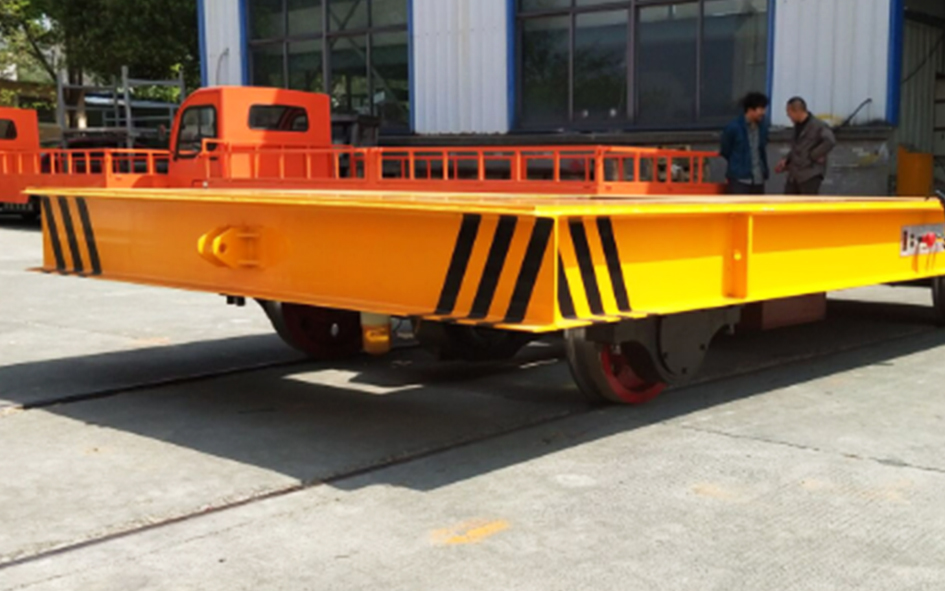
The KPD Series electric flatbed trolleys represent a highly specialized category of track-guided industrial material handling vehicles engineered to address the most demanding heavy-load transportation challenges in modern manufacturing facilities, shipyards, metallurgical plants, and large-scale logistics hubs. Unlike conventional cable-dragging, battery-powered, or trailing-cable flatcars, the KPD series adopts a unique low-voltage track power supply architecture that fundamentally eliminates the operational limitations imposed by external power cords, battery capacity constraints, and complex wiring layouts. This design philosophy not only prioritizes intrinsic operational safety but also delivers exceptional durability, scalability, and adaptability for continuous, high-intensity industrial workflows, making it one of the most widely specified heavy-duty transport solutions for inter-station material transfer across global heavy industry sectors.
At its core, the KPD series operates through a meticulously engineered two-stage voltage transformation system: a ground-mounted step-down unit converts the standard 380V industrial power supply (available in both three-phase and single-phase configurations) down to a 36V safe extra-low voltage (SELV) level, which is then fed directly into the dedicated running rails that double as conductive tracks. A precision current-collecting assembly mounted beneath the flatcar continuously draws this 36V low-voltage power, transmitting it to an on-board step-up transformer that restores the voltage back to 380V to drive a high-efficiency capacitor motor. This power delivery mechanism completely decouples the vehicle’s operational range from cable length or battery runtime, while embedding multiple layers of electrical safety protection that are nearly impossible to achieve with traditional flatcar designs.
Core Specifications and Performance Parameters
The KPD series is structured around a modular, scalable product matrix that covers standard load capacities ranging from 5 tons up to 100 tons, with custom-engineered variants available for ultra-heavy payloads up to 200 tons to accommodate extreme industrial requirements. Each model in the lineup is calibrated with application-specific parameters optimized for different operational intensities, track layouts, and factory footprint constraints.
For the entry-level KPD-6 model, the rated load capacity is 6 tons, paired with a platform dimension of 3200mm in length and 1600mm in width, a travel speed of 30 m/min, and a 2.2 kW drive motor. Moving up the range, the KPD-10 variant supports 10 tons of payload with a 3600mm × 2000mm platform, while the mid-tier KPD-16 model delivers 16 tons of carrying capacity at a travel speed of 25 m/min, fitted with a 3.5 kW motor and compatible with P24 rail profiles. The heavy-duty KPD-25, KPD-40, and KPD-63 models extend payload capabilities to 25 tons, 40 tons, and 63 tons respectively, with platform lengths expanding sequentially from 4500mm to 5600mm, and motor outputs scaling up to 7.5 kW to maintain consistent traction even under full load. The flagship 100-ton KPD model features an extra-large 6300mm × 2800mm platform, a reinforced 11 kW drive system, and compatibility with heavy-duty P43 rails to distribute extreme wheel pressures evenly across the track bed.
The series adheres to global standard rail gauge specifications as its baseline, with 1435mm standard gauge as the default configuration, while 762mm narrow-gauge variants are offered for compact factory layouts with limited space. For facilities requiring curved or looped track layouts, the KPD series is engineered to accommodate tight turning radii: when the curve radius is less than 100 meters, the track can be widened to 1455mm, and for radii under 50 meters, a 1460mm widened profile ensures smooth, derailment-free travel. The maximum allowable track gradient is strictly limited to 2‰ to prevent payload shifting and ensure stable traction performance. The vehicle’s undercarriage maintains a minimum 50mm ground clearance between the lowest point of the chassis and the top of the rail, preventing scraping on uneven track beds while keeping the overall platform height as low as 550mm for the 16-ton model, drastically simplifying loading and unloading operations for heavy workpieces.
The power delivery system is calibrated for precise performance across different operational distances: for single-phase power configurations, a 50×5mm copper auxiliary busbar supports a maximum continuous travel distance of 60 meters, while three-phase setups with 60×6mm busbars can extend the single-transformer coverage to 100 meters. By strategically installing additional ground-mounted step-down transformers at intervals along the track, the effective operational range of the KPD series can be extended indefinitely, eliminating the hard range limits that plague battery-powered flatcars. The drive system’s vertical gear reducer delivers a rated efficiency of over 94%, ensuring minimal energy loss even during 24/7 continuous operation, with a maximum allowable working cycle of 8 hours of uninterrupted travel under full rated load.
Material Selection and Structural Design Philosophy
Every component of the KPD series is selected and engineered to withstand the harshest industrial operating environments, where exposure to molten metal splashes, heavy falling debris, extreme temperature fluctuations, and continuous mechanical shock are routine operational conditions. The vehicle’s main chassis is constructed as a rigid box-frame structure, assembled from four heavy-duty large-section steel channel beams as longitudinal load-bearing members, reinforced with cross beams arranged at precise intervals to form an eight-point load distribution system. This design disperses the full payload evenly across the four wheel assemblies, eliminating localized stress concentrations that can cause chassis deformation even after decades of heavy use. The platform surface is fabricated from high-strength 16mm thick manganese steel plates, with options for reinforced anti-slip textured surfaces, welded-on positioning stops, or embedded heavy-duty rails for securing extra-large workpieces such as turbine casings or ship hull segments.
The wheel and axle assembly represents one of the most critical engineered subsystems of the KPD series. The vehicle axles are forged from high-grade 45# carbon steel, subjected to precision quenching and tempering heat treatment to achieve a tensile strength of 600MPa and a yield strength of 355MPa, ensuring they resist torsional deformation even under maximum payload. The running wheels are cast from 55# medium carbon steel, with their tread surfaces induction-hardened to a hardness of HRC 45-50 to minimize wear and extend service life to over 10 years under normal operating conditions. A specially engineered nylon insulation sleeve is installed between each wheel hub and the axle, creating a complete electrical isolation barrier that prevents current leakage from the conductive rails into the vehicle chassis, eliminating the risk of electric shock for operators and protecting sensitive on-board electronic components.
The current-collecting assembly, which maintains continuous electrical contact with the moving rail surfaces, uses high-purity copper alloy wear blocks mounted on spring-loaded sliding posts housed in a rigid guide frame. The spring preload is precisely calibrated to ensure the copper block maintains consistent, low-resistance contact with the rail top surface even when the track experiences minor vertical misalignment or uneven wear. A unique modular design allows the copper wear block to be rotated 90 degrees four times as its contact surface wears down, effectively quadrupling its service life and reducing replacement frequency and operational costs. The drive train’s gear components are forged from 40Cr and 20Cr alloy steels, carburized and quenched to form a hard tooth surface with a hardness of HRC 58-62, delivering exceptional wear resistance and shock load tolerance that far exceeds standard carbon steel gears.
The vehicle’s exterior finish is applied through a multi-step industrial coating process: after full shot blasting to achieve a SA2.5 surface cleanliness level, a primer layer of anti-rust epoxy paint is applied, followed by a topcoat of high-visibility polyurethane enamel in the signature safety yellow seen in product imagery. The corners of the platform are fitted with alternating red and white reflective warning strips, and the end faces are printed with standardized safety identification logos, ensuring the vehicle remains highly visible even in low-light factory environments. An integrated amber flashing warning lamp is embedded into the end face of the chassis, activating automatically whenever the vehicle is in motion to alert nearby personnel of approaching heavy loads.
Manufacturing Process and Quality Control Standards
The production of each KPD series electric flatbed trolley follows a strictly controlled, ISO 9001-certified manufacturing workflow that spans over 30 individual process steps, with mandatory quality verification checkpoints at every critical stage to ensure consistent performance and reliability. The process begins with raw material incoming inspection: every batch of steel plate, channel beam, alloy forging, and electrical component is subjected to material composition spectroscopy testing, mechanical property tensile testing, and dimensional verification to eliminate any non-conforming parts before they enter production.
The chassis fabrication process starts with precision CNC plasma cutting of all steel plate components, followed by robotic arc welding for the main longitudinal and cross beam joints. Robotic welding ensures consistent, full-penetration welds with zero porosity, eliminating the human error that can lead to chassis cracking under heavy load. After welding, the entire chassis assembly is subjected to a stress-relief annealing process in a large industrial furnace, heating the structure to 550-600°C and holding it for several hours to eliminate all residual welding stress, preventing long-term structural deformation even after years of heavy cyclic loading. The annealed chassis then goes through a three-axis CNC milling process on all mounting surfaces to ensure perfect flatness, guaranteeing that the gearboxes, motor mounts, and bearing seats are installed with precise alignment that eliminates abnormal vibration and premature wear.
The wheel and axle assembly undergoes separate precision machining processes: the forged axle blanks are turned on CNC lathes, then ground to achieve a surface roughness of Ra 1.6 on the bearing mounting journals, ensuring perfect concentricity. The hardened wheel treads are then precision ground to maintain strict dimensional tolerances, eliminating any out-of-round conditions that would cause the vehicle to jolt during travel. Before final assembly, every individual gearbox unit is run on a test bench for no less than 30 minutes, checking for smooth operation, noise levels below 65dB, and no oil leakage from the seal points.
After full vehicle assembly is completed, every KPD flatcar must pass a comprehensive 72-hour continuous full-load test on a dedicated factory test track. During this test, the vehicle is loaded to 110% of its rated payload, running back and forth continuously to verify traction performance, braking accuracy, current collection stability, and the functionality of all safety interlock systems. Electrical safety testing includes a 2000V high-voltage withstand test for all insulation components, ensuring there is zero current leakage from the 36V conductive rails to the vehicle chassis. Only after passing all these rigorous test procedures is the vehicle approved for delivery to the customer.
Installation, Commissioning, and Site Deployment
The installation of a KPD series flatcar system is a systematic process that integrates civil engineering, rail laying, electrical wiring, and vehicle commissioning, designed to be completed efficiently with minimal disruption to existing factory operations. The process begins with site survey and layout design: engineering teams first map out the planned travel route, verifying the foundation bearing capacity to ensure it can support the combined weight of the fully loaded flatcar and the dynamic impact loads generated during travel. For heavy payload models over 50 tons, the foundation is typically reinforced with concrete slabs no less than 300mm thick, with embedded anchor bolts to secure the rail mounting base plates.
Rail laying is the most critical step in the installation process, as the rails themselves function both as running surfaces and conductive power lines. The two running rails must be laid with strict dimensional accuracy: the gauge deviation between the two rails cannot exceed ±2mm over the entire length of the track, and the height difference between the two rail top surfaces must be kept below 1mm per meter to ensure smooth travel and consistent electrical contact. Special high-insulation rail fasteners are used to secure the rails to the base plates, creating a complete electrical isolation between the rails and the factory ground, preventing power leakage that could cause voltage drop or safety hazards. The joints between individual rail sections are welded using specialized copper-aluminum transition welding processes, ensuring minimal electrical resistance at the connection points to avoid overheating during high-current operation.
The ground-mounted step-down transformers are installed in dedicated, well-ventilated electrical cabinets positioned at pre-calculated intervals along the track, connected to the factory’s main 380V power distribution system. The low-voltage 36V output terminals of each transformer are connected directly to the two conductive rails, with dedicated over-current protection circuit breakers installed on each output line to automatically cut power in case of a short circuit. After the rails and power supply system are fully installed, a professional electrical testing team verifies that the insulation resistance between the two rails and the ground is no less than 0.5 MΩ, ensuring no stray current leakage that could interfere with other factory equipment.
The final commissioning phase begins with placing the KPD flatcar on the newly laid track, adjusting the spring preload of the current-collecting copper blocks to ensure they maintain full, even contact with the top of the rails. Technicians then calibrate the travel limit switches installed at both ends of the track, which automatically trigger the vehicle to decelerate and stop before reaching the end of the route to prevent derailment. The audible and visual alarm system is tested to confirm it activates immediately when the vehicle starts moving, and the emergency stop buttons mounted on both the vehicle body and the remote control pendant are verified to cut all power to the drive system within 0.1 seconds when triggered. After a series of no-load test runs to confirm smooth operation, the vehicle is subjected to a full-load test run with a calibrated test weight, verifying that it can travel at the rated speed, stop accurately, and maintain stable electrical performance even under maximum payload. The entire installation and commissioning process for a standard 20-ton KPD system can typically be completed within 3 working days, making it far faster to deploy than many other heavy transport solutions.
Diverse Application Scenarios and Industry-Specific Use Cases
The unique design advantages of the KPD series make it exceptionally well-suited for a wide range of heavy industrial scenarios where conventional transport solutions cannot meet operational requirements. In large-scale shipbuilding and ship repair yards, these flatcars are used to transport massive hull segments, engine blocks, and marine propulsion systems between the material storage yard, prefabrication workshops, and the dry dock. Unlike cable-powered flatcars that would be damaged by heavy steel plates being dragged across the yard, the KPD series has no exposed cables to get caught on protruding steel structures or burned by welding sparks, allowing it to operate safely in the chaotic, high-intensity environment of a shipyard. Its ability to travel on curved and looped tracks also allows it to integrate seamlessly with the circular material flow layouts common in modern ship prefabrication facilities.
In metallurgical and foundry workshops, where high temperatures from molten metal pouring operations are routine, the KPD series completely eliminates the risk of cable melting or burning that plagues trailing-cable flatcars. The 36V low-voltage power supply ensures that even if molten metal splashes onto the rails, there is no risk of dangerous arcing or electric shock to nearby workers. These trolleys are widely used to transport high-temperature casting molds, finished castings, and heavy furnace components between the smelting area, cooling yard, and machining workshops, operating reliably even in ambient temperatures exceeding 40°C.
For heavy machinery manufacturing facilities producing large hydraulic presses, turbine generators, and construction equipment, the KPD series serves as the core inter-station transport system moving workpieces weighing dozens of tons between CNC machining centers, assembly lines, and inspection stations. The low platform height simplifies the process of loading and unloading these massive components using overhead cranes, while the smooth, vibration-free travel prevents precision machined surfaces from being damaged during transport. Many factories integrate the KPD series with their existing overhead crane systems to create a fully automated material flow system, eliminating the need for manual forklift operations that pose safety risks for very heavy loads.
In large logistics warehouses and port container yards, the KPD series is deployed to transport heavy containers, steel coils, and bulk cargo between the unloading area, storage zones, and distribution points. Its ability to operate continuously for 24 hours without needing battery charging or cable replacement makes it ideal for multi-shift logistics operations, drastically improving throughput compared to battery-powered transport vehicles that require hours of downtime for recharging. The series is also widely specified in nuclear power plant construction sites, aerospace manufacturing facilities, and military heavy equipment maintenance depots, where operational safety, reliability, and zero risk of electrical hazards are non-negotiable requirements.
Operational Safety Features and Reliability Advantages
The KPD series has been engineered with multiple layers of redundant safety protection systems that far exceed the requirements of international industrial safety standards, creating an intrinsically safe operating environment for personnel working around heavy moving loads. The foundational safety advantage comes from its 36V SELV power supply architecture: unlike 380V-powered flatcars that pose a fatal electric shock risk if a cable is damaged, the 36V voltage present on the running rails is completely safe for human contact even under wet operating conditions, eliminating the possibility of fatal electrical injury. This design is particularly critical in facilities where workers regularly walk across the tracks, as there is no risk of electrocution even if a worker’s hands or feet come into direct contact with the rail surface.
The track-powered design completely removes all exposed power cables from the operational area, eliminating the tripping hazards, cable damage risks, and cross-transport interference that are inherent to trailing-cable flatcars. The vehicle’s body is fitted with a full suite of safety devices: a high-decibel audible alarm that sounds continuously during travel, flashing warning lights at both ends of the platform, non-contact infrared obstacle detection sensors that automatically trigger an emergency stop if a person or object enters the travel path, and mechanical buffer stops at both ends of the chassis that absorb impact energy in the unlikely event of a collision. All electrical components are housed in sealed, IP54-rated enclosures that protect against dust, metal shavings, and water splashes, ensuring reliable operation even in the dirtiest industrial environments.
The system’s inherent reliability is further enhanced by its robust mechanical design: the vertical gear reducer has no exposed transmission parts that can be damaged by falling debris, and the entire drive train is enclosed within the reinforced chassis structure. The vehicle’s traction performance is calibrated to deliver smooth, shock-free acceleration and deceleration, preventing heavy payloads from shifting during start-up and stop operations, which drastically reduces the risk of load tipping accidents. Unlike battery-powered flatcars that experience sudden performance drops as the battery discharges, the KPD series maintains consistent power output 100% of the time, regardless of how long it has been operating, eliminating unexpected downtime that can disrupt tightly scheduled production workflows.
Simplified Layout and Automation Integration Capabilities
One of the most transformative advantages of the KPD series is its ability to drastically simplify the design of factory internal transport systems,
This website uses cookies to ensure you get the best experience on our website.
 Español
 Pусский
 العربية
 Tiếng Việt



 WhatsApp
 Phone: