

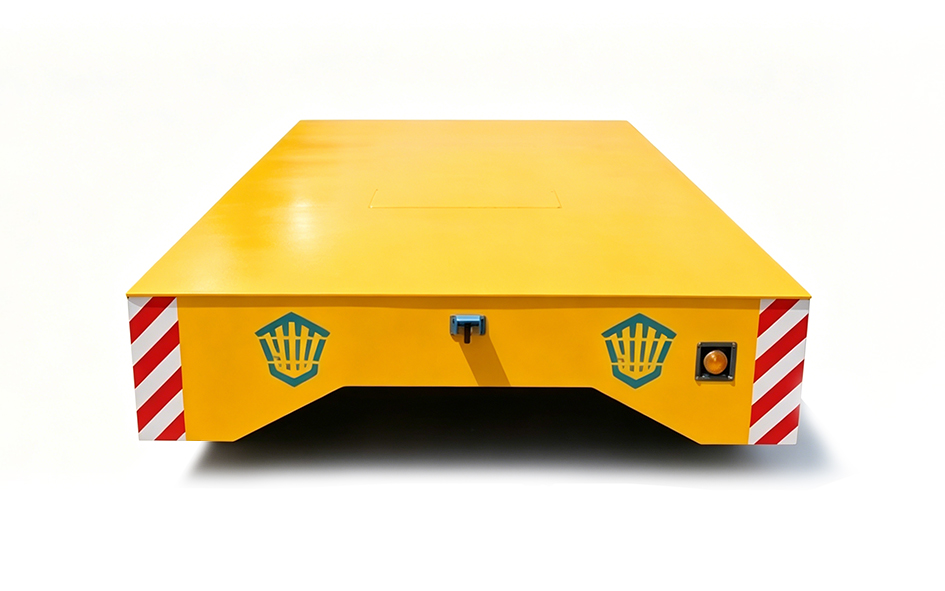
Electric Flatbed Carts represent a transformative advancement in the field of material handling and internal logistics. These battery-powered vehicles are engineered to transport goods, components, and equipment across flat surfaces in a wide range of industrial, commercial, and institutional environments. Unlike manual carts that demand significant physical effort from operators, or internal combustion vehicles that generate noise and emissions, electric flatbed carts offer a clean, quiet, and efficient alternative. Their fundamental design consists of a sturdy, flat platform mounted on a wheeled chassis, with the electric drive system—comprising a motor, controller, and rechargeable battery—concealed beneath the load surface. This simple yet robust configuration allows them to carry payloads ranging from a few hundred kilograms to several tons, depending on the model. Their popularity stems from their zero-emission operation, low maintenance requirements, exceptional maneuverability, and the substantial reduction in worker fatigue they facilitate. As industries increasingly prioritize sustainability and workplace safety, electric flatbed carts have become an indispensable tool for streamlining operations and improving productivity.
Classification and Model Variations
Electric flatbed carts are not produced as a single generic product; rather, they are available in a diverse array of models, each tailored to meet specific operational demands. The most fundamental distinction lies in the operator interface and control method. Walk-behind models, also referred to as tiller-operated carts, require the operator to walk alongside or behind the unit, steering via a tiller arm equipped with integrated throttle and brake controls. These are highly compact and maneuverable, making them ideal for congested spaces like narrow warehouse aisles or busy production floors. Ride-on models, conversely, feature a small platform or seat for the operator, significantly reducing fatigue during long-distance or repetitive transport tasks. These are steered using a steering wheel or handlebars and often include foot pedals for acceleration and braking, offering a more intuitive driving experience.
Remote-Controlled models represent another distinct category, providing the operator with the ability to direct the cart from a safe distance using a handheld transmitter. This configuration is particularly valuable when transporting hazardous materials, maneuvering in areas with limited visibility, or performing precision positioning tasks where the operator cannot be physically near the load. Heavy-duty industrial models are engineered for the most demanding applications, featuring reinforced frames, dual drive motors, and oversized battery packs. These units can handle extreme loads and are commonly found in steel mills, foundries, and heavy fabrication plants. Low-profile or scissor-lift variants incorporate a hydraulic or electric lifting mechanism, allowing the platform to be raised or lowered to align with workstation heights or conveyor systems, thereby facilitating ergonomic loading and unloading. Finally, special-purpose models are custom-designed for niche environments, such as cleanrooms, food processing facilities, or areas with extreme temperatures, utilizing materials like stainless steel and sealed electronic components to meet stringent regulatory or environmental requirements. Beyond these control configurations, models also differ based on drivetrain architecture—front-wheel drive offers superior traction when heavily loaded, rear-wheel drive enhances turning agility, and all-wheel drive provides maximum grip on slippery or uneven surfaces, albeit at a higher cost and complexity.
Application Scenarios and Industry Use Cases
The adaptability of electric flatbed carts allows them to permeate virtually every sector that requires internal goods movement. In warehousing and distribution centers, these carts are essential for shuttling pallets, oversize cartons, and loose goods between receiving docks, bulk storage areas, picking zones, and shipping bays. Their ability to handle heavy loads quietly and without emissions makes them ideal for indoor use, where air quality and noise levels are critical concerns. Manufacturing facilities rely heavily on electric flatbed carts to transport raw materials from storage to production lines and to move finished assemblies to quality inspection or packaging areas. The carts' low vibration and smooth acceleration are particularly beneficial when carrying delicate components like electronic assemblies, glass products, or precision machined parts.
In the retail and hospitality sectors, these carts are frequently used for back-of-house logistics, such as moving bulk inventory from receiving rooms to stockrooms, or transporting furniture, appliances, and supplies within large stores, hotels, and convention centers. Their quiet operation ensures that guest experiences are not disrupted, while their clean electric drive eliminates the risk of fuel or oil spills. Healthcare and institutional facilities, including hospitals, universities, and research campuses, utilize electric flatbed carts to distribute linens, meals, medical supplies, laboratory equipment, and waste materials across sprawling building complexes. The carts' non-marking tires and precise control are essential for maintaining sanitary conditions and avoiding damage to sensitive flooring.
Airports and seaports are another major application area, where these carts are employed to ferry baggage, cargo pallets, maintenance equipment, and spare parts across tarmacs, terminals, and cargo handling areas. Their zero-emission profile is increasingly valued in these environments as part of broader sustainability initiatives. Furthermore, the agricultural and horticultural sectors have adopted electric flatbed carts for moving harvested produce, potted plants, tools, and irrigation supplies across nurseries, greenhouses, and orchards, where uneven terrain and varying load weights demand robust and reliable performance. The entertainment and event management industry also benefits from these carts, using them to transport stage equipment, musical instruments, lighting rigs, and catering supplies across convention centers and outdoor festival grounds, where their silent operation and nimble turning radius are particularly advantageous.
Comprehensive Usage Instructions
Proper and safe use of an electric flatbed cart begins with a thorough pre-operation inspection. Before each shift, the operator should visually inspect the cart for any obvious signs of damage, including cracks in the platform, worn or loose tires, and secure attachment of all components. The battery charge level must be verified using the integrated indicator; a fully charged battery ensures optimal performance and prevents unexpected power loss during operation. The braking system should be tested by engaging the brake lever or pedal while the cart is stationary, and the horn or audible warning device should be confirmed to be functional. For remote-controlled models, the communication link between the transmitter and the receiver must be established and validated before any movement. The operator should also ensure that the load area is clear of obstructions and that the intended travel path is free from debris, spills, or uneven surfaces that could compromise stability.
Loading the cart is a critical phase that directly affects safety and vehicle longevity. The payload must be evenly distributed across the platform to maintain a low center of gravity and prevent tipping. The total weight must never exceed the cart's rated capacity, as overloading places excessive strain on the motor, transmission, and braking system, leading to premature wear and potential failure. If the cart is equipped with side rails, stakes, or tie-down points, these should be used to secure the load, especially when transporting items that are tall, loose, or prone to shifting. The operator should position the load so that it does not obstruct their view or interfere with the steering controls.
During operation, the cart should be started and stopped smoothly, avoiding sudden acceleration or harsh braking, which can destabilize the load and cause damage. When moving forward, the operator must maintain a clear line of sight and travel at a speed that allows for safe stopping within the visible distance. In pedestrian-dense areas, speed should be reduced, and the horn should be used to signal approach. When navigating corners or turning, the cart should be slowed down significantly to prevent overturning. The operator should be aware of the cart's turning radius and ensure adequate clearance for both the front and rear of the vehicle. When traversing ramps or inclined surfaces, the cart should be driven straight up or down the slope, never diagonally, and the load should always face uphill when ascending. For walk-behind models, the operator should remain in the designated walking area, never stepping directly in front of the cart. Parking the cart at the end of a task requires selecting a level, stable surface, engaging the parking brake, and turning off the power to prevent accidental movement. For extended parking periods, the battery should be charged according to the manufacturer's recommended schedule to maintain its health and longevity.
Battery Management and Maintenance
The battery is the most critical and costly component of an electric flatbed cart, and its proper care is essential for reliable performance and extended service life. For lead-acid batteries, regular watering is required to keep the electrolyte levels above the plates, though this must be done after a full charge to avoid overflow and acid spillage. The battery terminals should be inspected periodically for corrosion and cleaned with a baking soda solution and a wire brush when necessary. Lithium-ion batteries, while more expensive, offer significant advantages including lighter weight, faster charging, no required watering, and a longer cycle life. However, they require specific charging protocols and should never be fully discharged, as this can permanently damage the cells. Charging should always be performed in a well-ventilated area away from flammable materials, using only the charger designed for the specific battery type. Overcharging must be avoided, as it generates excessive heat and gas that can degrade the battery and potentially cause safety hazards. The cart's controller should be protected from moisture, extreme temperatures, and physical impact, as this electronic unit is sensitive to environmental stress. Regular maintenance also includes lubricating moving parts such as wheel bearings, pivot points, and steering linkages, as well as checking tire pressure for pneumatic models and inspecting solid tires for wear and flat spots.
Frequently Asked Questions
One of the most common questions concerns the range of an electric flatbed cart on a full charge. This varies significantly based on battery capacity, payload weight, terrain, operating speed, and frequency of starts and stops. Under typical indoor conditions with a moderate load, a standard cart can operate for a full eight-hour shift, but heavy loads or continuous incline operation will reduce this runtime substantially. Another frequent inquiry relates to charging time. Lead-acid batteries generally require eight to ten hours for a full charge and should be left on a trickle charge if used daily. Lithium-ion batteries can achieve an eighty percent charge in one to two hours and a full charge in three to four hours, allowing for opportunity charging during breaks. Users often wonder about the lifespan of the battery, which for lead-acid types is typically three to five years depending on usage and maintenance, while lithium-ion batteries can last eight to ten years or more under optimal conditions. A recurring concern is what to do when the cart fails to move despite a full battery. This usually points to a disconnected or damaged battery cable, a tripped circuit breaker, a faulty accelerator sensor, or an engaged emergency stop button that has not been reset. In such cases, the operator should first check the emergency stop and then verify all cable connections before seeking technical support.
Questions about braking on slopes are also prevalent. Most electric flatbed carts are equipped with regenerative braking that assists in slowing the vehicle on descents while simultaneously recharging the battery. Additionally, electromagnetic parking brakes automatically engage when the cart stops, preventing rollback. However, operators are always advised to descend slopes slowly and use manual brakes as needed. Another common query pertains to the suitability of these carts for outdoor use. While many models are designed for indoor flat floors, certain heavy-duty versions with pneumatic tires and weather-resistant enclosures can operate on paved outdoor surfaces, though they are not intended for unpaved or highly uneven terrain. Users also frequently ask about the cost of operation compared to internal combustion alternatives. Electric carts are significantly less expensive to operate due to lower energy costs, fewer moving parts, and reduced maintenance requirements, lacking oil changes, air filters, spark plugs, or cooling system service. Finally, there is often concern about the cart's ability to handle sensitive floors. Most electric flatbed carts come with non-marking polyurethane or rubber tires specifically designed to prevent scuffing or staining of epoxy, tile, or polished concrete floors, making them safe for use in showrooms, laboratories, and retail environments.
Safety Considerations and Best Practices
Safety is paramount when operating any electric flatbed cart. The operator should always wear appropriate personal protective equipment, including safety shoes and high-visibility clothing. Loose clothing, jewelry, or long hair should be secured to prevent entanglement with moving parts. The cart should never be used to transport personnel, and passengers must never be allowed to ride on the platform. In emergency situations, the operator should be familiar with the location and use of the emergency stop button, which immediately cuts all power to the motor. Regular training and refresher courses are strongly recommended to ensure that all operators understand the specific characteristics of the model they are using, including its braking distance, turning radius, and maximum safe speed.
Conclusion
Electric flatbed carts have proven themselves to be an essential investment for any organization that requires efficient, clean, and safe internal transportation of goods. Their wide range of models ensures that there is a suitable solution for virtually every application, from light-duty warehouse logistics to heavy industrial manufacturing. Understanding the various model types, selecting the right configuration for the specific environment, and adhering to proper usage and maintenance protocols will maximize the return on investment and ensure years of reliable service. As technology continues to advance, particularly in battery chemistry and motor efficiency, these carts will become even more capable and cost-effective, further solidifying their role as a cornerstone of modern material handling. By following the guidance provided herein, operators and managers can leverage the full potential of their electric flatbed carts to achieve safer, more productive, and more sustainable operations.
This website uses cookies to ensure you get the best experience on our website.
 Español
 Pусский
 العربية
 Tiếng Việt



 WhatsApp
 Phone: