

Equipment Overview
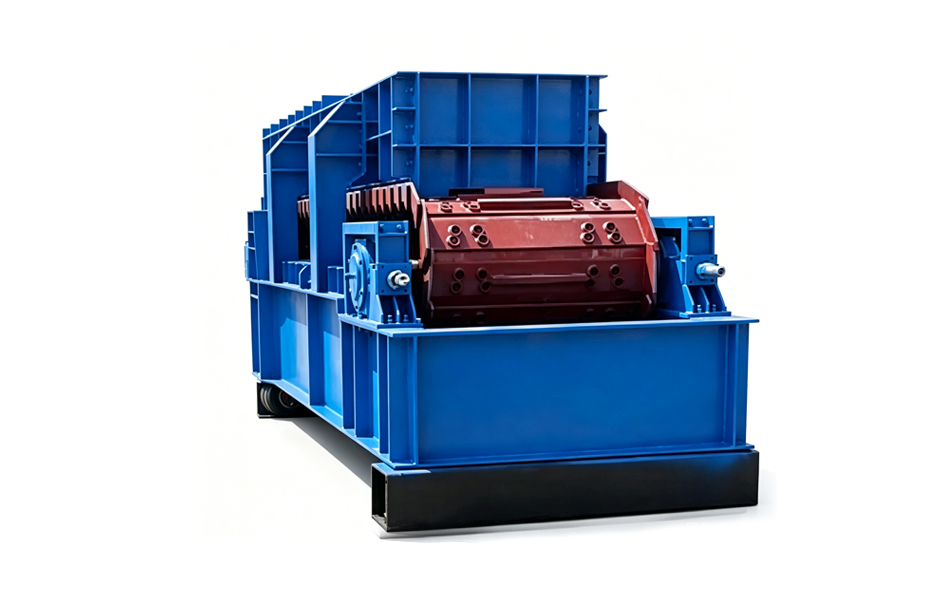
Heavy-Duty Plate Feeders are continuous conveying machines widely used in the mining, metallurgy, chemical, and coal industries. They are primarily used to continuously and uniformly feed and transfer various bulk materials—including those with some degree of stickiness—from storage silos to crushers, conveyors, and other machinery. The operating path consists of horizontal and inclined straight sections, with a maximum incline generally not exceeding 25 degrees.
Equipment Advantages
1. The feeder is capable of starting under a 15% overload, ensuring reliable performance.
2. The material-carrying trough features a heavy-duty steel frame structure, offering high impact resistance and wear resistance.
3. Equipped with rolling bearings, the bearing lubrication system can be either electric or automatic. The entire unit features low operating resistance, simple maintenance, and high operational efficiency.
4. It can operate in harsh environments such as high temperatures and high humidity, and can withstand significant discharge impacts.
Model/ Specifications | Trough PlateWidth mm | Installation Angle | Physical Block Size mm | Bulk Density t/m³ | Coating Thickness mm | Operating Speed m/s | Feeding Capacity t/h | Chain Model |
ZBOK1250 | 1250 | 0~25° | 600 | 1.5-1.8 | 700 | 0.015-0.12 | 80-400 | X216 |
ZBOK1500 | 1500 | 0~25° | 700 | 1.5-1.8 | 850 | 0.015-0.12 | 100-500 | X216 |
ZBOK1600 | 1600 | 0~25° | 800 | 1.5-1.8 | 1000 | 0.015-0.12 | 200-800 | X216 |
ZBOK1800 | 1800 | 0~25° | 900 | 1.5-1.8 | 1100 | 0.025-0.12 | 200-800 | X216 |
ZBOK2000 | 2000 | 0~25° | 1000 | 1.6-2 | 1200 | 0.025-0.12 | 250-1000 | X126F1 |
ZBOK2200 | 2200 | 0~25° | 1200 | 1.6-2.2 | 1300 | 0.025-0.12 | 300-1200 | X228 |
ZBOK2400 | 2400 | 0~25° | 1400 | 1.6-2.2 | 1400 | 0.025-0.12 | 400-1500 | X228 |
ZBOK2500 | 2500 | 0~25° | 1500 | 1.6-2.4 | 1500 | 0.025-0.12 | 450-1800 | X228 |
ZBOK2800 | 2800 | 0~25° | 1750 | 1.6-2.4 | 1600 | 0.025-0.12 | 500-2000 | X228 |
The heavy-duty plate feeder is a specialized piece of industrial equipment designed for the controlled, regulated feeding of bulk materials from a storage hopper or bin onto a downstream processing system. It is a critical component in many material handling operations, serving as the interface between storage and processing. The term "plate feeder" refers to the machine's primary operating mechanism: a reciprocating or oscillating plate that moves back and forth beneath a column of material, systematically discharging a consistent volume of material with each stroke. The "heavy-duty" designation indicates that this equipment is built to handle the most demanding applications, including large lump sizes, high bulk densities, and abrasive materials that would quickly destroy lighter-duty feeders.
The fundamental operating principle of a heavy-duty plate feeder is elegantly simple yet highly effective. The feeder consists of a sturdy, flat plate, often called the feeder pan or tray, which is mounted on a set of Rollers or a sliding mechanism. This plate is connected to a drive system, typically a crankshaft and connecting rod assembly powered by an electric motor through a reduction gearbox. As the motor rotates, it imparts a reciprocating motion to the plate. The plate moves forward at a relatively slow speed and then returns at a faster speed. This differential motion, known as a "slow advance and quick return" cycle, is what induces the material to move forward along the plate. Material in a hopper above the plate exerts a downward pressure. As the plate moves forward, it carries a layer of material with it. On the quick return stroke, the plate slips back beneath the material, while the material's inertia and the friction between the particles keep it from moving backward. This ratcheting effect results in a steady, forward flow of material being discharged from the front of the feeder.
The heavy-duty plate feeder is distinguished from other types of feeders, such as belt feeders, vibratory feeders, or screw feeders, by its robust construction and its ability to handle extremely difficult materials. It is particularly well-suited for applications where the feed material is characterized by large, irregular lumps, high abrasiveness, or high moisture content that might cause sticking or bridging in other feeder types. The massive, rigid construction of the plate feeder allows it to withstand the impact of large lumps dropping from a hopper and to resist the high compressive forces generated by a deep column of heavy material. This makes it a preferred choice in primary crushing circuits, where it feeds run-of-mine ore or large rocks into a jaw or gyratory crusher.
Construction and Design Features
The design of a heavy-duty plate feeder is centered around durability, reliability, and the ability to operate continuously in harsh environments. Every component, from the main frame to the drive mechanism, is engineered to withstand extreme loads and abrasive wear. The primary structural component is the heavy-duty frame, typically fabricated from thick steel plate and reinforced with substantial ribs and cross-members. This frame serves as the foundation for all other components, providing the rigidity needed to maintain alignment under heavy loads. The feeder pan itself is also constructed from heavy steel plate. Its surface is often equipped with replaceable wear liners, made from abrasion-resistant steel, to protect the base plate from the direct impact and sliding friction of the feed material. These liners are bolted in place, allowing for easy replacement when they become worn, which significantly extends the service life of the feeder.
The drive mechanism is the heart of the heavy-duty plate feeder. It must convert the continuous rotary motion of the motor into the reciprocating motion of the feeder plate. This is typically accomplished through a crank mechanism. The motor drives a gearbox that reduces the speed and increases the torque. The output shaft of the gearbox is connected to a crankshaft. Connecting rods link the crankshaft to the feeder plate. As the crankshaft rotates, it drives the connecting rods, which in turn push and pull the plate back and forth. The design of the crank linkage often incorporates features that allow for adjustment of the stroke length. By changing the throw of the crank, the operator can adjust the distance the plate travels on each stroke, thereby controlling the feed rate. This adjustability is a critical feature, as it allows the feeder to be tuned to match the capacity requirements of the downstream process.
The support system for the reciprocating plate is another critical design element. The heavy plate must be able to slide back and forth smoothly while supporting a tremendous load. This is achieved through a system of rollers or heavy-duty slide bearings. In roller-type designs, the feeder pan rides on a series of large, robust rollers mounted to the frame. These rollers are often equipped with sealed bearings to prevent the ingress of dust and grit. In slide-bearing designs, the pan slides on stationary wear strips made of a low-friction material or hardened steel. The choice between roller and slide support depends on the specific application, with roller designs generally offering lower friction and being more suitable for very heavy loads, while slide designs are simpler and more robust in extremely dirty conditions.
Application Scenarios
The heavy-duty plate feeder finds its primary application in industries where large volumes of difficult-to-handle bulk materials must be conveyed from storage to processing. Its robustness and reliability make it a standard piece of equipment in mining, mineral processing, cement production, steel manufacturing, and the construction aggregates industry. In each of these sectors, the feeder performs a unique and essential function.
In the mining industry, the heavy-duty plate feeder is often the first piece of processing equipment that the extracted ore encounters. After the ore has been blasted from the face and loaded into haul trucks, it is dumped into a primary crusher hopper. The plate feeder is located at the bottom of this hopper. Its job is to extract the ore from the hopper at a controlled rate and feed it directly into the primary jaw or gyratory crusher. The feeder must be able to handle the impact of large rocks, sometimes weighing several tons, falling from a height. It must also be able to resist the abrasive wear caused by the rock's movement across the feeder pan. The consistent, controlled feed provided by the plate feeder is essential for optimizing the crusher's performance. An uneven or erratic feed can cause the crusher to choke or to operate inefficiently, leading to increased wear on the crushing components and reduced throughput.
The cement industry is another major user of heavy-duty plate feeders. The raw materials for cement production, such as limestone, clay, and shale, are often extracted from quarries as large, lumpy, and sometimes wet materials. These materials must be fed to a primary crusher and then to a raw mill. Plate feeders are used in the primary crushing stage to regulate the feed to the crusher. They are also used later in the process to feed clinker, the intermediate product of cement manufacturing, to the final grinding mills. Clinker is a hard, abrasive material that is produced in a rotary kiln at high temperatures. A plate feeder is well-suited to handle this material because of its ability to withstand impact and abrasion, while its positive displacement action ensures a steady flow to the mill, which is critical for maintaining the quality of the cement.
In the steel industry, heavy-duty plate feeders are used to handle various bulk materials, including iron ore pellets, sinter, coal, and coke. These materials are fed to blast furnaces and other metallurgical processes. The feeders must operate reliably in high-temperature environments and handle materials that are sometimes hot and dusty. The robust construction of the plate feeder allows it to function effectively in these challenging conditions. The ability to provide a uniform feed is crucial for the chemical reactions occurring in a blast furnace, where consistent material flow is necessary to maintain the correct temperature and chemical balance.
The construction aggregates industry uses plate feeders to process sand, gravel, and crushed stone. In a quarry producing aggregates, the feeder is used to extract material from a surge pile or stockpile and feed it to a scalping screen or a secondary crusher. The feeder must handle a variety of material sizes, from fine sand to large cobbles. The abrasiveness of these materials, particularly when they contain quartz or other hard minerals, makes the wear-resistant construction of the plate feeder essential. The feeder's ability to provide a consistent feed rate is also important for ensuring that the screening equipment operates efficiently, as an uneven feed can reduce the efficiency of the screening process.
Beyond these primary industries, heavy-duty plate feeders are also used in various other applications, such as in recycling facilities to feed shredders and in chemical plants to handle various raw materials. Wherever there is a need to reliably and controllably feed a challenging bulk solid from storage to a process, the heavy-duty plate feeder is a strong candidate.
Operating Instructions
The proper operation of a heavy-duty plate feeder is essential for achieving optimal performance, maximizing equipment life, and ensuring the safety of the personnel in the vicinity. Operation involves a series of steps, from pre-start checks to shutdown procedures, all of which must be performed with diligence. The operator must have a thorough understanding of the machine's components, its controls, and the characteristics of the material being handled.
Pre-Start Inspection: Before the feeder is started, a thorough visual inspection is required. The operator should check the feeder pan and its wear liners for any signs of excessive wear, cracking, or damage. Any loose or missing bolts should be identified and tightened or replaced. The condition of the drive components should be assessed. This includes inspecting the motor, gearbox, crankshaft, connecting rods, and bearings for signs of oil leaks, overheating, or unusual wear. The operator should verify that all lubrication points are adequately supplied with the correct grade of lubricant. The support rollers or slide bearings should be checked for proper function and alignment. The hopper or bin above the feeder should also be inspected to ensure that there are no bridging or arching issues, which could prevent material from reaching the feeder. Finally, all safety guards, interlocks, and emergency stop devices must be verified to be in place and functional.
Start-Up Procedure: Starting the feeder is a sequential process. The first step is to sound a warning alarm, typically for a period of fifteen to thirty seconds, to alert personnel that the machine is about to start. After the alarm, the operator engages the drive motor. The feeder should be started without material in the hopper to allow the drive train to accelerate to full speed under no load. This minimizes the starting torque on the motor and gearbox, reducing mechanical stress. Once the feeder has reached its full operating speed, the material can be introduced into the hopper, or the gate or discharge valve from the storage bin can be opened to allow material to flow onto the feeder pan. The feed rate is then controlled by adjusting the stroke length. The operator should increase the stroke length gradually, observing the material flow and the downstream process, until the desired feed rate is achieved.
During Operation: Continuous monitoring is required during operation. The operator must observe the material flow to ensure that it is consistent and free of interruptions. Any bridging or arching in the hopper must be addressed immediately, often by using a pneumatic hammer or a mechanical agitator to break up the blockage. The operator should listen for any unusual noises coming from the feeder, such as grinding, knocking, or excessive vibration. These sounds can indicate a problem with the drive mechanism, a worn bearing, or a foreign object lodged in the feeder. The motor and gearbox temperatures should be monitored regularly to prevent overheating. Excessive heat can be a sign of overloading or inadequate lubrication. The operator should also check the condition of the material being fed. If the material is excessively wet or sticky, it may tend to adhere to the feeder pan, reducing its effectiveness and potentially causing blockages.
Shutdown Procedure: Shutting down the feeder must also be a controlled process. The first step is to stop the flow of material into the feeder by closing the gate or discharge valve from the hopper. The feeder should be allowed to run until the feeder pan is completely empty of material. This is important because starting a feeder under load, with a full pan of material, can place excessive strain on the motor and drive components. After the feeder pan is empty, the drive motor is stopped. The operator should then conduct a post-operation inspection, checking for any signs of damage or abnormal wear that may have occurred during the shift. The feeder should be cleaned of any accumulated dust or spillage. The critical lubrication points should be checked again and topped up if necessary. This routine shutdown and cleaning procedure is essential for maintaining the feeder's reliability and longevity.
Common Questions and Solutions
The operation of a heavy-duty plate feeder, like that of any industrial equipment, is subject to certain issues and challenges. Understanding the causes of common problems and their solutions is vital for minimizing downtime and maintaining the efficiency of the material handling system.
Why does the feeder plate not move, or why is the feed rate inconsistent? A stuck or slow-moving feeder plate is often caused by a mechanical problem or a blockage. If the plate is not moving at all, the drive motor may have failed, or the gearbox may be damaged. A simple tripped circuit breaker or a blown fuse should also be checked. If the motor and gearbox are working but the plate is sluggish, the support rollers may be seized, or the slide bearings may be worn. The roller bearings should be greased, or the slide bearings may need to be replaced if worn. A more common cause of inconsistent feed is a blockage in the hopper. Material bridging or arching above the feeder pan prevents material from settling onto the feeder. This can be addressed by using a hopper agitator or air cannons to break the bridge. The feeder stroke length may also need adjustment to match the material characteristics.
Why is the feeder producing excessive vibration or noise? Excessive vibration or noise is a clear sign that something is wrong. The most common cause is a loose component. The operator should check all bolts and fasteners on the drive mechanism, the pan, and the frame. A broken or fatigued connecting rod or a cracked crankshaft will also produce a distinct knocking sound. Worn bearings in the gearbox or on the support rollers will often produce a grinding or whining noise. If the wear liners on the feeder pan are loose or broken, they can also cause noise and vibration. In any case, if abnormal noise or vibration is present, the feeder should be stopped immediately for a thorough inspection. Continuing to run the feeder in such a condition can lead to catastrophic failure and more extensive damage.
What causes excessive wear on the feeder pan or liners? The feeder pan and its wear liners are subject to constant abrasion from the material passing over them. The rate of wear depends on the hardness and abrasiveness of the material and the frequency of feeding. If the wear is excessive and rapid, it may indicate that the wrong grade of wear liner material has been selected. For extremely abrasive materials, a higher hardness grade, such as a chrome-molybdenum alloy, may be required. The feeder stroke length may also be set too high, causing material to be dragged across the pan with greater force, increasing wear. In some cases, the material may contain tramp metal or other contaminants that are causing accelerated wear. The feeder's speed can also be a factor. A lower speed may reduce wear by reducing the sliding velocity of the material. When wear liners are worn through, they must be replaced promptly to prevent damage to the base pan.
How can I adjust the feed rate precisely? The feed rate of a heavy-duty plate feeder is primarily controlled by adjusting the stroke length of the reciprocating plate. This is typically done by changing the position of the crank pin on the crankshaft. Moving the crank pin outward, away from the center of rotation, increases the stroke length and hence the feed rate. Moving it inward decreases the stroke. This adjustment should only be made with the feeder stopped. The operator should also ensure that the stroke length is within the manufacturer's recommended range to avoid overloading the drive mechanism. Another way to control the feed rate is to adjust the speed of the motor using a variable frequency drive, if the feeder is equipped with one. Reducing the motor speed slows the stroke cycle, reducing the feed rate. A combination of stroke length and motor speed adjustments offers the greatest flexibility in controlling the feed rate.
What should I do if material is spilling over the sides of the feeder pan? Material spilling over the sides of the feeder pan is a serious issue, as it can lead to material accumulation around the feeder, increased cleanup costs, and potential safety hazards. The most common cause is that the feeder pan is not wide enough for the material or that the material is being fed unevenly from the hopper. If the hopper discharge is not centered over the feeder pan, the material will pile up on one side and spill over. Adjusting the hopper discharge gate to center the flow can often solve this problem. If the feeder is overloaded, meaning the feed rate is too high for the pan's capacity, material will also spill over the sides. In this case, the stroke length or motor speed should be reduced. The side skirts on the feeder may also be worn or damaged, allowing material to escape. These skirts should be inspected and replaced if necessary.
In conclusion, the heavy-duty plate feeder is a robust, reliable, and indispensable machine in the material handling industry. Its ability to consistently feed difficult bulk materials makes it a critical link in many processing chains. By understanding its design, its applications, the correct operating procedures, and the solutions to common problems, operators and maintenance personnel can ensure that this equipment provides years of trouble-free service, contributing to the overall efficiency and productivity of the industrial process it supports.
This website uses cookies to ensure you get the best experience on our website.
 Español
 Pусский
 العربية
 Tiếng Việt



 WhatsApp
 Phone: