

The material handling Medium-Sized Plate Feeder is a specialized piece of equipment designed to serve as a reliable interface between storage systems and processing operations across a wide spectrum of industries. As the name suggests, this feeder is purpose-built for the general field of material handling, which encompasses the movement, storage, control, and protection of materials throughout the manufacturing and distribution process. The medium-sized plate feeder occupies a central position in this discipline, offering a balanced solution that combines substantial throughput capacity with practical dimensions and operational flexibility. It is not merely a machine but a strategic component that enables the efficient flow of bulk solids from one stage of production to the next.
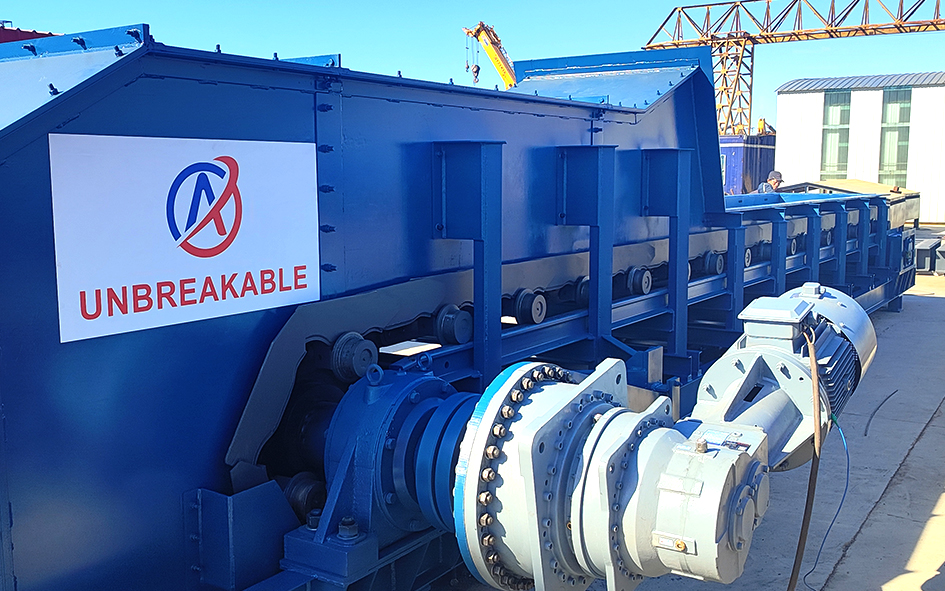
The concept of material handling is broad, and the medium-sized plate feeder is designed to address the specific challenges that arise when dealing with bulk materials that are difficult to manage. These materials may be abrasive, sticky, lumpy, or have variable moisture content. They may be prone to bridging or arching in storage bins, or they may segregate, causing variations in the feed composition. The medium-sized plate feeder is engineered to overcome these challenges through its positive displacement action, which forces material forward regardless of its flow characteristics. This makes it a versatile and dependable solution for handling materials that would cause other types of feeders, such as belt or vibratory feeders, to fail or perform inadequately.
The Material Handling Medium-Sized Plate Feeder is distinguished by its adaptability. It is designed to be integrated into a wide variety of systems, from stationary processing plants to mobile equipment. Its moderate size and weight make it suitable for installation in existing facilities without requiring extensive structural modifications. The feeder can be configured with various options, including different pan lengths and widths, variable speed drives, and a range of wear liner materials, to match the specific requirements of the application. This flexibility is a key advantage, allowing the feeder to be optimized for the particular material and operating conditions it will encounter.
The applications for the material handling medium-sized plate feeder are extensive and diverse, reflecting the broad scope of the material handling field. It is used in the food processing industry to handle grains and other agricultural products, in the chemical industry to handle various powders and granules, in the recycling industry to handle waste materials, and in the construction industry to handle aggregates and sand. In each of these applications, the feeder performs the critical function of providing a controlled, consistent feed, ensuring that downstream processes operate efficiently and produce a consistent product. The reliability and versatility of the material handling medium-sized plate feeder make it an indispensable tool in the modern industrial landscape.
Design Features for Material Handling Applications
The design of the material handling medium-sized plate feeder is optimized for the specific demands of general material handling, balancing robust construction with practical considerations such as cost, maintainability, and ease of integration. The main frame is fabricated from heavy steel plate, typically with a thickness of twenty to thirty-five millimeters, and is reinforced with internal ribs and cross-members. This frame provides the rigidity necessary to support the weight of the material column and to withstand the dynamic forces of the reciprocating pan. The frame is designed with mounting points that allow it to be bolted to a concrete foundation, a structural steel support, or a mobile chassis, providing flexibility in installation.
The feeder pan is the primary interface with the material and is constructed from abrasion-resistant steel. The base pan thickness typically ranges from twenty to forty millimeters, depending on the application. The pan is fitted with replaceable wear liners, which are essential for extending the service life of the feeder. The liners are usually made from high-chrome iron or manganese steel, offering excellent resistance to abrasive wear. The liners are segmented for easy replacement; individual segments can be changed without removing the entire pan. The liners are attached to the pan with recessed bolts, which are protected from damage by the sliding material. The side skirts of the pan are raised to contain the material and are also fitted with wear liners. The discharge end of the pan is equipped with a heavy wear bar that protects the edge of the pan from the impact of the discharging material.
The support system for the pan is designed for smooth, friction-free movement under load. The pan is typically supported on a series of Rollers mounted to the main frame. The rollers are of moderate diameter and are equipped with sealed bearings that are protected from contamination by seals or shields. The rollers are mounted on adjustable bearing housings, allowing for precise alignment of the pan. In some applications, particularly where the feeder is exposed to extremely dirty conditions, a slide-bearing support system may be used. The slide bearings are essentially large wear strips made from a low-friction material, providing a simpler and more robust support system that is less susceptible to contamination.
The drive system of the material handling medium-sized plate feeder is designed for reliable, efficient power transmission. The drive train typically consists of an electric motor, a reduction gearbox, and a crank mechanism. The motor is a standard industrial motor with a power rating that matches the capacity of the feeder. The gearbox is a heavy-duty reduction unit that provides the necessary torque multiplication. The crank mechanism converts the rotary motion into the reciprocating motion of the pan. The crankshaft and connecting rods are robust steel components. The bearings on the crankshaft are sized for long service life. Many designs incorporate a variable frequency drive, allowing the operator to adjust the motor speed and the feed rate precisely. The entire drive assembly is enclosed in a protective housing and is equipped with a lubrication system.
Application Scenarios
Food Processing Industry: In the food processing industry, the material handling medium-sized plate feeder is used to handle various agricultural products, including grains, seeds, and nuts. These materials are often delicate and require careful handling to prevent damage. The feeder's controlled, gentle action minimizes breakage and ensures a consistent feed to processing equipment such as mills, extruders, and dryers.
Chemical Industry: The chemical industry uses the plate feeder to handle a wide variety of powdered and granular materials, including fertilizers, plastics, and pigments. These materials can be abrasive and dusty. The feeder's enclosed design and robust construction minimize dust emissions and ensure reliable operation.
Recycling Industry: In recycling plants, the plate feeder is used to handle mixed waste materials, including paper, plastics, and metals. The feeder's ability to handle irregular, lumpy materials makes it ideal for these applications. It provides a controlled feed to shredders, sorters, and other processing equipment.
Construction Materials: The construction industry uses the plate feeder to handle aggregates, sand, and cement. These materials are abrasive and require a feeder that can withstand the wear. The plate feeder's robust construction and replaceable wear liners ensure long service life.
Mining and Minerals: In smaller mining and mineral processing operations, the medium-sized plate feeder is used to handle ores and minerals. It provides a controlled feed to crushers and mills, maximizing their efficiency.
Operating Instructions
Pre-Start Inspection: A thorough inspection is mandatory before starting. The operator should check the pan and wear liners for wear or damage, inspect the drive components for abnormalities, and verify all safety guards are in place. The hopper must be inspected for any bridging.
Start-Up Procedure: The feeder is started with a warning alarm. It should be started with no material on the pan. Once running smoothly, the hopper gate is opened to introduce material. The stroke length is adjusted to achieve the desired feed rate.
Continuous Monitoring: The operator must monitor the material flow, listen for unusual sounds, and check motor and gearbox temperatures. Any bridging in the hopper must be addressed immediately. The condition of the wear liners should be observed.
Shutdown Procedure: The hopper gate is closed to stop the material flow. The feeder is allowed to run until the pan is empty. The motor is then stopped, and a post-operation inspection is performed.
Common Questions and Solutions
Why does the feeder occasionally jam? Jams are often caused by blockages in the hopper or the presence of foreign objects in the feed. The operator should stop the feeder and clear the blockage. The hopper design may need to be modified to prevent bridging.
What causes rapid wear of the wear liners? Rapid wear is caused by highly abrasive material. The operator should consider using a harder grade of liner material or reducing the feeder speed. Regular inspection and timely replacement of liners is essential.
How can I improve feed rate consistency? Inconsistent feed is often caused by material segregation in the hopper. The hopper should be designed for mass flow to ensure uniform material flow. Regular inspection and replacement of wear liners is also essential, as worn liners can change the effective stroke length.
Why is the feeder pan skewing? Skewing indicates uneven wear on the support rollers or slide bearings. The operator should inspect and replace worn components and ensure the pan is properly aligned.
What is the proper lubrication schedule? The operator should follow the manufacturer's recommendations, which typically include daily lubrication of all grease fittings, weekly checks of oil levels, and periodic replacement of lubricants.
How do I adjust the feed rate? The feed rate is controlled by adjusting the stroke length of the reciprocating pan. This is typically done by changing the position of the crank pin on the crankshaft. Increasing the throw increases the stroke length and the feed rate; decreasing the throw reduces the feed rate. Some models also offer variable speed drives for additional control.
What should I do if the feeder is making excessive noise? Excessive noise is a sign of a mechanical problem. The operator should stop the feeder and inspect the drive components. Loose bolts, worn bearings, or a broken component could be the cause. The feeder should not be operated until the problem is resolved.
How often should the wear liners be replaced? The replacement interval depends on the abrasiveness of the material and the operating conditions. The operator should inspect the liners regularly and replace them when they have worn down to a certain point, typically when they are about one-third of their original thickness.
Can the feeder handle wet or sticky materials? Yes, the positive displacement action of the plate feeder makes it suitable for handling wet or sticky materials. However, the operator may need to adjust the stroke length and speed to prevent material build-up on the pan.
What are the benefits of a variable frequency drive? A variable frequency drive allows the operator to adjust the motor speed, providing precise control over the feed rate. This is particularly useful in applications where the material characteristics or the required feed rate change frequently.
How do I ensure the feeder is properly aligned? Proper alignment is essential for the smooth operation of the feeder. The support rollers or slide bearings must be aligned to ensure the pan travels in a straight, parallel path. The operator should use precision measuring tools to check the alignment and make adjustments as needed.
What should I do if the feeder stalls under load? A stall under load is usually caused by an overload or a mechanical failure. The operator should stop the feeder immediately, clear any material from the pan, and inspect the drive system. The cause of the stall must be identified and corrected before the feeder is restarted.
How do I prevent spillage from the feeder? Spillage can be prevented by ensuring the feeder is not overloaded and that the side skirts are in good condition. The feed from the hopper should be centered on the pan to prevent uneven loading.
What is the typical service life of a material handling medium-sized plate feeder? With proper operation and maintenance, a medium-sized plate feeder can provide many years of reliable service, often exceeding twenty years. The service life depends on the severity of the application and the quality of the maintenance program.
How do I store the feeder if it is not in use? If the feeder is to be stored for an extended period, it should be thoroughly cleaned, and all exposed surfaces should be coated with a rust-preventative compound. The feeder should be stored in a dry, protected area. The periodic rotation of the drive mechanism is also recommended to prevent the bearings from developing flat spots.
What type of motor is best for a medium-sized plate feeder? A high-torque, low-speed motor is typically best, as it provides the necessary torque to start the feeder under load and to move the heavy pan. A motor with a variable frequency drive offers the greatest flexibility in controlling the feed rate.
How can I reduce noise from the feeder? Noise can be reduced by ensuring all components are properly lubricated and that there are no loose parts. The use of noise-dampening mounts and enclosures can also help. Regular maintenance to prevent wear and tear is the most effective way to minimize noise.
What safety features should I look for? Safety features include emergency stop buttons, guards over moving parts, and warning alarms. The feeder should also have interlocks that prevent it from starting under unsafe conditions. The operator should be trained in the safe operation of the feeder.
How do I handle a change in material characteristics? If the material characteristics change, the operator may need to adjust the stroke length, the motor speed, or the hopper discharge rate. The wear liners may also need to be replaced if the new material is more abrasive. The feeder's performance should be monitored closely after any change in material.
Can the feeder be used in a mobile application? Yes, the medium-sized plate feeder is often used in mobile crushing and screening plants. The feeder is mounted directly to the plant's chassis and provides the controlled feed necessary for the plant's operation. The feeder must be secured during transport to prevent damage.
What are the advantages of a plate feeder over a belt feeder? A plate feeder offers several advantages over a belt feeder. It is more durable and can handle more abrasive materials. It provides a positive displacement action, making it suitable for sticky materials that would cause a belt feeder to slip. It also requires less maintenance, as there are no belts to replace.
What are the advantages of a plate feeder over a vibratory feeder? A plate feeder offers advantages over a vibratory feeder in handling materials that are difficult to vibrate, such as wet or sticky materials. The plate feeder's positive displacement action forces the material forward, while a vibratory feeder relies on the material's ability to flow. The plate feeder is also more robust and can handle larger lumps.
How do I select the right size of plate feeder? The right size is determined by the required feed rate, the characteristics of the material, and the space available. The operator should consult with an engineer to determine the correct pan width, length, and drive power for the application.
What is the importance of the hopper design? The hopper design is critical for the proper operation of the feeder. The hopper must provide a consistent, uninterrupted flow of material to the feeder pan. The hopper should be designed for mass flow to prevent bridging and segregation. The discharge opening should be sized to match the feeder's capacity.
How do I handle tramp metal in the feed? Tramp metal in the feed can cause serious damage to the feeder and downstream equipment. A tramp metal magnet or a metal detector should be installed in the feed stream to remove any metallic contaminants before they reach the feeder.
What is the best way to clean the feeder? The feeder should be cleaned regularly to prevent material build-up. The operator should use compressed air or a brush to remove dust and debris from the feeder pan and the drive components. The feeder should not be cleaned with water unless it is specifically designed for wet cleaning.
How do I train operators on the feeder? Operators should be trained on the safe operation of the feeder, including the start-up and shutdown procedures, the monitoring of the feeder during operation, and the identification of potential problems. The training should also cover the proper lubrication and maintenance procedures.
In conclusion, the material handling medium-sized plate feeder is a versatile, reliable, and essential piece of equipment for a wide range of industries. Its robust construction, positive displacement action, and adaptability make it a superior choice for handling challenging bulk materials. By understanding its design, applications, operating procedures, and common problems, plant operators and maintenance personnel can ensure that this equipment provides consistent, efficient, and reliable service for many years, contributing to the overall productivity and profitability of their operations. The material handling medium-sized plate feeder is not merely a machine; it is a strategic asset that enables the efficient and effective processing of bulk materials, supporting the production of the goods and materials that underpin modern society.
This website uses cookies to ensure you get the best experience on our website.
 Español
 Pусский
 العربية
 Tiếng Việt



 WhatsApp
 Phone: