

Equipment Introduction
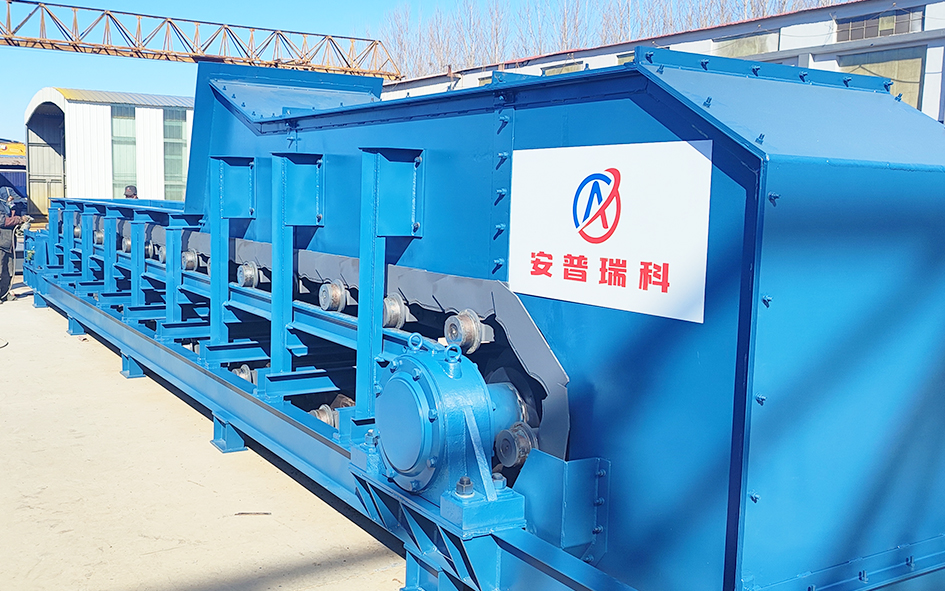
The Medium-Sized Plate Feeder is a continuous conveying machine widely used in the mining, metallurgy, chemical, and coal industries. It is primarily used to continuously and uniformly feed and transfer various bulk materials—including those with some degree of stickiness—from storage silos to crushers, conveyors, and other machinery. It operates on horizontal and inclined straight lines, with a maximum incline generally not exceeding 25°.
Equipment Features
1. Equipped with rolling bearings, the bearing lubrication system can be either electric or automatic. The entire machine features low operating resistance, simple maintenance, and high operational efficiency.
2. The tail section is designed for reliability and is suitable for rainy and humid regions. It prevents chain tooth skipping—which could disrupt production—caused by the accumulation of sticky materials at the tail end.
Parameter Model | Conveyor Trough Width (mm) | Feed Rate (m/s) | Material Layer Height (mm) | Production Capacity (m³/h) | Chain Model |
BL800 | 800 | 0.02-0.25 | 600 | 30-340 | M224-S-250 |
BL1000 | 1000 | 0.02-0.25 | 750 | 40-550 | M224-S-250 |
BL1250 | 1250 | 0.01-0.25 | 900 | 40-800 | M315-S-315 |
BL1600 | 1600 | 0.01-0.2 | 1050 | 50-1000 | M450-S-315 |
The medium-sized plate feeder occupies a vital and distinctive position within the broad spectrum of material handling equipment. It is designed to bridge the gap between the massive, high-capacity feeders used in large-scale mining and the smaller, lighter-duty feeders employed in less demanding applications. This class of equipment is characterized by its versatility, offering a balanced combination of capacity, durability, and practicality that makes it suitable for a wide range of industrial operations. Medium-sized plate feeders are not simply scaled-down versions of their larger counterparts; they are thoughtfully engineered machines that address the specific needs of operations that require substantial throughput but do not justify the expense and infrastructure of the largest feeders.
The defining characteristics of a medium-sized plate feeder include a pan width typically ranging from one to two meters, a pan length of two to four meters, and a drive system with moderate power requirements. These feeders are capable of processing material at rates ranging from fifty to five hundred tons per hour, depending on the material characteristics and the specific configuration. This capacity range makes them ideal for a diverse array of applications, from secondary crushing circuits in quarries to feeding operations in medium-scale manufacturing plants. Their size also makes them more accessible for maintenance and repair, as components are not so large that they require specialized heavy-lifting equipment for servicing.
The fundamental operating principle of the medium-sized plate feeder is identical to all plate feeders: a reciprocating steel pan moves back and forth beneath a column of material, delivering a controlled and consistent feed. However, the medium-sized feeder often incorporates design features that enhance its versatility. Many models offer adjustable stroke lengths and variable drive speeds, allowing the operator to fine-tune the feed rate to match the specific requirements of the downstream process. This flexibility is one of the key advantages of the medium-sized feeder, making it a popular choice in plants that process a variety of materials or that experience frequent changes in production rates.
The applications for medium-sized plate feeders are extensive and varied. They are found in quarries producing aggregates for construction, in recycling plants processing construction and demolition waste, in coal preparation plants, and in various manufacturing industries that handle bulk solids. Their moderate size and capacity make them suitable for both stationary and mobile installations. In mobile crushing and screening plants, the medium-sized plate feeder is often the feeder of choice, providing the necessary capacity while maintaining a compact footprint that is compatible with the mobility requirements of the plant. The versatility, reliability, and cost-effectiveness of the medium-sized plate feeder ensure its continued relevance in the modern industrial landscape.
Construction and Design Features
The construction of a medium-sized plate feeder reflects a careful balance between robustness and practicality. While it is built to withstand the rigors of continuous industrial operation, it does not employ the overly massive, oversized components that characterize the largest feeders. This balance results in a machine that is durable, reliable, and cost-effective, both in terms of initial capital investment and ongoing operating costs. The main frame is fabricated from heavy steel plate, typically with a thickness of twenty to forty millimeters, reinforced with internal ribs and cross-members. The frame is designed to provide the necessary rigidity to support the weight of the material column and to absorb the dynamic forces of the reciprocating pan, but it is not so heavy as to be impractical for the intended applications.
The feeder pan is the primary working component and is constructed from abrasion-resistant steel plate. The base pan thickness typically ranges from twenty to forty millimeters, depending on the expected wear conditions. The pan is fitted with a system of replaceable wear liners, usually made from high-chrome iron or manganese steel. These liners are segmented to facilitate replacement; individual segments can be changed without removing the entire pan. The liners are attached to the pan with recessed, high-strength bolts, preventing the bolt heads from being damaged by the sliding material. The side skirts of the pan are raised to contain the material and are also fitted with wear liners. The discharge end of the pan is equipped with a heavy wear bar to protect the edge of the pan from the impact of the discharging material.
The support system for the pan in a medium-sized feeder is typically a roller-type design. The pan rides on a series of Rollers mounted to the main frame. The rollers are of moderate diameter, typically one hundred fifty to three hundred millimeters, and are equipped with sealed bearings that are protected from contamination. The rollers are mounted on adjustable bearing housings, allowing for precise alignment of the pan. In some designs, a slide-bearing support system may be used, particularly in applications where the feeder is exposed to extremely dirty conditions. The slide bearings are essentially large wear strips made from a low-friction material, providing a simpler and more robust support system.
The drive system of a medium-sized plate feeder is designed to provide reliable, efficient power transmission. The drive train typically consists of an electric motor, a reduction gearbox, and a crank mechanism. The motor is a standard industrial motor with a power rating typically ranging from fifteen to seventy-five kilowatts, depending on the size and capacity of the feeder. The gearbox is a heavy-duty reduction unit that provides the necessary torque multiplication. The crank mechanism converts the rotary motion into the reciprocating motion of the pan. The crankshaft is a forged steel shaft, and the connecting rods are robust steel components. The bearings on the crankshaft are sized for long service life. The entire drive assembly is enclosed in a protective housing and is equipped with a lubrication system.
Application Scenarios
Aggregate Production: In quarries producing aggregates for construction, the medium-sized plate feeder is commonly used in secondary and tertiary crushing circuits. After the primary crusher has reduced the rock to a manageable size, the medium-sized feeder extracts the material from a surge bin or stockpile and feeds it to the secondary cone or impact crusher. The feeder's controlled discharge ensures an even feed to the crusher, maximizing its efficiency and product quality.
Recycling Operations: Recycling plants processing construction and demolition waste use medium-sized plate feeders to handle a variety of materials, including concrete, asphalt, and mixed debris. The feeder's ability to handle irregular, lumpy material makes it ideal for these applications. The feeder is used to feed the primary crusher or to extract material from a stockpile for further processing.
Coal Preparation: Medium-sized plate feeders are used in coal preparation plants to feed coal to crushers, screens, and other processing equipment. The feeders handle coal that may contain fines and moisture, and their positive displacement action ensures a consistent feed even when the material is sticky.
Manufacturing Industries: Various manufacturing industries use medium-sized plate feeders to handle bulk raw materials. For example, in the ceramics industry, the feeder is used to feed clay and other raw materials to mixers and extruders. In the chemical industry, the feeder is used to handle various granular materials.
Mobile Crushing and Screening Plants: In mobile crushing and screening plants, the medium-sized plate feeder is often the feeder of choice. Its compact size and moderate weight make it compatible with the mobility requirements of the plant. The feeder is mounted directly to the plant's chassis and provides the controlled feed necessary for the plant's operation.
Operating Instructions
Pre-Start Inspection: Before the feeder is started, a thorough inspection is required. The operator should check the pan and wear liners for wear or damage. Loose bolts should be identified and tightened. The drive components should be checked for any signs of oil leaks or unusual wear. Lubrication levels should be checked and any required greasing performed. The hopper must be inspected for any bridging.
Start-Up Procedure: The start-up is a sequential process. The operator sounds a warning alarm, engages the drive motor, and allows the feeder to reach full speed with no material on the pan. The hopper gate is then opened to introduce material, and the stroke length is adjusted to achieve the desired feed rate.
Continuous Monitoring: During operation, the operator must monitor the material flow, listen for unusual sounds, and check motor and gearbox temperatures. Any bridging in the hopper must be addressed immediately. The condition of the wear liners should be observed.
Shutdown Procedure: The hopper gate is closed to stop the material flow. The feeder is allowed to run until the pan is empty. The motor is then stopped, and a post-operation inspection is performed.
Common Questions and Solutions
Why does the feeder occasionally jam? Jams are often caused by blockages in the hopper or the presence of foreign objects in the feed. The operator should stop the feeder and clear the blockage. The hopper design may need to be modified to prevent bridging.
What causes rapid wear of the wear liners? Rapid wear is caused by highly abrasive material. The operator should consider using a harder grade of liner material or reducing the feeder speed. Regular inspection and timely replacement of liners is essential.
How can I improve feed rate consistency? Inconsistent feed is often caused by material segregation in the hopper. The hopper should be designed for mass flow to ensure uniform material flow. Regular inspection and replacement of wear liners is also essential, as worn liners can change the effective stroke length.
Why is the feeder pan skewing? Skewing indicates uneven wear on the support rollers or slide bearings. The operator should inspect and replace worn components and ensure the pan is properly aligned.
What is the proper lubrication schedule? The operator should follow the manufacturer's recommendations, which typically include daily lubrication of all grease fittings, weekly checks of oil levels, and periodic replacement of lubricants.
How do I adjust the feed rate? The feed rate is controlled by adjusting the stroke length of the reciprocating pan. This is typically done by changing the position of the crank pin on the crankshaft. Increasing the throw increases the stroke length and the feed rate; decreasing the throw reduces the feed rate. Some models also offer variable speed drives for additional control.
What should I do if the feeder is making excessive noise? Excessive noise is a sign of a mechanical problem. The operator should stop the feeder and inspect the drive components. Loose bolts, worn bearings, or a broken component could be the cause. The feeder should not be operated until the problem is resolved.
How often should the wear liners be replaced? The replacement interval depends on the abrasiveness of the material and the operating conditions. The operator should inspect the liners regularly and replace them when they have worn down to a certain point, typically when they are about one-third of their original thickness.
Can the feeder handle wet or sticky materials? Yes, the positive displacement action of the plate feeder makes it suitable for handling wet or sticky materials. However, the operator may need to adjust the stroke length and speed to prevent material build-up on the pan.
What are the benefits of a variable frequency drive? A variable frequency drive allows the operator to adjust the motor speed, providing precise control over the feed rate. This is particularly useful in applications where the material characteristics or the required feed rate change frequently.
How do I ensure the feeder is properly aligned? Proper alignment is essential for the smooth operation of the feeder. The support rollers or slide bearings must be aligned to ensure the pan travels in a straight, parallel path. The operator should use precision measuring tools to check the alignment and make adjustments as needed.
What should I do if the feeder stalls under load? A stall under load is usually caused by an overload or a mechanical failure. The operator should stop the feeder immediately, clear any material from the pan, and inspect the drive system. The cause of the stall must be identified and corrected before the feeder is restarted.
How do I prevent spillage from the feeder? Spillage can be prevented by ensuring the feeder is not overloaded and that the side skirts are in good condition. The feed from the hopper should be centered on the pan to prevent uneven loading.
What is the typical service life of a medium-sized plate feeder? With proper operation and maintenance, a medium-sized plate feeder can provide many years of reliable service, often exceeding twenty years. The service life depends on the severity of the application and the quality of the maintenance program.
How do I store the feeder if it is not in use? If the feeder is to be stored for an extended period, it should be thoroughly cleaned, and all exposed surfaces should be coated with a rust-preventative compound. The feeder should be stored in a dry, protected area. The periodic rotation of the drive mechanism is also recommended to prevent the bearings from developing flat spots.
In conclusion, the medium-sized plate feeder is a versatile and reliable workhorse that fills a critical niche in the material handling industry. Its balanced design, moderate capacity, and adaptability make it suitable for a wide range of applications, from aggregate production to recycling to mobile crushing plants. By understanding its design, applications, operating procedures, and common problems, plant operators can ensure that this equipment provides consistent, efficient, and reliable service for many years. The medium-sized plate feeder is not merely a machine; it is a vital component of the production chain, helping to transform raw materials into finished products that support modern society.
This website uses cookies to ensure you get the best experience on our website.
 Español
 Pусский
 العربية
 Tiếng Việt



 WhatsApp
 Phone: