

The high capacity Heavy-Duty Plate Feeder represents the upper echelon of bulk material feeding equipment, designed specifically for operations that demand immense throughput rates. While all heavy-duty plate feeders are built for robustness, the high capacity variant is distinguished by its ability to process enormous volumes of material continuously, often exceeding several thousand tons per hour. These feeders are the lifelines of mega-scale industrial operations, from the world's largest open-pit mines to massive port handling facilities and high-throughput cement plants. Their design prioritizes not only durability but also the hydraulic and mechanical capability to move vast quantities of material with precision and reliability.
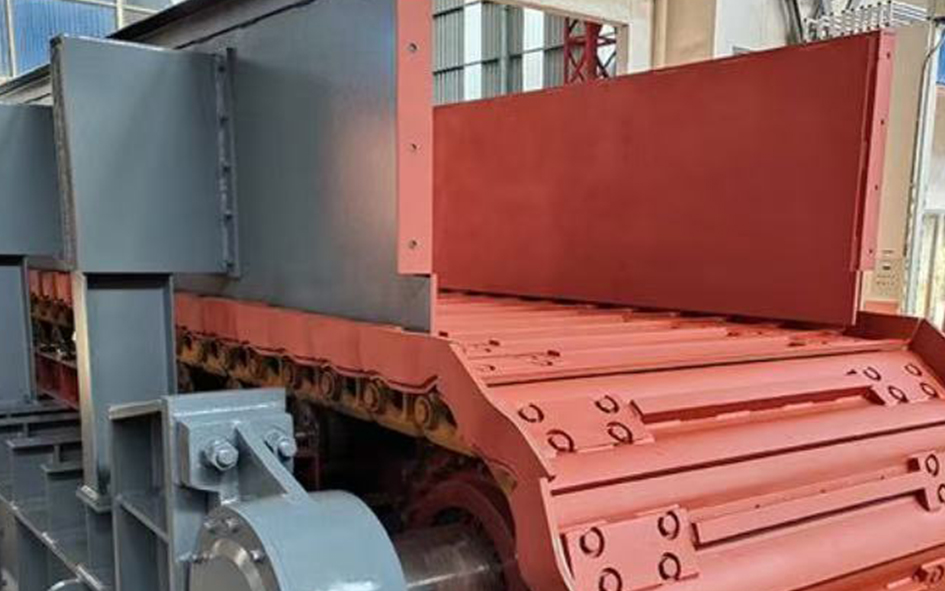
The concept of "high capacity" in the context of a plate feeder is not merely about size; it is about the synergistic integration of all components to achieve maximum material flow. A high capacity feeder features a wider and longer pan, a more powerful drive system, and a more robust support structure than standard feeders. The stroke length and frequency are optimized to move a thicker, wider layer of material with each reciprocation. The hopper above the feeder is designed to ensure a continuous, uninterrupted supply of material to match the feeder's output. The entire system is engineered to operate at the upper limits of material handling capability while maintaining the controlled, consistent feed that is essential for downstream processing efficiency.
The operating principle of the High Capacity Heavy-Duty Plate Feeder is the same as all plate feeders: a reciprocating pan moves back and forth beneath a material column, conveying material forward through a differential motion. However, the scale is dramatically different. The pan of a high capacity feeder can be several meters wide and many meters long, weighing tens of tons. The drive system must generate immense force to move this pan, loaded with hundreds of tons of material, with each stroke. The bearings, shafts, and structural components are correspondingly massive. This is equipment that must be seen to be believed, representing the pinnacle of mechanical engineering in the bulk material handling field.
The applications for high capacity heavy-duty plate feeders are found in the largest and most intensive industrial operations. In massive open-pit copper and gold mines, these feeders are the critical link between the primary crusher and the stockpile, processing run-of-mine ore at rates that stagger the imagination. In large port facilities, they unload cargo ships at breakneck speeds. In mega-cement plants, they feed the primary crushers with limestone at rates that support the production of millions of tons of cement annually. In all these applications, the high capacity plate feeder is not just a component; it is the key that unlocks the full potential of the entire production system.
Design Features for Maximum Throughput
The design of a high capacity heavy-duty plate feeder is focused on achieving maximum throughput while maintaining reliability and longevity. The feeder pan is the primary determinant of capacity, and it is designed to be as wide and long as practical for the application. The width of the pan determines the width of the material layer that can be carried, while the length determines the volume of material that can be moved with each stroke. The pan is constructed from thick, high-strength, abrasion-resistant steel, often with a base plate thickness of fifty to eighty millimeters. The pan is fitted with a comprehensive system of replaceable wear liners, typically made from high-chrome white iron or other specialized wear-resistant alloys. The liners are segmented for easy replacement and are attached with recessed, high-strength bolts.
The drive system of a high capacity feeder must generate tremendous force to move the massive pan and its load. The motor is typically a large, high-torque, slow-speed electric motor with a power rating of several hundred kilowatts. The motor is coupled to a massive reduction gearbox that provides a very high reduction ratio, often exceeding one hundred to one. The gearbox is a custom-designed unit with a high service factor to ensure a long, trouble-free life. The output of the gearbox is connected to a robust crank mechanism that converts the rotary motion into the reciprocating motion of the pan. The crankshaft and connecting rods are massive steel forgings, and the bearings are oversized to handle the extreme loads. The drive system is equipped with a soft starter or a variable frequency drive to control acceleration and reduce mechanical stress.
The support system for the pan in a high capacity feeder is designed to handle the immense weight and the dynamic forces of the reciprocating motion. The pan is supported on a series of heavy-duty Rollers mounted to the main frame. These rollers are of a very large diameter, often exceeding five hundred millimeters, to minimize rolling resistance and to distribute the load. The rollers are equipped with massive, sealed bearings that are protected from contamination by labyrinth seals. The support structure itself is a heavy fabricated steel frame, heavily reinforced to withstand the loads.
Application Scenarios
Large Open-Pit Mines: In massive open-pit copper, gold, and iron ore mines, the high capacity plate feeder is used to feed the primary gyratory crusher. The feeder handles run-of-mine ore at rates exceeding five thousand tons per hour. Its controlled feed is essential for maximizing the crusher's throughput and minimizing wear.
Port Handling Facilities: Large port facilities use high capacity plate feeders to unload bulk cargo ships. The feeders extract the material from the ship's hold or from a receiving hopper and feed it onto conveyors for transport to storage or processing. The feeders must handle a wide variety of materials, including coal, iron ore, and grain, at very high rates.
Mega-Cement Plants: The largest cement plants use high capacity plate feeders to feed limestone and other raw materials to the primary crusher. The feeder's high throughput is essential for supporting the plant's massive production capacity.
Aggregate Production: Large quarries producing aggregates for construction use high capacity plate feeders to feed the primary crusher. The feeders handle large volumes of hard, abrasive rock.
Operating Instructions
Pre-Start Inspection: A comprehensive inspection is mandatory. The operator should check the pan and wear liners for wear or damage, inspect the drive system for abnormalities, and verify all safety guards are in place. The hopper must be inspected for any bridging.
Start-Up Sequence: The feeder is started with a warning alarm. It should be started with no material on the pan. Once running smoothly, the hopper gate is opened to introduce material.
Continuous Monitoring: The operator must monitor the material flow, listen for unusual sounds, and check the motor and gearbox temperatures. Any issues must be addressed immediately.
Shutdown Procedure: The hopper gate is closed to stop the material flow. The feeder is allowed to run until the pan is empty. The motor is then stopped, and a post-operation inspection is performed.
Common Questions and Solutions
Why does the feeder occasionally jam? Jams are often caused by blockages in the hopper or the presence of tramp metal. The operator should stop the feeder and clear the blockage. A tramp metal magnet may be required.
What causes rapid wear of the wear liners? Rapid wear is caused by highly abrasive material. The operator should use a harder grade of liner material or reduce the feeder speed.
How can I improve feed rate consistency? Inconsistent feed is often caused by material segregation in the hopper. The hopper should be designed for mass flow, and wear liners should be replaced regularly.
Why is the feeder pan skewing? Skewing indicates uneven wear on the support rollers or slide bearings. The operator should inspect and replace worn components and realign the pan.
How do I maximize the feeder's capacity? To maximize capacity, the stroke length and speed should be set to the optimal values for the material. The hopper must be designed to provide a continuous supply of material. The wear liners must be in good condition to minimize friction.
In conclusion, the high capacity heavy-duty plate feeder is the ultimate solution for the most demanding high-throughput material handling applications. Its massive construction, powerful drive system, and optimized design allow it to process immense volumes of material reliably and efficiently. By understanding its design, applications, operating procedures, and common problems, plant operators can ensure that this equipment provides the high availability and throughput that are essential for the success of their operations. This feeder is not merely a machine; it is the engine that drives the world's largest industrial enterprises.
This website uses cookies to ensure you get the best experience on our website.
 Español
 Pусский
 العربية
 Tiếng Việt



 WhatsApp
 Phone: