

The industrial grade Heavy-Duty Plate Feeder represents the pinnacle of material handling engineering, designed for the most extreme and demanding applications in heavy industry. The term "industrial grade" signifies a level of construction, performance, and reliability that far exceeds standard commercial or light-duty equipment. These feeders are built to operate continuously, twenty-four hours a day, seven days a week, in the harshest environments imaginable, from deep underground mines to surface quarries and massive industrial processing plants. They are the unsung heroes of the material handling world, ensuring a steady, controlled flow of bulk materials to crushers, screens, and other processing equipment, without which entire production lines would grind to a halt.
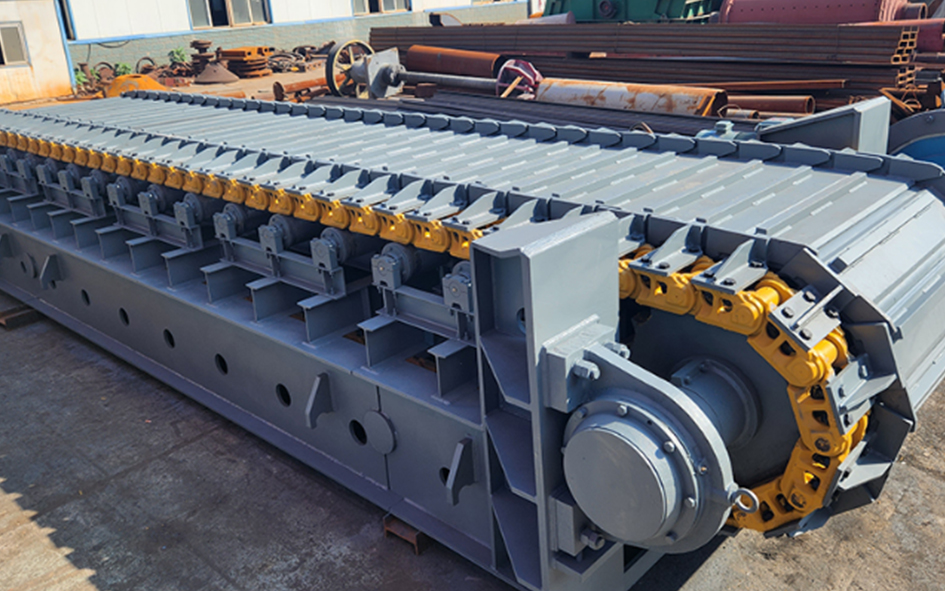
The Industrial Grade Heavy-Duty Plate Feeder distinguishes itself from lesser equipment through its uncompromising construction and the quality of its materials. Every component, from the massive main frame to the smallest bolt, is engineered for maximum durability and longevity. The frames are fabricated from the thickest available steel plates, heavily reinforced to withstand the immense stresses of supporting hundreds of tons of material. The feeder pans are constructed from the finest abrasion-resistant steels, often clad with even harder wear liners. The drive systems are oversized and overbuilt, with motors, gearboxes, and bearings designed for a service life measured in decades, not years. This is equipment that is expected to outlast the plant in which it is installed, and it is designed and built accordingly.
The operating principle of the industrial grade plate feeder is rooted in simplicity and reliability: a heavy reciprocating plate moves back and forth beneath a column of material, delivering a controlled feed. However, the implementation of this principle in an industrial grade feeder involves a level of sophistication and engineering refinement that sets it apart. The kinematics of the drive mechanism are optimized to minimize wear and maximize efficiency. The support systems are designed for frictionless movement under extreme loads. The control systems are robust and precise, allowing for fine-tuning of the feed rate to match the downstream process. This combination of heavy-duty construction and refined engineering results in a feeder that delivers consistent, reliable performance year after year, with minimal maintenance.
The applications for industrial grade heavy-duty plate feeders are found wherever large volumes of difficult-to-handle materials must be processed. They are the standard choice for primary crushing in large mines, for feeding high-capacity cement plants, and for handling the most abrasive materials in the steel and aggregates industries. Their reliability is so critical that in many operations, a spare feeder is kept on standby to ensure that production can continue without interruption in the event of a failure. The cost of downtime in these operations is so high that the investment in industrial grade equipment is not just justified; it is essential.
Construction and Engineering Excellence
The construction of an industrial grade heavy-duty plate feeder is a testament to the principles of heavy engineering. The process begins with the main frame, which is the structural backbone of the entire machine. This frame is fabricated from high-strength, low-alloy steel plates, typically with a thickness of fifty to over one hundred millimeters, depending on the size of the feeder. The plates are cut, formed, and welded together using advanced welding techniques to ensure full penetration and maximum strength. The frame is heavily reinforced with internal ribs, cross-members, and gussets, creating a rigid, box-like structure that can withstand the most extreme loads. The mounting feet are machined to precise tolerances to ensure perfect alignment with the foundation. The entire frame is stress-relieved after welding to remove any residual stresses that could cause distortion or cracking over time.
The feeder pan is the component that directly interacts with the material, and its design is critical to the feeder's performance and longevity. The pan is constructed from a base plate of heavy abrasion-resistant steel, often with a thickness of forty to seventy millimeters. This base plate provides the structural strength to support the material load. The pan is then fitted with a comprehensive system of replaceable wear liners. These liners are typically made from a high-chrome white iron, which offers outstanding resistance to abrasive and impact wear. In some of the most demanding applications, the liners may be made from a martensitic steel or even a ceramic composite material. The liners are segmented into manageable sections and are attached to the pan using recessed, high-strength bolts. The bolt holes are designed to prevent the bolts from being damaged by the sliding material. The side skirts of the pan are raised to contain the material and are also fitted with wear liners. The discharge end of the pan is equipped with a heavy wear bar that protects the edge of the pan from the impact of the discharging material.
The support system for the feeder pan is engineered for minimal friction and maximum durability. The pan is supported on a series of heavy-duty Rollers mounted to the main frame. These rollers are of a large diameter, typically three hundred to five hundred millimeters, to ensure smooth rolling action and to distribute the load over a large area. The rollers are equipped with massive, sealed, spherical roller bearings that are designed to handle both radial and thrust loads. The bearings are protected from contamination by labyrinth seals, which prevent the ingress of dust and grit. The rollers are mounted on adjustable bearing housings, allowing for precise alignment of the pan. In some of the most extreme applications, the pan is supported on heavy-duty slide bearings rather than rollers. While slide bearings offer a simpler and more robust system, they require more frequent lubrication and are more difficult to adjust.
The drive system of an industrial grade plate feeder is a masterpiece of mechanical engineering. The system typically consists of a large electric motor, a heavy-duty reduction gearbox, and a robust crank mechanism. The motor is a high-torque, low-speed design, often with a power rating of several hundred kilowatts. It is equipped with a soft starter or a variable frequency drive to control the acceleration and reduce the starting current. The gearbox is a massive, custom-designed unit that provides a substantial reduction ratio, typically in the range of twenty to one to over one hundred to one. The gearbox is designed with a high service factor to ensure a long, trouble-free life. The gearbox is flange-mounted directly to the main frame to ensure perfect alignment with the crank mechanism. The crank mechanism is constructed from massive steel forgings. The crankshaft is a large-diameter, forged steel shaft, and the connecting rods are equally robust. The bearings on the crankshaft are oversized and are designed for easy inspection and replacement. The entire drive assembly is enclosed in a protective housing and is equipped with a comprehensive lubrication system.
Application Scenarios
The industrial grade heavy-duty plate feeder is deployed in the most challenging and critical material handling applications in the world. The following scenarios represent the most common and demanding applications for this equipment.
Primary Crushing in Large Open-Pit Mines: In large open-pit mines, the primary crushing circuit is the heart of the operation. The industrial grade plate feeder is installed at the bottom of a massive receiving hopper, often with a capacity of several hundred tons. Run-of-mine ore, including blocks weighing several tons, is dumped into the hopper by large haul trucks. The plate feeder extracts this ore and feeds it at a controlled rate into the primary gyratory crusher. The feeder must be able to handle the enormous impact of the falling ore and the severe abrasion. Its controlled feed is essential for maximizing the crusher's throughput and minimizing wear.
Underground Mining Applications: In underground mining, the plate feeder is often used to feed ore from a storage bin or a loading pocket to a crusher or a skip hoist. The space constraints of an underground mine place additional demands on the feeder. It must be compact and robust, and it must be able to operate reliably in a confined, dusty, and often wet environment. The industrial grade plate feeder is designed to meet these challenges.
High-Capacity Cement Plants: In large cement plants, the plate feeder is used to feed limestone, clay, and other raw materials to the primary crusher. The materials are often hard, abrasive, and wet. The feeder's ability to handle these materials reliably is essential for the plant's operation. The industrial grade feeder is also used to feed clinker, the hard, abrasive product of the cement kiln, to the final grinding mills.
Steel Industry: In the steel industry, the plate feeder is used to handle a variety of bulk materials, including iron ore pellets, sinter, and coke. These materials are fed to blast furnaces and other processes. The feeders must operate reliably in high-temperature environments. The industrial grade plate feeder is designed to withstand these conditions.
Aggregate Production: In large quarries producing aggregates, the plate feeder is used to feed the primary crusher. The material can be very hard and abrasive. The feeder's robust construction ensures reliable operation and long service life.
Operating Instructions
Pre-Start Inspection: A thorough inspection must be performed before each start. The operator should check the feeder pan and wear liners for wear or damage, inspect the drive components for leaks or abnormalities, and verify all safety guards are in place.
Start-Up Sequence: The feeder should be started with a warning alarm, followed by engaging the motor. The feeder should start with no material on the pan. Once the feeder is running smoothly, the hopper gate can be opened to introduce material.
Monitoring During Operation: The operator must monitor the material flow, listen for unusual sounds, and check motor and gearbox temperatures. Any bridging in the hopper must be addressed immediately.
Shutdown Procedure: The hopper gate is closed to stop the material flow, and the feeder is allowed to run until the pan is empty. The motor is then stopped, and a post-operation inspection is performed.
Common Questions and Solutions
Why does the feeder occasionally jam? Jams are often caused by blockages in the hopper or the presence of tramp metal. The operator should stop the feeder and clear the blockage. A tramp metal magnet may be required.
What causes rapid wear of the wear liners? Rapid wear is caused by highly abrasive material. The operator should use a harder grade of liner material or reduce the feeder speed.
How can I improve feed rate consistency? Inconsistent feed is often caused by material segregation in the hopper. The hopper should be designed for mass flow, and wear liners should be replaced regularly.
Why is the feeder pan skewing? Skewing indicates uneven wear on the support rollers or slide bearings. The operator should inspect and replace worn components and realign the pan.
What is the proper maintenance schedule? The maintenance schedule depends on the operating conditions. The operator should follow the manufacturer's recommendations, which typically include daily lubrication, weekly inspections, and annual overhauls.
In conclusion, the industrial grade heavy-duty plate feeder is the ultimate solution for the most demanding material handling challenges in heavy industry. Its robust construction, refined engineering, and reliable operation make it an essential component in the world's largest and most critical industrial operations. By understanding its design, applications, operating procedures, and common problems, plant operators can ensure that this equipment provides decades of reliable service, contributing to the efficiency and profitability of their operations.
This website uses cookies to ensure you get the best experience on our website.
 Español
 Pусский
 العربية
 Tiếng Việt



 WhatsApp
 Phone: