

The stationary Heavy-Duty Plate Feeder is a foundational piece of equipment in the bulk material handling industry, representing the classic and most widely recognized configuration of this essential machinery. Unlike its mounted or mobile counterparts, the stationary plate feeder is designed for permanent installation at a fixed location within a processing plant. It is bolted to a dedicated concrete foundation or a structural steel support system, becoming a permanent fixture of the production line. This fixed installation provides the ultimate in stability and allows for the largest and most powerful designs, making the stationary plate feeder the preferred choice for high-capacity, continuous-duty applications in primary crushing circuits and other demanding material handling scenarios.
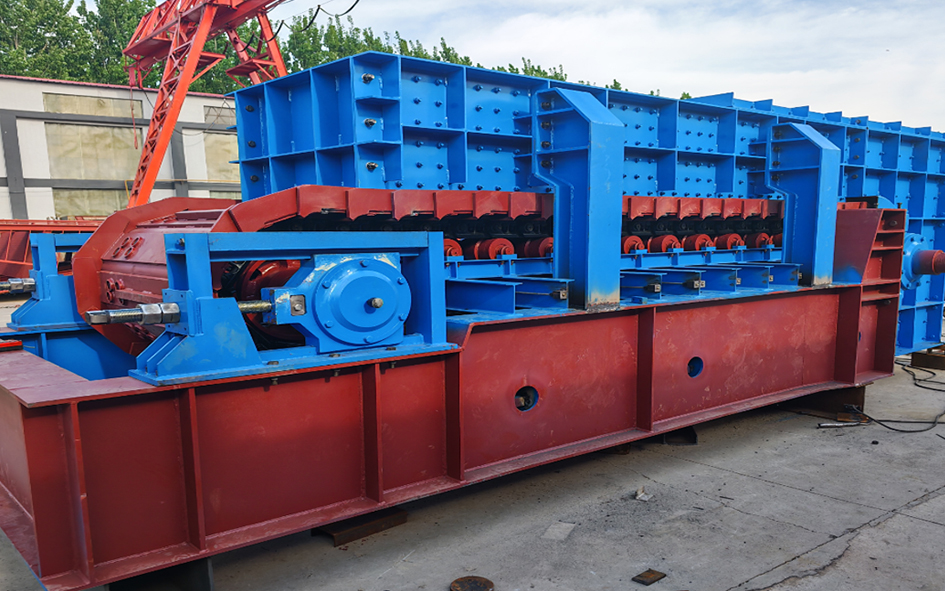
The term "stationary" emphasizes the permanence of the installation, which is a critical distinction from portable or mobile units. A stationary feeder is part of a plant's long-term infrastructure, expected to operate reliably for decades with proper maintenance. Its foundation is engineered specifically to support the weight of the feeder, the material column above it, and the dynamic forces generated during operation. This robust, fixed support allows the feeder to handle the most extreme loads, including the massive impact of large lumps of rock or ore falling from a great height, without any risk of shifting or misalignment. The stationary design also facilitates the use of larger, heavier components, such as oversized motors, massive gearboxes, and thicker feeder pans, enabling higher throughput capacities.
The fundamental operating principle of the Stationary Heavy-Duty Plate Feeder is identical to all plate feeders: a heavy, reciprocating steel plate moves back and forth beneath a column of material, delivering a controlled and consistent feed. However, the stationary configuration allows for optimization of every aspect of the design for maximum reliability and performance. The feeder is precisely aligned with the hopper above and the crusher or conveyor below, creating a seamless material flow path. The large, heavy-duty components are designed for easy access for maintenance, and the permanent installation allows for the implementation of sophisticated control systems to monitor and regulate the feeder's operation. This combination of stability, capacity, and reliability makes the stationary heavy-duty plate feeder an indispensable component in many of the world's largest industrial operations.
Construction and Design Features
The design of a stationary heavy-duty plate feeder is a masterclass in robust engineering, where every component is sized and constructed to withstand the most severe operating conditions. The main frame is the foundation of the entire machine. It is fabricated from thick, high-strength steel plates, often exceeding fifty millimeters in thickness, and is heavily reinforced with internal ribs, cross-members, and gussets. This massive structure provides the rigidity necessary to support the enormous weight of the material column in the hopper and to absorb the dynamic forces of the reciprocating pan without distortion. The frame is designed with strategically placed mounting feet that are bolted to the concrete foundation using heavy-duty anchor bolts. The alignment of these mounting points is critical, as any misalignment can lead to uneven loading and premature wear of the feeder components.
The feeder pan is the primary working component and is subjected to the most severe wear. It is constructed from heavy, abrasion-resistant steel plate, typically with a thickness of thirty to sixty millimeters, depending on the application. The pan is fitted with a comprehensive system of replaceable wear liners. These liners are usually made from high-chrome iron, a material that offers exceptional resistance to abrasive wear. The liners are segmented into easily manageable sections and are bolted to the pan, allowing for quick and efficient replacement when they become worn. The design of the liner attachment is critical; the bolts must be recessed to prevent them from being damaged by the sliding material. The pan's side skirts are raised to contain the material and are also protected by wear liners. The front edge of the pan, which discharges the material, is often reinforced with a heavy wear bar to withstand the impact of the material leaving the feeder.
The support system for the reciprocating pan in a stationary feeder is designed for maximum durability and minimal maintenance. The pan is supported on a series of heavy-duty Rollers mounted to the main frame. These rollers are large in diameter, often exceeding three hundred millimeters, and are equipped with massive, sealed bearings that are protected from contamination by labyrinth seals. The rollers are precisely aligned and are mounted on adjustable bearing housings to allow for fine-tuning of the pan's alignment. In some very heavy-duty applications, the pan may be supported on heavy-duty slide bearings rather than rollers. Slide bearings, which are essentially large wear strips made from a low-friction material, provide a simpler, more robust support system that is less susceptible to contamination. However, they generally require more frequent lubrication and are more difficult to adjust.
The drive system of a stationary heavy-duty plate feeder is a powerful and robust assembly. It typically consists of a large electric motor, a heavy-duty reduction gearbox, and a robust crank mechanism. The motor is often a high-torque, slow-speed design that is capable of starting under load. The gearbox is a massive unit, often weighing several tons, that provides a substantial reduction ratio to convert the high-speed rotation of the motor into the low-speed, high-torque output needed to move the heavily loaded pan. The gearbox is typically flange-mounted directly to the main frame to ensure perfect alignment. The crank mechanism, which converts the rotary motion into the reciprocating motion of the pan, is constructed from massive steel components. The crankshaft is a large, forged steel shaft, and the connecting rods are equally robust. The bearings on the crankshaft are oversized and are designed for easy inspection and replacement. The entire drive assembly is often enclosed in a protective housing to prevent accidental contact and to contain any lubricant leaks.
Application Scenarios
The stationary heavy-duty plate feeder is deployed in a wide variety of applications where its capacity, reliability, and durability are essential. It is the feeder of choice for high-capacity, continuous-duty operations that demand a consistent, controlled feed of the most difficult materials. The following scenarios represent the most common and demanding applications for this equipment.
Primary Crushing in Hard Rock Mining: The most demanding application for a stationary plate feeder is in the primary crushing circuit of a hard rock mine. In this scenario, the feeder is installed at the bottom of a massive receiving hopper. Run-of-mine ore, which may include blocks weighing several tons, is dumped into the hopper by large haul trucks. The plate feeder extracts this ore from the hopper and feeds it at a controlled rate into the primary gyratory or jaw crusher. The feeder must be able to withstand the enormous impact of the ore falling from a height and resist the severe abrasion from the hard, sharp rock. Its consistent, controlled feed is essential for maximizing the crusher's throughput and minimizing wear on the crushing components.
Iron Ore Processing: Iron ore processing plants rely heavily on stationary plate feeders. The ore, which is often very dense and abrasive, is fed from storage bins to primary and secondary crushers. The plate feeder's ability to handle heavy, lumpy material and to provide a consistent feed is critical for the efficient operation of the entire processing plant. In many iron ore operations, the ore is wet and sticky, which can be a challenge for other feeder types. The positive displacement action of the plate feeder ensures that the material is forced forward, even when it is wet, maintaining a consistent feed to the downstream equipment.
Copper and Gold Mining: The mining of base and precious metals, such as copper and gold, also relies heavily on stationary plate feeders. The ore in these operations is often very hard and abrasive, and it is extracted in large volumes. Plate feeders are used in the primary crushing circuits of these mines to provide a controlled feed to the crushers. The feeder's durability and reliability are essential for maintaining the high availability that is required in modern mining operations, where any downtime can result in significant production losses.
Cement Production: In the cement industry, stationary plate feeders are used to handle a variety of raw materials, including limestone, clay, shale, and iron ore. These materials are often extracted from quarries as large, lumpy, and sometimes wet materials. The feeders are used in the primary crushing stage to regulate the feed to the crusher. They are also used later in the process to feed clinker, the hard, abrasive intermediate product of cement manufacturing, to the final grinding mills. The plate feeder's ability to withstand impact and abrasion and to handle sticky materials makes it a reliable choice for the cement industry.
Aggregate Production: Quarries producing crushed stone and sand and gravel for construction purposes also use stationary plate feeders. The feeders are used to extract material from the primary surge pile or hopper and feed it to the primary crusher. The material can vary from soft limestone to hard granite, and the feeder must be able to handle this variability. The controlled feed provided by the plate feeder is essential for maximizing the efficiency of the crushing circuit and for producing a consistent product.
Power Generation: Coal-fired power plants use stationary plate feeders to feed coal from storage silos to the pulverizers that grind the coal into a fine powder for combustion. The coal can be highly abrasive and can contain large lumps. The plate feeder's reliable, controlled feed is essential for maintaining a consistent supply of fuel to the boilers, ensuring stable power generation.
Operating Instructions
The operation of a stationary heavy-duty plate feeder requires a systematic approach to ensure safety, maximize equipment life, and maintain production efficiency. The following guidelines outline the critical steps involved in daily operation.
Pre-Start Inspection and Preparation: Before the feeder is started, a comprehensive inspection is mandatory. The operator should visually inspect the entire machine. The feeder pan and its wear liners must be checked for excessive wear, cracking, or damage. Loose bolts should be identified and tightened. The condition of the drive components, including the motor, gearbox, and crank mechanism, should be assessed for any signs of oil leaks, overheating, or unusual wear. The lubrication levels at all critical points must be checked, and any required grease fittings should be serviced. The hopper above the feeder must be inspected for any bridging or arching of material. All safety guards, emergency stop buttons, and interlocks must be verified to be in place and functioning correctly.
Start-Up Procedure: The start-up of the plate feeder is a sequential process. The first step is to sound a warning alarm for a period to alert all personnel that the machine is about to start. After the alarm, the operator engages the drive motor. The feeder should be started without a load of material on the pan to allow the drive train to accelerate to full speed under minimal stress. Once the feeder has reached its full operating speed and is running smoothly, the gate on the hopper can be opened to allow material to flow onto the feeder pan. The feed rate is set by adjusting the stroke length. The operator should increase the stroke gradually, observing the material discharge, until the desired feed rate is achieved.
Continuous Monitoring: During operation, the operator must maintain constant vigilance. The flow of material onto the feeder pan and off the discharge end must be consistent. Any bridging in the hopper must be addressed immediately. The operator should listen for any unusual sounds, such as grinding, knocking, or excessive vibration, which can indicate mechanical problems. The motor and gearbox temperatures should be monitored regularly, and any significant rise in temperature should be investigated. The condition of the wear liners should be observed, and any signs of rapid wear should be noted.
Shutdown Procedure: The shutdown of the feeder must be as controlled as the start-up. The first step is to close the gate on the hopper to stop the flow of material. The feeder should be allowed to continue running until the pan is completely empty of material. This prevents material from packing on the pan. Once the pan is empty, the operator stops the drive motor. A post-operation inspection is then conducted, checking for any signs of damage or wear. The machine should be cleaned of any accumulated dust and debris, and lubrication points should be inspected and serviced as needed.
Common Questions and Solutions
Why does the feeder occasionally jam or stall? A jam or stall is often caused by a blockage in the hopper that causes a sudden surge of material, or by the presence of tramp metal or other foreign objects in the feed. The operator should stop the feeder immediately and clear the blockage. The hopper design should be evaluated to prevent bridging, and a tramp metal magnet may be needed.
What causes the wear liners to wear out prematurely? Premature wear is typically caused by highly abrasive material, an incorrect liner material, or a feeder speed that is too high. The operator should consider using a harder grade of liner, reducing the feeder speed, or adjusting the stroke length to minimize material movement.
How can I improve the consistency of the feed rate? Inconsistent feed is often the result of material segregation in the hopper. The hopper should be designed for mass flow to ensure uniform material flow. Regular inspection and replacement of wear liners is also essential, as worn liners can change the effective stroke length.
Why is the feeder pan skewing or misaligned? Skewing is a sign of uneven wear on the support rollers or slide bearings. The operator should inspect and replace worn components and ensure the pan is properly aligned on its support system.
How often should the lubricant be changed? The change interval depends on the operating conditions and the type of lubricant used. The operator should follow the manufacturer's recommendations, which are typically based on operating hours and ambient temperature.
In conclusion, the stationary heavy-duty plate feeder is the workhorse of the primary crushing circuit and many other heavy-duty material handling applications. Its robust design, massive construction, and reliable operation make it an essential component in the world's largest and most demanding industrial operations. By understanding the feeder's design, its various applications, the correct operating procedures, and the solutions to common problems, plant operators and maintenance personnel can ensure that this equipment provides decades of reliable service, contributing to the overall efficiency and profitability of the mining and processing operation.
This website uses cookies to ensure you get the best experience on our website.
 Español
 Pусский
 العربية
 Tiếng Việt



 WhatsApp
 Phone: