

The mounted Heavy-Duty Plate Feeder represents a specialized evolution of the traditional plate feeder, distinguished by its integration into a larger material handling system through a specific mounting configuration. Unlike standalone feeders that rest on their own foundations, a mounted plate feeder is physically attached to and supported by a structural framework, a mobile chassis, or another piece of processing equipment. This mounting arrangement offers distinct advantages in terms of portability, space utilization, and system integration. The "mounted" designation indicates that the feeder is not a freestanding unit but is designed to be a permanent or semi-permanent part of a larger assembly, often being skid-mounted, trailer-mounted, or directly bolted to a crusher or screening plant structure.
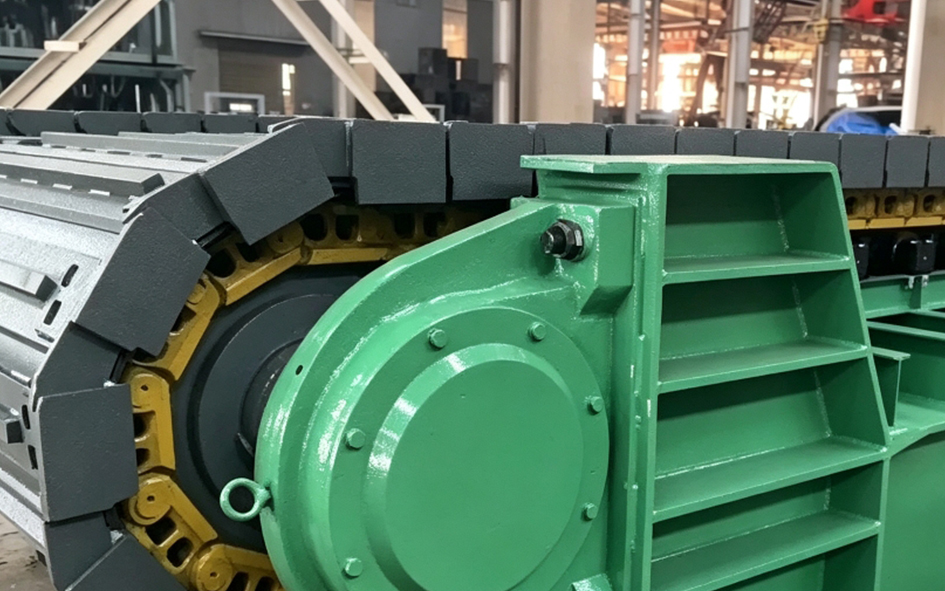
The fundamental operating principle of a Mounted Heavy-Duty Plate Feeder remains identical to that of its stationary counterpart: a heavy reciprocating plate moves back and forth beneath a column of material, delivering a controlled and consistent feed to downstream equipment. However, the mounted configuration introduces new design considerations. The support structure must be engineered to accommodate the dynamic loads of the reciprocating feeder while also serving its primary function of supporting the entire assembly. The mounting points must be robust enough to transfer the feeder's forces into the structure without causing distortion or fatigue. In mobile applications, such as track-mounted or wheel-mounted crushing plants, the feeder must also be designed to withstand the additional stresses of transportation and operation on uneven terrain.
The versatility of the mounted heavy-duty plate feeder has made it a popular choice in industries where mobility or space constraints are paramount. In quarrying and mining, tracked and wheeled crushing plants are increasingly common, allowing operators to move the processing equipment directly to the material source. In these applications, a mounted plate feeder is the critical interface between the excavator or wheel loader feeding the plant and the primary crusher. In stationary plants, mounting the feeder directly to the crusher structure can reduce the overall footprint of the system and simplify the material flow path, eliminating the need for a separate foundation and associated conveyors. This integration can lead to significant cost savings and operational efficiencies.
Construction and Design Features
The design of a mounted heavy-duty plate feeder is a study in robust engineering, where every component is optimized for the dual demands of reliable material feeding and the structural requirements of the mounting arrangement. The main frame, which in a stationary feeder is a heavy fabricated base, is in a mounted feeder both a structural support and the interface between the feeder and the mounting structure. This frame is typically fabricated from thick, high-strength steel plates and is heavily reinforced with internal ribs and gussets. The mounting points are specially designed to distribute the loads evenly into the supporting structure, preventing stress concentrations that could lead to cracking or fatigue.
The feeder pan itself is the primary wear component and is constructed from heavy abrasion-resistant steel. In typical designs, the pan is lined with replaceable wear liners, usually made from high-chrome iron or manganese steel, which are bolted to the pan. These liners are segmented to facilitate replacement; individual segments can be changed without removing the entire pan. The thickness of the base pan and the liners is determined by the specific application. In a primary crusher application where the feeder handles large, heavy lumps of rock, the pan and liners will be substantially thicker than in a secondary application handling smaller material. The side skirts of the pan are raised to contain the material and are also fitted with wear liners.
The support system for the reciprocating pan in a mounted feeder is designed for heavy loads and long service life. The pan is supported on a series of heavy-duty Rollers or slide bearings mounted to the main frame. In roller-type designs, the rollers are large-diameter and are equipped with sealed, heavy-duty bearings to prevent contamination by dust and grit. These rollers are precisely aligned to ensure smooth, friction-free movement of the pan. In slide-bearing designs, the pan rides on hardened steel wear strips. While this design is simpler, it typically requires more frequent lubrication and inspection. Regardless of the support type, the system is designed to handle the high compressive loads generated by the material column and the dynamic forces of the reciprocating motion.
The drive system of a mounted heavy-duty plate feeder is another area of intense engineering focus. The motor, gearbox, and crank mechanism must all be compact and robust, often packaged into a space-efficient assembly. The drive system is typically flange-mounted or directly bolted to the main frame to minimize the overall dimensions. The motor is usually a high-torque, low-speed design capable of starting under load. The gearbox is a heavy-duty reduction unit that provides the necessary torque multiplication. The crank mechanism converts the rotary motion into the reciprocating motion of the pan. The connecting rods are massive steel forgings, and the bearings are oversized to handle the extreme loads. Many designs incorporate a shear pin or a torque-limiting coupling to protect the drive system in the event of an overload, such as a jam caused by tramp metal or a sudden surge of material.
Application Scenarios
The mounted heavy-duty plate feeder is deployed in a wide range of applications where its integration into a larger system offers distinct advantages. Its adaptability to both mobile and stationary installations makes it a versatile solution for many material handling challenges. The specific mounting configuration—whether skid-mounted, trailer-mounted, track-mounted, or directly bolted to a crusher—is chosen to match the operational requirements of the application.
Mobile Crushing Plants: One of the most prominent applications is in mobile track-mounted or wheel-mounted crushing plants. In the quarrying and mining industries, mobile plants have become the standard for many operations, allowing operators to move the crusher directly to the face of the quarry or mine. This eliminates the need for haul trucks to transport material to a stationary plant, significantly reducing operating costs. In these plants, the mounted plate feeder is installed at the top of the plant structure, directly beneath the feed hopper. The feeder extracts the material from the hopper and feeds it at a controlled rate into the primary jaw or impact crusher mounted below. The entire assembly is mounted on a tracked or wheeled chassis, allowing it to be moved easily around the site. The feeder's robust construction ensures it can withstand the rigors of both operation and transport.
Mobile Screening Plants: In addition to crushing plants, mounted plate feeders are also used in mobile screening plants. These plants are designed to screen material into different size fractions and may be used in conjunction with a crusher or as a standalone unit. In a screening plant, the mounted feeder is used to feed the raw material to the primary screen. The feeder's controlled discharge ensures an even layer of material across the screen deck, maximizing the screen's efficiency and throughput.
Portable Conveyor Systems: Another application is in portable conveyor systems, where a mounted plate feeder is used to control the discharge of material from a stockpile into a portable conveyor. This is common in construction and demolition recycling, sand and gravel operations, and in various bulk material handling applications. The feeder is mounted on a portable frame that can be moved by a skid steer or a forklift. This arrangement allows operators to quickly set up a material handling system and then move it to another location when the job is finished.
Integrated Stationary Plants: In stationary processing plants, a mounted plate feeder is often integrated directly into the structure of the crusher or screen. This is done to reduce the overall footprint of the system and to simplify the material flow path. By eliminating the need for a separate feeder foundation and an additional conveyor to transfer material from the feeder to the crusher, this integrated approach can result in significant capital and operational cost savings. The feeder is directly bolted to the crusher frame, ensuring perfect alignment between the feeder discharge and the crusher feed opening. This close integration also minimizes the transfer height, reducing dust generation and material degradation.
Recycling Operations: The recycling industry, particularly in the processing of construction and demolition waste, is another major user of mounted plate feeders. These operations often require mobility to process materials at various demolition sites. A mobile plant with a mounted plate feeder can be moved to a site, process the waste material, and then be moved to the next site. The feeder's ability to handle a wide variety of materials, including reinforced concrete, asphalt, and mixed demolition debris, makes it an essential component in these plants.
Operating Instructions
The operation of a mounted heavy-duty plate feeder follows the same general principles as a stationary feeder, but with some important considerations related to the mounting arrangement. Whether the feeder is part of a mobile plant or an integrated stationary system, the operator must be thoroughly familiar with the equipment and its specific operating procedures.
Pre-Operational Inspection: Before starting the feeder, a thorough inspection is required. The operator should visually inspect the entire machine, paying particular attention to the mounting points. All bolts and fasteners connecting the feeder to its support structure must be secure. In mobile applications, the operator must also inspect the chassis and any towing or transport systems to ensure they are in good condition. The wear liners on the pan and side skirts should be checked for wear, and any loose bolts should be tightened. The condition of the drive components—motor, gearbox, and crank mechanism—must be assessed. Lubrication levels should be checked and any required greasing performed. The hopper above the feeder should be inspected for any material blockages. All safety guards and emergency stops must be verified to be in place and functional.
Start-Up Procedure: The start-up sequence is critical for reducing stress on the equipment. The operator must first sound a warning alarm to alert personnel in the area. After the alarm, the drive motor is engaged. The feeder should always be started with no material on the pan. This allows the drive train to reach full speed under a low load. Once the feeder is running smoothly, the gate on the feed hopper can be opened to allow material to flow onto the pan. The feed rate is set by adjusting the stroke length, a process that should be done gradually while observing the material flow.
Monitoring During Operation: Continuous monitoring is essential. The operator must observe the material flow to ensure it is consistent and free of blockages. Any bridging in the hopper must be addressed immediately. The operator should listen for any unusual sounds from the feeder and monitor the motor and gearbox temperatures. The vibration levels of the feeder and its mounting structure should also be observed. Excessive vibration can indicate a problem with the feeder or a loose mounting point. In mobile plants, the operator must also be aware of the terrain; if the plant is on uneven ground, it may affect the feeder's performance and should be addressed by leveling the plant.
Shutdown Procedure: The shutdown of the feeder should be a controlled process. The hopper gate is closed first to stop the flow of material. The feeder is allowed to continue running until the pan is completely empty. This prevents material from packing on the pan, which could cause problems during the next start-up. Once the pan is empty, the drive motor is stopped. The operator should then perform a post-operation inspection, checking for any signs of damage or abnormal wear. The machine and its mounting points should be cleaned of any accumulated dust and debris. Lubrication points should be checked and serviced as needed.
Common Questions and Solutions
The operation of a mounted heavy-duty plate feeder is subject to a number of common issues. Understanding these problems and their solutions is essential for minimizing downtime and maximizing productivity.
Why does the feeder vibrate excessively during operation? Excessive vibration is a serious concern. The most likely cause is a loose mounting point. The bolts connecting the feeder to its support structure should be checked and tightened to the specified torque. In mobile plants, uneven ground can cause the chassis to twist, which can stress the feeder and cause vibration. The plant should be leveled properly before operation. Other causes include a worn bearing in the drive mechanism or an unbalanced pan due to uneven material loading. If the vibration is severe, the feeder should be stopped immediately and inspected.
How do I transport a mobile plant with a mounted plate feeder safely? Transporting a mobile plant requires special care to prevent damage to the feeder and its mounting. Before transport, the feeder should be secured. Some designs include transport locks that physically restrain the feeder pan to prevent it from moving during transport. The operator should also ensure that the hopper is empty and that any loose material is cleared from the pan. The plant's transport speed should be kept within the manufacturer's recommendations, and the plant should be towed only on smooth, level roads. Special care should be taken when turning to prevent the plant from tipping.
What causes the feeder pan to skew or become misaligned? The feeder pan must travel in a straight, parallel path. If it begins to skew, it indicates a problem with the support rollers or the slide bearings. Worn rollers or bearings can cause the pan to drift. The drive mechanism may also be out of adjustment, causing uneven force on the pan. If the pan is skewing, the feeder should be stopped and inspected. The support system should be adjusted or components replaced as needed to restore proper alignment.
Why does material build up on the pan, even when the feeder is operating? Material build-up is often caused by excessive moisture or fines in the feed material. If the material is sticky, it can adhere to the pan and accumulate over time. The operator may need to reduce the stroke length to allow a thinner layer of material to be carried. Some plants use a vibrating mechanism or a scraper to clean the pan continuously. The moisture content of the feed material should also be monitored; if it is consistently high, a drying or pre-screening step may be necessary.
How do I adjust the feed rate for different materials? The feed rate is controlled by adjusting the stroke length of the reciprocating pan. This is typically done by changing the position of the crank pin on the crankshaft. Increasing the throw of the crank increases the stroke length and the feed rate; decreasing the throw reduces the feed rate. The operator should refer to the machine's manual for the proper procedure. In mobile plants with a variable speed drive, the feed rate can also be adjusted by changing the motor speed. However, the stroke length adjustment is the primary method for controlling the feed rate.
In conclusion, the mounted heavy-duty plate feeder is a versatile and robust solution for material feeding in a wide range of applications. Its integration into mobile and stationary systems offers distinct advantages in terms of mobility, space utilization, and system cost. By understanding the feeder's design, its various applications, the correct operating procedures, and the solutions to common problems, plant operators and maintenance personnel can ensure that this equipment provides reliable, efficient service for many years.
This website uses cookies to ensure you get the best experience on our website.
 Español
 Pусский
 العربية
 Tiếng Việt



 WhatsApp
 Phone: