

Custom Electric Flatbed Trucks: A Comprehensive Technical and Operational Guide
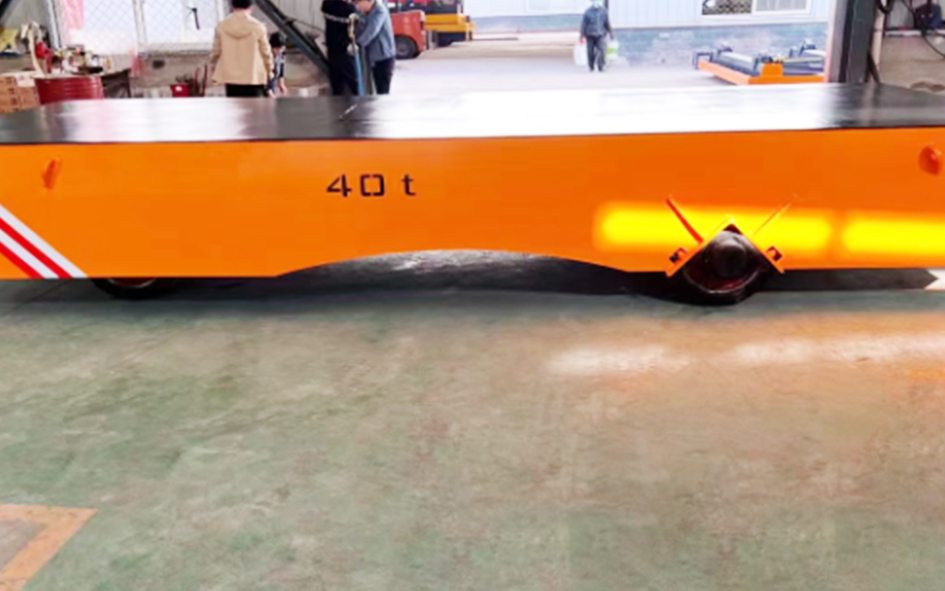
Custom electric flatbed trucks represent the convergence of versatility, sustainability, and engineering precision in modern material handling. Unlike standard off-the-shelf solutions, these vehicles are designed and manufactured to meet the specific operational demands of diverse industries, from heavy manufacturing and logistics to specialized sectors such as aerospace and pharmaceuticals. The essence of a custom electric flatbed truck lies in its adaptability: every aspect, from load capacity and platform dimensions to power systems and control interfaces, can be tailored to optimize workflow efficiency and safety in a given environment.
Product Overview and Core Capabilities
A custom electric flatbed truck is fundamentally a battery-powered, wheeled transport vehicle featuring an open, flat platform for cargo. Its primary function is the short-to-medium distance transfer of heavy or bulky items that are difficult to move manually or with standard forklifts. What distinguishes these vehicles from their standard counterparts is the degree of customization available. They can be engineered to navigate tight workshop spaces, operate on uneven outdoor terrain, or integrate with automated production lines.
The core of their capability lies in a robust electric drivetrain. Typically, these trucks are powered by high-capacity industrial batteries—either maintenance-free lead-acid or more advanced lithium-ion units—that provide several hours of continuous operation on a single charge. For example, a typical custom truck might be equipped with a 48V or 72V battery system paired with AC or DC motors ranging from 1.5 kW to over 10 kW, depending on the load and performance requirements. This electric power source offers significant advantages over internal combustion engines, including zero emissions, quiet operation, lower vibration, and reduced long-term maintenance costs.
Key Specifications and Customization Parameters
The true value of a custom electric flatbed truck is realized through its parametric flexibility. Manufacturers often allow for deep customization across several critical dimensions. The primary specification is the rated load capacity, which can range dramatically from 2 tons for light industrial tasks to 20 tons, 50 tons, or even up to 500 tons for heavy engineering applications. This capacity is directly tied to the structural integrity of the chassis, which is typically fabricated from high-tensile steel using processes like CNC cutting and robotic welding to ensure durability under stress.
Beyond weight, the physical dimensions of the truck are fully customizable. The platform size, or table size, can be adjusted in length, width, and height to accommodate specific cargo profiles, from standard pallets to extra-long steel pipes or oversized machinery components. For instance, a manufacturer might request a 3600mm by 2000mm platform for a 10-ton model, scaling up to a 10,000mm by 3000mm platform for a 150-ton variant. The ground clearance and wheelbase are also engineered based on the operating environment, such as adapting to rough terrain or low-profile loading docks.
The choice of power supply and control system adds another layer of customization. While battery power is the most flexible option for trackless operation, providing independent movement across a facility, other options exist for specific applications. Cable drum systems supply continuous power for fixed-route, high-duty-cycle workshops, and low-voltage rail power systems offer a solution for environments where battery charging is undesirable. Control is equally versatile, ranging from simple onboard handles to sophisticated wireless remote controls with a range of over 50 meters, and even PLC-based systems for automated routes with features like "soft start/soft stop" to prevent load shifting.
Application Scenarios Across Industries
Custom electric flatbed trucks serve as the "heavy-duty flexible hand" in numerous industrial settings, solving critical material transfer bottlenecks. Their adaptability makes them indispensable across a wide spectrum of use cases. In metallurgy and heavy industry, they are used for the precise transfer of extremely heavy loads such as steel coils, large mechanical components, and molds. A 20-ton model, for example, can replace inefficient forklift routes or hazardous manual handling, transporting these items between production stations or across workshops with ease.
The automotive and aerospace sectors benefit from their use in flexible manufacturing systems. Trackless, battery-powered variants allow for just-in-time (JIT) delivery of components like battery packs, body panels, or even aircraft sections and engines directly to assembly lines. In shipbuilding, these trucks facilitate the movement of large hull plates and sections within fabrication halls, where their ability to navigate around obstacles with omnidirectional steering is crucial. Furthermore, in logistics and warehousing, they streamline operations by moving heavy pallets and goods between storage and shipping areas, with customization for specific environments like cleanrooms in food and pharmaceutical applications where contamination prevention is vital.
Operational Guidelines and Usage Instructions
Effective operation of a custom electric flatbed truck hinges on adherence to safety protocols and an understanding of its unique characteristics. A thorough pre-operation inspection is the first step. Operators should verify the battery charge level, inspect the truck for any damage, and ensure the travel path is clear of debris and obstacles. Safety features, including emergency stop buttons, warning lights, and audible alarms, should be tested to confirm they are functional.
Safe driving practices are paramount. The center of gravity of any load must be aligned with the truck's load-bearing center to prevent tip-overs, particularly when transporting long or oddly shaped items. For example, when carrying cylindrical components like steel pipes, V-shaped anti-slip pads and side blocks should be used to prevent rolling, and the cargo must be securely fixed with high-strength straps at multiple points. Speed control is critical; normal travel speed should be limited to around 3 km/h, with reduced speeds for starting, braking, and cornering to avoid inertia-induced sliding. Operators should also be aware that objects on the flatbed can block rearward visibility, necessitating the use of rearview cameras or designated guides when maneuvering in tight spaces.
Frequently Asked Questions
What is the maximum load capacity for a custom electric flatbed truck?
The load capacity is highly customizable and can range from 2 tons to well over 500 tons, depending on the design and intended application. The size of the truck, its chassis construction, and its power system are all engineered to support the specified load.
How long does the battery last on a single charge?
The operational time varies based on the battery type (lead-acid or lithium-ion), capacity (measured in ampere-hours), and the truck's load and duty cycle. A typical truck with a 180Ah to 400Ah battery can operate continuously for 3 to 6 hours under a full load, with travel distances of up to 7 km per charge.
What are the primary types of power supply available?
Manufacturers offer a range of power supply options to suit different needs. The most common are battery-powered systems for maximum flexibility, cable drum systems for continuous power on fixed routes, and low-voltage rail power for specific applications requiring a track-based solution.
Can these trucks navigate tight spaces?
Yes, many custom electric flatbed trucks, especially trackless models, are designed for superior maneuverability. They can feature differential drive or hydraulic steering systems that allow for 360-degree in-place rotation, right-angle turns, and operation in narrow factory aisles. The turning radius is a key design parameter that can be optimized for a given facility layout.
Are additional safety features available?
Beyond standard emergency stops and alarms, trucks can be equipped with advanced safety systems. These include laser radar obstacle detection for automatic stopping, electromagnetic brakes for secure parking in the event of a power failure, and limit switches to define safe travel zones.
This website uses cookies to ensure you get the best experience on our website.
 Español
 Pусский
 العربية
 Tiếng Việt



 WhatsApp
 Phone: