

Idler Rollers are fundamental cylindrical components used extensively in material handling systems, particularly Belt Conveyors, to support and guide moving belts while minimizing friction and wear. Unlike drive rollers that receive power directly from a motor, Idler Rollers do not have their own power source but rotate freely as the belt moves over them, reducing the resistance encountered by the belt as it transports materials from one location to another. Their role is essential for maintaining the smooth operation of conveyor systems across industries ranging from mining and quarrying to logistics and manufacturing.
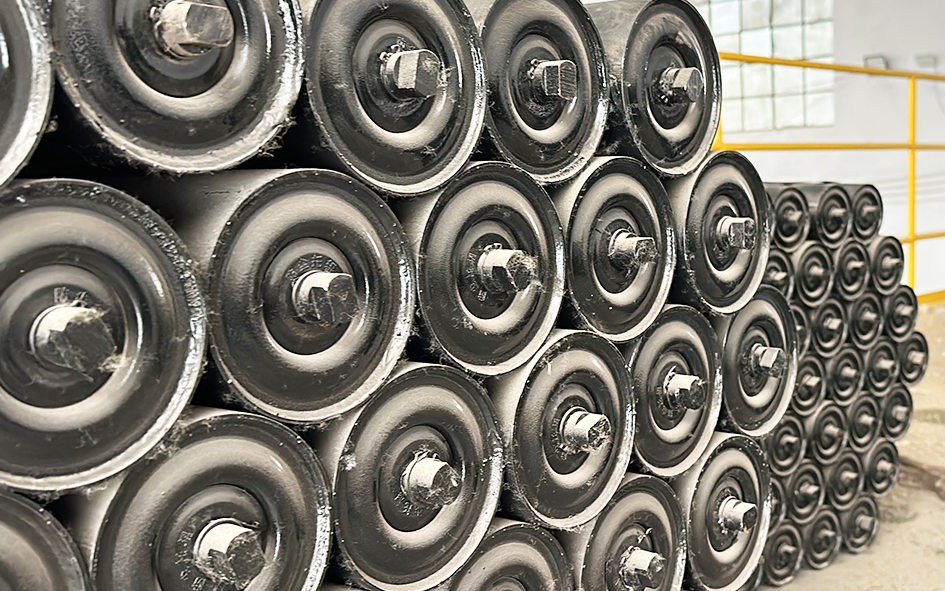
The basic construction of an idler roller consists of a roller tube, a shaft running through its center, bearings housed at both ends, sealing systems to protect the bearings, and end caps. The roller tube is typically made from carbon steel, though rubber-covered or composite tubes are also available for specialized applications. The shaft, usually made from cold drawn steel with machined ends, provides structural support and allows the roller to be mounted securely to the conveyor frame. Bearings, often deep groove ball bearings or sealed bearing sets, enable the roller to spin freely while supporting the weight of the belt and the materials being transported. Sealing systems—ranging from labyrinth seals to contact seals or combined structures—are essential for preventing dust, moisture, and contaminants from entering the bearings and causing premature failure.
Idler rollers are classified by factors including roll diameter, type of service, operating conditions, belt load, and belt speed. Their load-carrying capacity and calculated bearing life determine their rating, with different classification systems used in various regions. The importance of consistent standards across all idlers on a given conveyor cannot be overstated, as mismatched components can lead to uneven wear, belt tracking issues, and reduced system reliability.
Types of Idler Rollers
Idler rollers are available in a variety of configurations, each designed to serve a specific function within a conveyor system. The selection of the appropriate type is critical for ensuring efficient operation and minimizing downtime.
Carrying idlers, also known as load idlers, are installed on the upper side of the conveyor to support the belt while it carries material. They are available in flat or troughed designs. Flat carrying idlers consist of a single horizontal roll and are used on flat belts, such as those found in belt feeders. Troughed idlers, which are more common, typically consist of three rolls: one horizontal center roll with inclined wing rolls on either side. The angle of the inclined rollers from horizontal is called the trough angle, and it helps to contain bulk materials on the belt, preventing spillage. Some troughed idler sets are offset designs, where the center roll has a different centerline than the wing rollers, reducing overall height—a feature popular in underground mining applications where headroom is limited.
Return idlers support the belt on its underside as it travels back to the loading zone after discharging its cargo. These typically consist of a single horizontal roll hung from the underside of the conveyor stringers. However, V-return idlers, incorporating two smaller rolls set at an angle, are sometimes used to improve belt tracking and reduce belt wandering.
Impact idlers are specially designed to absorb the shock of falling materials at loading points. They are coated with high-strength, shock-absorbing materials, often rubber, to minimize structural deformation from weight transfer shocks and protect both the belt and the idler structure from damage. These idlers are typically installed at the tail frame or transfer points where material is dropped onto the conveyor.
Training idlers, also called aligning idlers, are used to correct belt misalignment and prevent the belt from drifting off-center. When a belt drifts, it can cause wear on frames, spillage of materials, and operational frustration. Tapered rollers, which are wider on one end and narrower on the other, gently guide the belt back to center. Some training idlers are mounted in self-aligning frames that pivot with the belt, allowing the rollers to follow the belt's movement automatically.
Specialized idlers include rubber-coated rollers, which provide cushioning, improve grip, and reduce noise, making them useful when the belt is slick from water or oil or in recycling plants where noise reduction is beneficial. Rubber disc return rollers feature spaced discs along the shaft that break material buildup off the return belt, reducing the need for manual scraping, particularly in applications involving sticky materials like clay or coal. Steel screw idlers, with spiral-grooved surfaces on the return side, push debris outward while also guiding the belt toward the center, performing both cleaning and tracking functions.
Application Scenarios
Idler rollers are indispensable in a wide range of industries where bulk materials or goods must be transported efficiently over distance.
In mining and quarrying operations, idler rollers support heavy-duty belt conveyors that transport ore, coal, gravel, and other extracted materials from the extraction site to processing facilities. These environments are demanding, with abrasive materials, heavy loads, and exposure to dust and moisture. Heavy-duty steel rollers with reinforced shafts and sealed bearings are typically used to withstand these harsh conditions. In thermal power plants, coal transport systems rely on conveyor belts supported by idlers; any failure can cause significant delays affecting the entire plant's operations.
Ports and shipping terminals use idler rollers on conveyors that handle bulk cargo such as grain, fertilizer, and mineral ores during loading and unloading operations. The rollers must be durable enough to handle high throughput while maintaining reliable performance in coastal environments where corrosion is a concern.
Cement plants and recycling facilities rely on idler rollers to support conveyor systems that move raw materials, finished products, and waste streams. Rubber-coated rollers and disc return rollers are particularly valuable in these settings to reduce noise and prevent material buildup on return belts.
In manufacturing and warehousing, idler rollers support lighter-duty conveyors used in assembly lines, packaging operations, and distribution centers. Here, the focus is often on smooth operation, quiet performance, and minimal maintenance requirements, with plastic or rubber-coated rollers often preferred to protect products and reduce noise.
Agricultural operations also utilize idler rollers in grain handling systems, where conveyors transport harvested crops from fields to storage or processing facilities. The rollers must be sealed against dust and capable of operating reliably in varying weather conditions.
Usage Instructions and Maintenance
Proper installation, operation, and maintenance of idler rollers are essential for maximizing their service life and ensuring the reliable operation of the conveyor system.
Installation requires careful attention to alignment and spacing. Idlers must be mounted squarely on the conveyor frame, with the roller axis perpendicular to the belt travel direction. Improper alignment can cause the belt to track off-center, leading to uneven wear on both the belt and the idlers. The spacing between carrying idlers should be appropriate for the belt width and material weight to prevent belt sagging and spillage. For return idlers, spacing can typically be greater since the empty belt is lighter.
Regular inspection is a cornerstone of effective maintenance. Idler rollers should be visually inspected for poor rotation, wear, physical damage, and signs of material buildup. A seized roller can cause significant damage to the belt edge in a short period, and replacing a worn roller is far more cost-effective than replacing a damaged belt. Inspection frequency depends on operating conditions; in abrasive environments, daily checks may be necessary.
Many modern idler rollers are sealed for life and require no lubrication. However, regreasable designs exist, and these should be greased at regular intervals using compatible grease. For Self-aligning Idlers, pivot-point lubrication may be required even when the main rolls are sealed for life. The sealing system is critical for bearing longevity; moisture and dirt ingress that degrade lubricating grease are among the primary causes of bearing failure. Labyrinth seals, combined with high-quality grease, provide effective protection in most conditions.
Cleaning is essential in applications with sticky materials or carryback. Rubber disc return rollers help reduce material buildup, but even these require occasional cleaning as the discs can pack with fine dust. Regular cleaning of spillage and carryback from around idlers prevents material accumulation that can cause premature wear or blockages.
Winter shutdown periods offer an opportunity for comprehensive maintenance: cleaning carryback and spillage from idlers, lubricating where applicable, and inspecting for worn or broken components to ensure trouble-free restart in spring. Replacing idlers showing signs of excessive wear before they fail can prevent costly downtime during peak operating seasons.
Common Issues and Troubleshooting
Despite their robust design, idler rollers can experience a range of issues that affect performance and reliability. Understanding these problems and their causes is essential for effective troubleshooting.
Seized or poorly rotating rollers are among the most common issues. A seized roller causes the belt to drag across the stationary surface, generating heat and rapidly wearing both the belt and the roller. Causes include bearing failure due to contamination or inadequate lubrication, excessive load, or physical damage to the roller shell. Regular inspection and prompt replacement of failing rollers are the primary prevention strategies.
Bearing failure is a leading cause of idler roller problems. The most dominant types of damage observed include plastic deformation, which occurs when the bearing is subjected to loads exceeding its capacity, resulting in deformation of the rolling elements. Corrosive wear, typically caused by moisture ingress through inadequate seals, leads to rust and pitting on bearing surfaces. Other failure modes include fretting corrosion, fractures, surface fatigue wear, and abrasive wear. Proper sealing and lubrication, combined with operation within load ratings, are critical for minimizing bearing failures.
Belt tracking problems can be caused by misaligned idlers. When a belt drifts to one side, it can rub against the conveyor frame, causing damage to the belt edge and increasing wear on idler bearings. Tapered rollers and self-aligning idlers are designed to correct tracking issues. However, if these components are not functioning properly—due to being seized, worn, or improperly installed—tracking problems will persist. Regular inspection of training idlers and their frames is essential.
Excessive noise or vibration from idler rollers often indicates a developing problem. Whistling noises may result from poorly lubricated bearings, while jarring noises may be caused by worn or loose components. In some cases, the issue may be due to misalignment between the belt and the idler, causing uneven contact and abnormal wear patterns. Prompt investigation of unusual noises can prevent more serious failures.
Premature wear of the roller shell can result from abrasive materials, improper coating selection, or operating conditions such as high-temperature or chemical exposure. Rubber-coated rollers may crack or wear unevenly if exposed to heat or chemicals that degrade the rubber compound. Steel rollers may suffer accelerated wear from sharp or abrasive materials. Selecting the appropriate roller type for the specific application and replacing worn rollers before they fail are the best preventive measures.
Contamination of bearings by dust and moisture remains a persistent challenge. Even with sealed designs, seals can degrade over time, particularly in harsh environments. Ingress of contaminants degrades the lubricating grease, leading to increased friction, wear, and eventual bearing seizure. Regular inspection of seals and replacement of damaged rollers can mitigate this issue.
Users frequently ask about the expected service life of idler rollers, which varies widely based on operating conditions. In clean, light-duty applications, rollers may last ten years or more, while in abrasive mining environments, replacement may be needed annually or even more frequently. Another common question concerns the proper method for checking if a roller is still serviceable; a simple rotation test—spinning the roller by hand to feel for smoothness and listen for noise—can reveal many problems. Questions about lubrication intervals are also frequent; for sealed-for-life designs, no lubrication is needed, but regreasable designs typically require attention every three to six months depending on usage intensity.
Conclusion
Idler rollers are essential but often overlooked components of material handling systems, performing the critical function of supporting conveyor belts, minimizing friction, and guiding materials efficiently along their journey. Their diverse types—carrying, return, impact, training, and specialized variants—enable them to meet the demands of industries ranging from mining and quarrying to manufacturing and agriculture. Proper selection, installation, regular inspection, and timely maintenance are essential for maximizing roller life and preventing the costly downtime associated with failures. Understanding common issues such as bearing failure, tracking problems, and contamination enables operators to troubleshoot effectively and implement preventive measures. As material handling systems continue to evolve, the role of idler rollers in ensuring efficient, reliable, and cost-effective conveyor operation remains as important as ever. By investing attention in these small but critical components, organizations can significantly improve the overall performance and longevity of their conveyor systems.
This website uses cookies to ensure you get the best experience on our website.
 Español
 Pусский
 العربية
 Tiếng Việt



 WhatsApp
 Phone: