

Cushion Idlers, also known as rubber-coated idlers or impact-absorbing idlers, represent a specialized category of conveyor idler Rollers designed to provide enhanced protection for conveyor belts and the materials being transported. Unlike standard steel idlers, cushion idlers feature a resilient outer layer of rubber or synthetic elastomer bonded to the steel roller core. This rubber covering serves multiple critical functions: absorbing impact energy from falling materials, reducing vibration and noise, improving belt traction, and minimizing wear on both the belt and the idler structure itself. The cushioning effect is particularly valuable at loading and transfer points where materials are dropped onto the conveyor belt from height, subjecting the belt to potentially damaging impact forces.
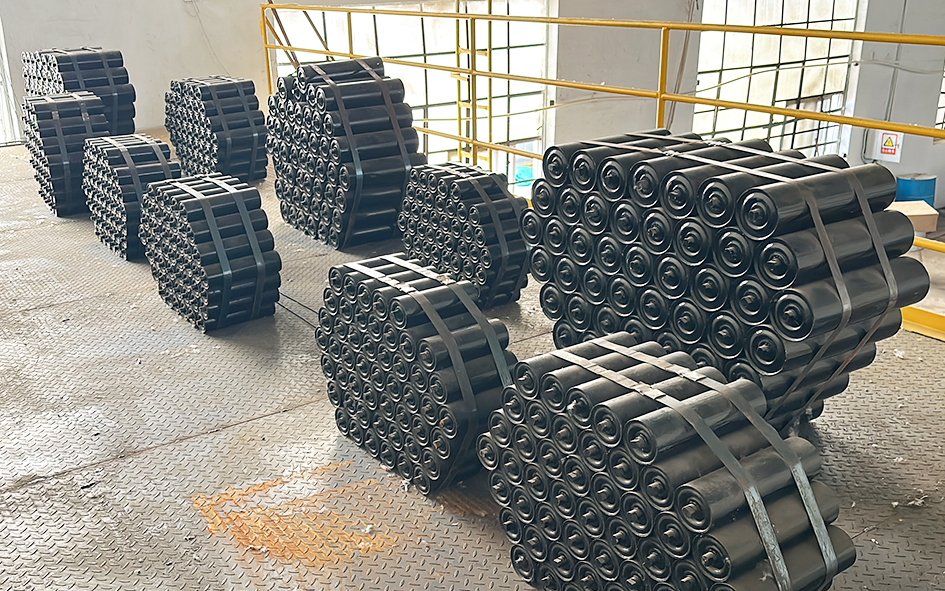
The fundamental construction of a cushion idler begins with a steel roller shell, similar to that of a standard idler, which provides the structural strength necessary to support the belt and load. Over this steel core, a layer of high-quality rubber or polyurethane compound is bonded through a vulcanization process or mechanical attachment. The thickness of the rubber covering typically ranges from 10 to 20 millimeters, depending on the application requirements and the level of impact protection needed. The rubber compound is specially formulated to offer a balance of resilience, abrasion resistance, and durability, with different formulations available for various operating conditions such as high temperature, oil exposure, or extreme abrasion.
The bearing and sealing systems of cushion idlers are similar to those of standard idlers, with precision bearings housed in sealed cartridges to protect against contamination. However, cushion idlers often feature enhanced sealing to account for the more demanding environments in which they are typically deployed. The shaft runs through the center of the roller, providing mounting points for attachment to the conveyor frame. The entire assembly is designed to rotate freely while withstanding the combined forces of belt tension, load weight, and impact energy.
The primary advantage of cushion idlers lies in their ability to extend belt life significantly. At loading points, where material falls onto the belt from chutes or other conveyors, the impact energy can cause substantial damage to both the belt and the idler support structure. This impact manifests as rips, punctures, or accelerated wear on the belt surface, as well as structural damage to the idler frames and bearings. The resilient rubber covering of cushion idlers absorbs this impact energy, distributing it across a wider area and reducing the peak force transmitted to the belt. This cushioning effect can extend belt life by 25 to 50 percent in many applications, representing a substantial return on investment.
Types and Classifications of Cushion Idlers
Cushion idlers are available in several configurations, each designed to address specific application requirements and operating conditions. The selection of the appropriate type is essential for achieving optimal performance and longevity.
Standard cushion idlers feature a uniform rubber covering over the entire steel roller shell, providing consistent cushioning across the full width of the belt contact area. These are the most common configuration and are suitable for a wide range of applications where impact protection is needed but belt tracking and material containment are not primary concerns. The rubber covering is typically smooth, though some designs incorporate slight grooves or patterns to improve grip and material release.
Tapered cushion idlers incorporate a rubber covering that is thicker at the center and thinner at the ends, creating a slight crown profile. This crown helps to center the belt on the idler, improving tracking and reducing the tendency for the belt to wander off-center. Tapered cushion idlers are often used in applications where belt alignment is challenging, such as on long conveyors or those with variable loading conditions.
V-shaped cushion idlers feature a rubber covering that is molded into a V-profile, providing improved belt centering and material containment. These are particularly useful on Belt Conveyors carrying loose bulk materials where spillage is a concern. The V-shape helps to channel the belt into the center of the idler, maintaining proper alignment and reducing the risk of belt edge damage.
Impact cushion idlers are specifically designed for the most demanding loading applications. These feature an exceptionally thick rubber covering, often up to 30 millimeters or more, and are built with reinforced steel cores to withstand extreme impact forces. Some designs incorporate multiple rubber layers or energy-absorbing structures within the roller to further enhance impact resistance.
Return side cushion idlers are used on the underside of the conveyor, where the empty belt returns to the loading point. While impact protection is less critical on the return side, these idlers provide other benefits, including improved traction for belt drives, reduced noise, and protection of the belt from damage caused by trapped debris or protrusions on the roller surface.
The rubber compounds used in cushion idlers vary based on the specific application requirements. Natural rubber compounds offer excellent resilience and impact absorption, making them ideal for general-purpose applications. Synthetic rubber compounds, such as nitrile or neoprene, provide enhanced resistance to oil, grease, and chemicals, making them suitable for applications involving petroleum-based products or aggressive chemicals. Heat-resistant compounds are available for applications involving elevated temperatures, while abrasion-resistant compounds are used where the belt carries sharp or highly abrasive materials.
Application Scenarios
Cushion idlers find extensive application across numerous industries where conveyor systems must handle challenging materials or operate under demanding conditions.
In mining and mineral processing, cushion idlers are essential components at loading points where run-of-mine ore or coal is dropped onto conveyor belts from crushers, screens, or other equipment. The impact forces from large, heavy lumps of material can quickly damage unprotected belts, leading to costly belt replacements and unscheduled downtime. Cushion idlers at these transfer points absorb the impact energy, protecting the belt and ensuring continuous operation. They are also used along the conveyor line where the belt passes over transitions or changes in elevation, providing additional support and protection.
Quarrying and aggregate operations rely heavily on cushion idlers to protect conveyor belts from the impact of heavy stone, gravel, and sand. These materials are highly abrasive, and the impact from falling stone can cause severe belt damage if not properly mitigated. Cushion idlers at loading points, crusher discharge areas, and screening stations are essential for maintaining belt integrity and ensuring efficient operation.
In power generation facilities, coal handling systems use cushion idlers at transfer points where coal is dropped from storage piles or railcars onto conveyors feeding the power plant boilers. The rubber coating absorbs impact forces and reduces noise, creating a safer and more pleasant working environment for plant personnel.
Cement production involves handling highly abrasive materials including limestone, clay, and finished cement. Cushion idlers protect conveyor belts from the impact and abrasion of these materials, extending belt life and reducing maintenance requirements. The rubber covering also helps to reduce dust generation, a significant concern in cement plants due to environmental and health considerations.
Recycling and waste handling facilities process a wide variety of materials, including metals, plastics, paper, and construction debris. These materials often have sharp edges or irregular shapes that can damage conveyor belts. Cushion idlers provide protection against these hazards while also reducing noise levels, which are a significant concern in recycling facilities due to the constant impact of materials on the conveyor system.
In manufacturing environments, cushion idlers are used on assembly line conveyors that transport finished goods or components. While impact forces are typically lower than in bulk material handling, the rubber covering provides a gentler surface that reduces the risk of product damage, particularly for delicate or finished items. The reduced noise levels are also beneficial in manufacturing settings where worker comfort is a consideration.
Agricultural operations use cushion idlers on conveyors handling grain, seed, and other agricultural products. The rubber covering protects the belt from impact damage and provides a surface that is gentler on the agricultural products, reducing breakage and maintaining product quality.
Usage Instructions
Proper installation, operation, and maintenance of cushion idlers are essential for maximizing their performance and service life. The following guidelines provide a comprehensive overview of best practices.
Installation of cushion idlers begins with proper alignment and positioning on the conveyor frame. Like all conveyor idlers, cushion idlers must be mounted squarely on the conveyor stringers, with the roller axis perpendicular to the belt travel direction. Improper alignment can cause the belt to track off-center, leading to uneven wear on both the belt and the cushion idler. The spacing between cushion idlers should be based on the belt width and the weight of the material being carried, with closer spacing used for heavier loads or at impact points where additional support is needed.
At loading points, cushion idlers should be arranged in banks of three to five idlers, with each idler spaced closely together to create a continuous cushioning zone beneath the loading area. This arrangement ensures that the full impact energy of falling material is absorbed, protecting the belt along the entire loading length. The cushion idlers should be positioned with their centers aligned with the expected impact point of the material stream.
The belt tension and alignment should be checked before the conveyor is put into operation, as excessive belt tension or misalignment can cause accelerated wear on the cushion idlers and the belt itself. The belt should be properly tracked and centered before the cushion idlers are adjusted to ensure that the belt runs correctly over the center of the idler rolls.
During operation, cushion idlers should be monitored for signs of wear, damage, or malfunction. Regular inspection of the rubber covering is essential, looking for cracks, tears, or delamination from the steel core. The rubber surface should show uniform wear across its width, with any uneven wear patterns indicating potential tracking problems or misalignment. The bearings should be checked for smooth rotation, and any seized or difficult-to-turn idlers should be replaced promptly.
Cleaning of cushion idlers is important in applications where material buildup is a concern. The rubber surface can accumulate fine dust or sticky material, reducing its effectiveness and causing premature wear. Regular cleaning with brushes, scrapers, or air blowers can prevent material buildup and maintain the cushioning performance.
Lubrication requirements for cushion idlers are similar to those for standard idlers. Sealed-for-life designs require no lubrication, while regreasable designs should be lubricated according to the manufacturer's guidelines. The bearings should receive periodic attention to ensure they remain in good condition, as bearing failure can cause the cushion idler to seize, leading to belt damage.
Common Issues and Troubleshooting
Despite their robust design and careful installation, cushion idlers can experience a range of issues that affect their performance and service life. Understanding these issues and their causes is essential for effective troubleshooting and preventive maintenance.
Rubber covering damage is one of the most common issues affecting cushion idlers. The rubber layer can be damaged by sharp or abrasive materials, which cut or wear away the rubber surface. Excessive impact forces can cause the rubber to crack, chunk, or delaminate from the steel core. Chemical attack from oils, solvents, or aggressive chemicals can also degrade the rubber compound, causing it to soften, swell, or become brittle. The solution to these issues involves selecting the appropriate rubber compound for the specific application and operating conditions, as well as regular inspection and replacement of worn coverings.
Delamination occurs when the rubber covering separates from the steel roller core. This is typically caused by poor bonding during manufacturing, excessive impact forces that exceed the adhesive strength, or the ingress of moisture or chemicals that attack the bond layer. Delamination can cause the rubber covering to peel away from the steel core, leading to uneven rotation, excessive wear, and potential belt damage. Preventing delamination requires careful selection of high-quality cushion idlers from reputable manufacturers and monitoring for early signs of separation.
Bearing failure in cushion idlers can be caused by contamination, inadequate lubrication, or excessive loading. The impact forces that cushion idlers are designed to absorb can also transmit shock loads to the bearings, potentially causing fatigue or damage over time. Sealing systems must be maintained to prevent the ingress of dust, moisture, or other contaminants. Bearing temperature monitoring can provide early warning of developing problems, with excessive heat indicating friction and potential failure.
Excessive wear of the rubber covering can result from highly abrasive materials, improper belt tension, or misalignment of the conveyor system. The wear rate should be monitored regularly, and idlers should be replaced before the rubber covering is completely worn through to the steel core. Worn through areas can cause the belt to be damaged by the exposed steel surface, leading to accelerated belt wear or failure.
Uneven wear patterns on the rubber covering typically indicate belt tracking problems, misaligned idlers, or uneven loading of the conveyor. The belt should be inspected and adjusted to run centrally over the idler rolls, and any misaligned idlers should be realigned. Uneven loading can be corrected by adjusting the material feed system to ensure the load is centered on the belt.
Excessive noise or vibration from cushion idlers can be caused by a variety of issues, including worn bearings, delaminated rubber coverings, or misalignment. Unusual noise should be investigated promptly, as it often indicates a developing problem that could lead to idler failure or belt damage.
Conclusion
Cushion idlers are essential components in many conveyor systems, providing critical protection against impact damage, extending belt life, and reducing noise and vibration. Their rubber-coated design absorbs the energy of falling materials at loading points and other impact areas, preventing damage to the belt and supporting structure. Understanding the different types of cushion idlers, their application scenarios, proper usage instructions, and common issues enables operators to select and maintain these components effectively. Regular inspection, timely replacement, and appropriate compound selection are key factors in maximizing the return on investment in cushion idlers. As conveyor technology continues to advance, cushion idlers will remain a valuable tool for protecting belt investments and ensuring reliable, efficient material handling operations across a wide range of industries.
This website uses cookies to ensure you get the best experience on our website.
 Español
 Pусский
 العربية
 Tiếng Việt



 WhatsApp
 Phone: