

The Loading and Unloading of Electric Flat Carts represent some of the most critical and potentially hazardous phases in the material handling workflow. These operations involve the transfer of goods onto and off the flat platform of an electric cart, whether it is a rubber-tired utility vehicle or a rail-guided industrial trolley. The efficiency, safety, and success of these activities directly impact overall productivity, equipment longevity, and worker well-being. Unlike the transport phase, where the cart moves along a predetermined path, loading and unloading require precise coordination between the operator, the cart, the load, and often additional handling equipment such as forklifts, overhead cranes, or conveyor systems. Understanding the principles, techniques, and best practices for these operations is essential for any organization that relies on electric flat carts for internal logistics.
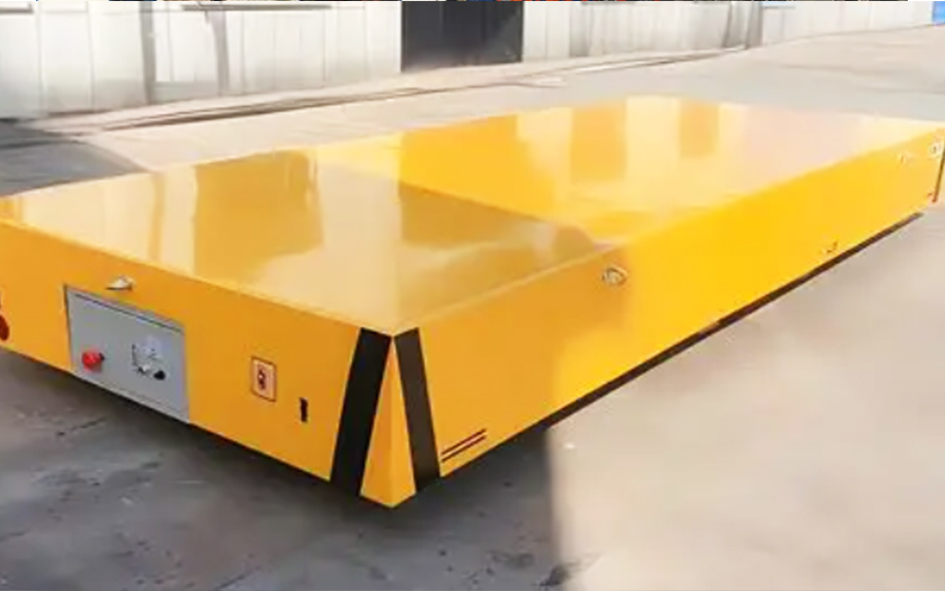
The fundamental challenge in loading and unloading lies in the physical transfer of mass. Electric flat carts are designed to carry substantial weights, sometimes exceeding one hundred tons in heavy industrial applications. Moving such masses onto and off a moving platform demands careful planning, proper equipment, and strict adherence to safety protocols. The platform itself is typically flat and low to the ground to facilitate loading, but the height difference between the cart bed and the surrounding floor or dock level must still be managed. Additionally, the load must be positioned correctly on the platform to ensure stability during transport, with the center of gravity maintained as low and as centrally located as possible.
Types of Loading and Unloading Methods
The method used to load and unload an electric flat cart depends on several factors, including the nature of the goods, their weight and dimensions, the available handling equipment, and the facility layout. Different approaches offer varying degrees of efficiency, safety, and cost-effectiveness.
Manual Loading and Unloading
For lighter loads or smaller carts, manual loading may be feasible. This involves workers physically placing items onto the cart platform. While this method requires no specialized equipment, it is labor-intensive and carries risks of musculoskeletal injuries, particularly when handling awkward or heavy items. Manual loading is generally limited to individual items weighing less than twenty-five kilograms and is most suitable for low-volume operations or situations where the goods are easily handled. Even in manual operations, mechanical aids such as roller tracks, skate wheels, or simple ramps can reduce physical strain and improve efficiency. Workers involved in manual loading should be trained in proper lifting techniques, including keeping the back straight, bending at the knees, and using leg muscles rather than the back to lift.
Forklift Loading and Unloading
Forklifts are the most common mechanical aid for loading and unloading electric flat carts, particularly in warehousing and manufacturing environments. A forklift can lift palletized goods from the floor or a storage rack and place them directly onto the cart platform. This method is highly efficient for standard pallet sizes and loads up to several tons. The key considerations include ensuring that the forklift's capacity matches the load weight, that the forklift operator has clear visibility of the cart and the placement area, and that the cart is stationary and braked during the operation. The forklift forks must be inserted fully under the pallet or load, and the load should be placed gently onto the cart to avoid impact damage to both the goods and the cart platform. Proper communication between the forklift operator and any ground personnel is essential to prevent accidents.
Crane and Hoist Loading
For exceptionally heavy or oversized items that cannot be handled by forklifts, overhead cranes or hoists are employed. These systems use slings, chains, or specialized lifting beams to raise the load from its storage position and lower it onto the cart platform. Crane loading is common in steel mills, heavy fabrication plants, and foundries where the loads may weigh tens or hundreds of tons. The cart must be positioned precisely under the crane's hook path, and the load must be guided into place using tag lines to prevent swinging. This method requires highly skilled crane operators and riggers, as well as meticulous planning to ensure that the load's center of gravity aligns with the cart's central axis. The lifting gear must be inspected regularly, and the load must be securely attached before any lifting commences.
Roller Conveyor and Transfer Systems
In automated or high-volume operations, roller conveyor systems are often integrated with electric flat carts to facilitate loading and unloading. The cart may be equipped with a powered or unpowered roller bed that aligns with a fixed conveyor at the loading station. When the cart is docked at the station, goods are transferred directly from the conveyor onto the cart's Rollers, and vice versa at the unloading point. This method is particularly effective for uniform items such as boxes, bags, or components that are already on conveyor-compatible packaging. The cart must be accurately positioned at the docking station, often using guidance rails or optical sensors, to ensure smooth transfer. The conveyor and cart roller speeds should be synchronized to prevent jams or damage to the goods.
Tilting and Dumping Mechanisms
Some specialized electric flat carts are equipped with tilting or dumping mechanisms that facilitate the unloading of bulk materials such as sand, gravel, scrap metal, or agricultural produce. These carts have platforms that can be hydraulically or mechanically tilted to one side or the rear, allowing the contents to slide off by gravity. This method is highly efficient for loose materials and eliminates the need for additional handling equipment at the unloading point. The tilting operation must be performed on stable, level ground, and the cart must be positioned so that the dumped material falls into a designated receiving area, such as a hopper, bin, or stockpile. Operators must ensure that no personnel are in the dumping zone and that the cart's center of gravity remains within safe limits during the tilting process.
Side-Loading and Specialized Configurations
Certain applications require side-loading capabilities, where goods are loaded onto the cart from the side rather than from the ends or top. This is common in narrow aisle environments or where the cart operates alongside a fixed workbench or conveyor. Side-loading carts may have removable side rails, drop-down sides, or specialized platforms that facilitate access. The loading process is similar to that of standard carts but requires careful attention to the cart's stability, as the load's center of gravity may shift more significantly when loading from the side. Some carts are designed with a low-profile side entry that allows pallet jacks or walkie stackers to place loads directly onto the platform without requiring a ramp.
Application Scenarios
Loading and unloading operations occur across virtually every industry that utilizes electric flat carts, each with its own unique challenges and requirements.
In warehousing and distribution centers, loading and unloading are typically high-frequency activities involving palletized goods. Forklifts are the primary loading tool, moving pallets from storage racks onto waiting carts that then transport the goods to shipping areas. The efficiency of these operations directly affects order fulfillment rates and overall warehouse throughput. Proper staging areas and clear traffic lanes are essential to prevent congestion and accidents.
In manufacturing plants, loading and unloading often involve raw materials being brought to production lines and finished goods being removed. The carts may be loaded at a central receiving area and unloaded at individual workstations. The timing and precision of these operations are critical to maintaining production continuity. Some manufacturing operations use conveyor-integrated carts that can be loaded directly from the production line without manual intervention.
Steel mills and foundries present some of the most demanding loading and unloading scenarios. Massive steel coils, slabs, and castings must be moved from storage areas to processing equipment and then to shipping. Overhead cranes with specialized lifting magnets or tongs are typically used for these operations. The extreme weights and high temperatures involved require rigorous safety protocols and regular equipment inspection. The carts themselves may be equipped with heat shields or specialized decks to protect against radiant heat during loading.
Construction sites and heavy engineering projects use electric flat carts to transport building materials, prefabricated components, and heavy equipment. Loading and unloading in these environments often occur on uneven or unpaved surfaces, requiring careful stabilization of the cart and the load. Mobile cranes, excavators, or telescopic handlers may be used to place loads onto the carts.
Airports and seaports utilize electric flat carts for cargo handling, with loading and unloading operations involving baggage, freight containers, and maintenance supplies. The high volume and tight schedules demand efficient processes, often using conveyor belts, container handlers, or specialized baggage loaders. The carts must be positioned precisely at loading bridges or cargo bays, and the loads must be secured to prevent shifting during transport across tarmacs and aprons.
In the agricultural sector, electric flat carts are used to transport harvested produce, feed, fertilizers, and equipment. Loading and unloading may involve dumping mechanisms for bulk crops, forklifts for palletized goods, or manual handling for smaller items. The outdoor environment introduces variables such as weather, mud, and uneven terrain that can complicate operations and require additional precautions.
Usage Instructions for Loading and Unloading
Proper procedures for loading and unloading are essential for safety and operational efficiency. These guidelines should be followed consistently by all operators and personnel involved in these activities.
Before any loading or unloading operation begins, the electric flat cart must be brought to a complete stop and the parking brake engaged. For rail-guided carts, this is typically automatic when the cart is stationary, but operators should verify that the brake is applied. The cart should be positioned on level ground whenever possible to prevent unintended movement and to maintain stability. If loading or unloading on an incline is unavoidable, additional chocks or wheel blocks should be placed to secure the cart.
The operator must ensure that the cart's rated capacity is not exceeded. Overloading is one of the most common causes of equipment failure and accidents. The total weight of the load, including any pallets, containers, or packaging, should be verified before loading. The load distribution across the platform must be even, with the center of gravity located as close to the cart's geometric center as possible. Uneven loading can cause the cart to become unstable during transport, increasing the risk of tipping or load shifting.
During the loading process, the load should be placed gently onto the platform to avoid impact damage. Dropping loads onto the cart can damage the platform, the suspension, and the wheel assemblies. It can also cause the load itself to be damaged or to shift into an unsafe position. When using mechanical handling equipment such as forklifts or cranes, the operator should lower the load slowly and smoothly, maintaining control throughout the placement process.
Once the load is on the cart, it must be secured before any movement. The method of securing depends on the nature of the load and the cart's design. Common securing methods include straps, chains, ratchet binders, tension belts, or edge protectors. Some carts have fixed or removable side rails that help contain the load. For tall or irregularly shaped items, additional bracing or blocking may be required to prevent tipping or shifting during transport. The operator should inspect the load securing to confirm that all fasteners are tight and that the load cannot move relative to the cart.
For unloading, the same principles apply in reverse. The cart should be stationary and braked at the unloading point. The load should be released from its securing devices only when the unloading equipment or personnel are ready to receive it. When using lifting equipment to remove the load, the attachments should be applied correctly, and the load should be lifted straight up to clear the platform before any horizontal movement begins. Personnel should never stand under a suspended load or between the cart and the unloading equipment.
After unloading is complete, the cart should be inspected for any signs of damage or debris. Loose items or residues on the platform should be cleaned to prevent contamination of the next load and to maintain safe conditions. The cart should be moved away from the unloading area to allow access for the next operation.
Common Issues and Troubleshooting
Loading and unloading operations are prone to various issues that can disrupt workflow, damage equipment, or cause injuries. Recognizing and addressing these issues promptly is essential for maintaining smooth operations.
Load instability is one of the most frequent problems. If a load shifts during transport, it may be because it was not properly centered or secured during loading. The solution is to ensure that the load is evenly distributed and that all securing devices are correctly applied and tightened before movement. For loads with a high center of gravity, additional tie-downs or bracing may be necessary. Operators should also reduce speed when transporting unstable or tall loads to minimize the risk of shifting.
Damage to the cart platform or wheel assemblies can result from impact loading. When loads are dropped onto the platform, the shock can bend the platform, damage bearings, or cause misalignment of the wheel assemblies. Preventing this requires careful control during the placement of loads and the use of cushioned surfaces if the loads are likely to be dropped. Regular inspection of the platform and wheels can identify damage early, allowing for repairs before the damage worsens.
Intermittent jamming during conveyor-to-cart loading is a common issue in automated systems. This may be caused by misalignment between the conveyor and the cart, by items that are not properly oriented, or by debris on the conveyor or cart rollers. The solution involves checking the alignment of the cart at the docking station, ensuring that items are correctly positioned on the conveyor, and keeping all rollers clean and lubricated.
Personnel safety incidents during loading and unloading are a serious concern. Common causes include lack of communication between the operator and the loading equipment operator, inadequate training, and failure to use personal protective equipment. To prevent such incidents, clear communication protocols should be established, including hand signals or radio communication. All personnel involved in loading and unloading should be trained in the specific procedures for their role and should wear appropriate personal protective equipment, including safety shoes, high-visibility clothing, hard hats, and gloves.
A common question from operators concerns how to handle loading and unloading on slopes or uneven ground. The safest approach is to avoid such conditions whenever possible by positioning the cart on level ground. If this is unavoidable, the cart should be secured with additional chocks, and the load should be placed with the center of gravity as low as possible. The unloading equipment should be positioned so that the load is lifted or removed in a way that does not require the cart to move during the operation.
Another frequent inquiry relates to the maximum speed at which loading and unloading should be performed. The answer is that these operations should always be done at a slow, controlled pace. Rapid movement of the cart during loading or unloading can cause the load to shift, the operator to lose control, or the equipment to be damaged. The cart should be completely stopped and braked before any loading or unloading commences.
Conclusion
The loading and unloading of electric flat carts are fundamental operations that demand skill, attention to detail, and strict adherence to safety protocols. The choice of loading method—whether manual, forklift-based, crane-assisted, conveyor-integrated, or specialized dumping—must align with the specific requirements of the loads, the facility, and the operational environment. Proper loading techniques ensure that the cart remains stable during transport, that the load is secure, and that the equipment is protected from damage. Unloading operations must be conducted with equal care to ensure that goods are safely transferred to their destination without incident. By following established procedures, providing comprehensive training to personnel, and maintaining equipment in good condition, organizations can achieve efficient, safe, and reliable loading and unloading operations that support overall productivity and worker safety. As material handling technologies continue to evolve, the integration of advanced sensors, automated guidance, and intelligent control systems promises to further enhance these critical operations, reducing manual effort and improving precision.
This website uses cookies to ensure you get the best experience on our website.
 Español
 Pусский
 العربية
 Tiếng Việt



 WhatsApp
 Phone: